
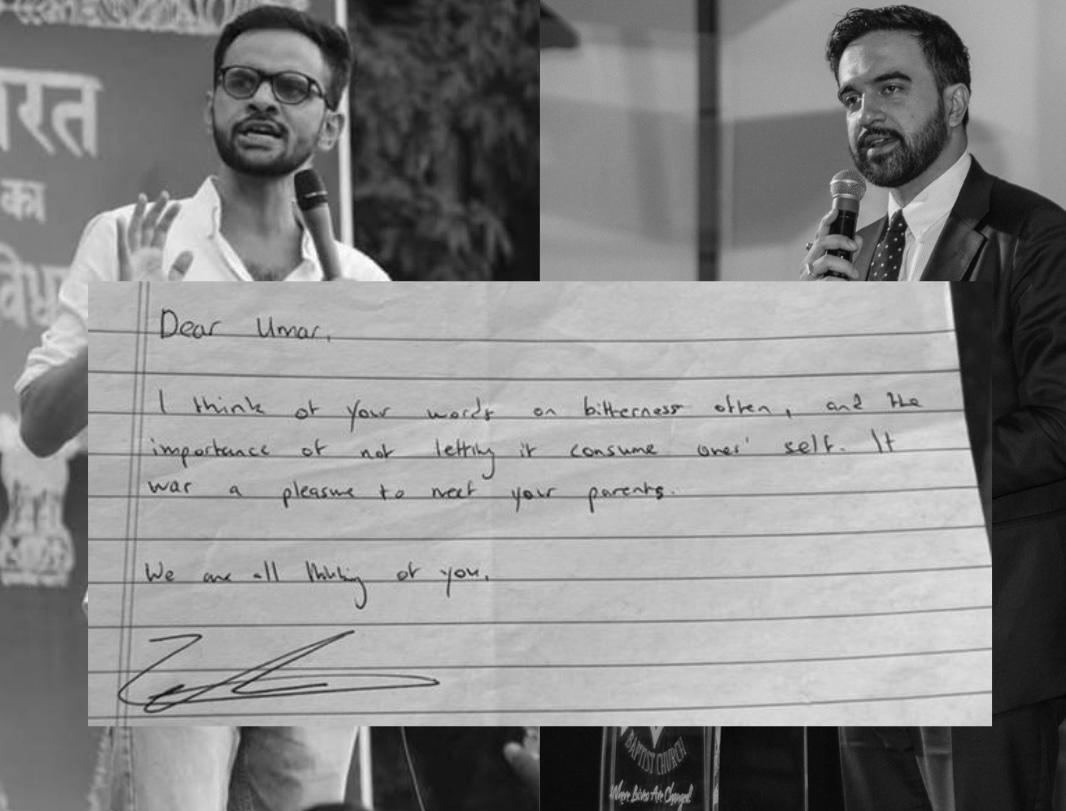
U.S. Lawmakers, NYC Mayor Mamdani urge bail for detained Indian activist Umar Khalid
Eight U.S. lawmakers, led by Representatives Jim McGovern and Jamie Raskin , have expressed concern over the continued detention of Indian activist Umar Khalid, writing to India’s ambassador in December 2025. Khalid has been in pre-trial detention since September 2020 under the Unlawful Activities (Prevention) Act (UAPA), accused of alleged involvement in the 2020 Delhi riots that claimed 53 lives.
Adding a personal touch, Newly sworn-in New York City Mayor Zohran Mamdani sent a handwritten note to Khalid , praising his words on avoiding bitterness after meeting his parents.
Khalid, a former student leader and activist , has long been a polarising figure in India for his political activism and advocacy on minority and student rights. Supporters argue that he is a political prisoner denied due process, while the Indian government maintains that he is accused of serious criminal offences, including allegedly inciting riots.
The interventions by U.S. lawmakers and a city mayor have drawn sharp criticism in India, particularly from right-wing leaders, who labelled it as foreign interference in judicial matters. Critics argue that such advocacy raises diplomatic tension, questioning whether it is appropriate for foreign officials to publicly comment on ongoing legal proceedings in a sovereign democracy.
Legal experts note that under the UAPA, pre-trial detention is common, and bail is difficult to obtain, making Khalid’s prolonged detention a subject of human rights debate. U.S. lawmakers contend their letters highlight due process concerns , rather than questioning the judicial findings, but the timing and nature of the interventions have nevertheless become a sensitive diplomatic issue.
Observers say that while such foreign advocacy cannot legally compel India’s courts, it adds international scrutiny and can influence reputational and political discourse, particularly between two major democracies.
The case continues to be closely watched, both in India and internationally, as it raises questions about human rights, judicial independence, and the limits of foreign diplomatic pressure.