
US launches new retaliatory strikes against ISIS in Syria after deadly ambush
The United States has carried out a new series of air and drone strikes targeting Islamic State positions across Syria, escalating its response to last month’s deadly ambush in Palmyra that killed two US soldiers and a civilian interpreter. US Central Command reported that the operations took place around 12:30 p.m. Eastern Time on Saturday, in coordination with partner forces, striking multiple ISIS locations.
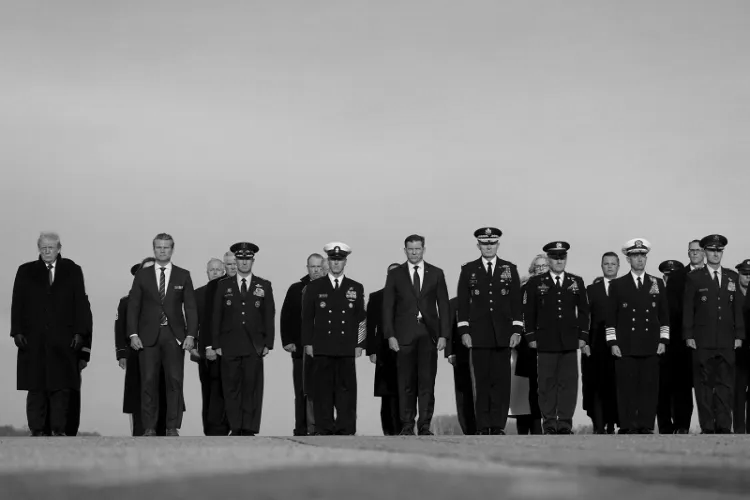
The ambush claimed the lives of Sgt Edgar Brian Torres-Tovar and Sgt William Nathaniel Howard of the Iowa National Guard, along with civilian interpreter Ayad Mansoor Sakat. Several other personnel were injured in the attack, marking one of the most lethal incidents for American forces in Syria in recent years.
These actions are part of Operation Hawkeye Strike , initiated on December 19 in direct retaliation for the Palmyra killings. The campaign aims to dismantle ISIS infrastructure, including weapons depots, command centers, and transit routes, while sending a firm message that attacks on US personnel will be met with decisive action. US officials emphasized that the strikes are designed to prevent the group from regrouping or planning future assaults against coalition forces.
Despite losing control of its former territorial “ caliphate ,” ISIS continues to operate in Syria by exploiting deserts, weak governance, and the country’s fragmented landscape. The ongoing conflict has left multiple actors including Syrian government forces, Kurdish-led groups, Turkish-backed militias, and other local factions controlling separate areas, creating gaps that ISIS uses for ambushes and insurgent attacks.
The intensified strikes reflect a dual strategy: demonstrating deterrence while attempting to weaken the group’s operational capacity. However, analysts warn of potential escalation and civilian harm, given Syria’s crowded battlefield and the proximity of multiple foreign militaries. Even with precision targeting, repeated bombardments in contested zones carry the risk of collateral damage and further destabilization.
Regionally, the campaign signals Washington’s commitment to counterterrorism and its continued military presence in Syria. It also underscores the country’s persistent role in shaping security dynamics across the Middle East, even as domestic and international attention shifts to other conflicts.
Observers will be watching closely to see whether ISIS attempts retaliatory attacks, how Operation Hawkeye Strike evolves, and how other armed factions respond to intensified US operations amid Syria’s fragile security environment.