
US launches deep-sea mission three weeks on to recover F/A-18 Super Hornet and MH-60 helicopter
The US Navy has launched a complex and highly expensive recovery operation in the South China Sea to retrieve two military aircraft that crashed into the seabed, amid growing concerns that China could gain access to sensitive American defence technology.
The incidents involved an F/A-18 Super Hornet fighter jet and an MH-60 Seahawk helicopter, which went down within about half an hour of each other in late October during routine operations linked to the aircraft carrier USS Nimitz. Both aircraft were operating from the carrier as part of standard training and patrol activity in one of the world’s most strategically sensitive maritime regions. All personnel on board were safely rescued.
Although the exact cause of the crashes has not been formally confirmed, US President Donald Trump said shortly after the incidents that contaminated fuel could have been a possible factor. A US Navy spokesperson said that recovery work is currently underway but declined to disclose the precise location of the crash sites for security reasons.
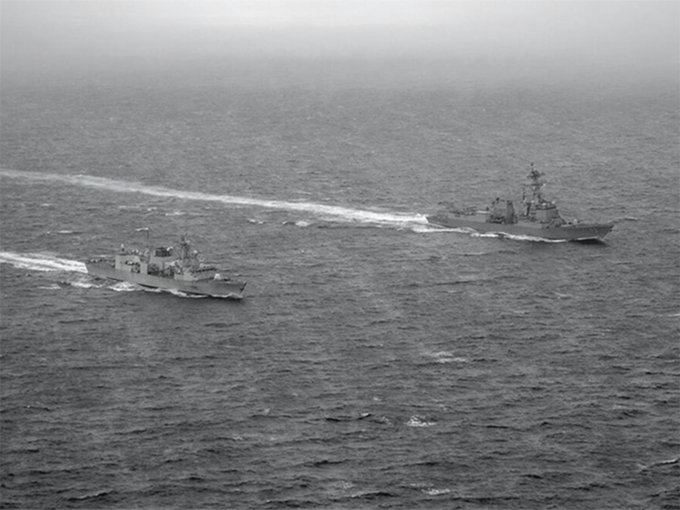
Cmdr. Matthew Comer of the US 7th Fleet confirmed that the USNS Salvor, a Safeguard-class salvage ship operated by the Military Sealift Command, is conducting operations at the scene. The vessel is capable of lifting up to 300 tons from the seabed, while the crashed F/A-18 weighs roughly 33 tons and the MH-60 helicopter around 11 tons. Defence experts note that salvage missions of this kind are highly complex and expensive, often running into millions of dollars due to the specialised ships, deep-sea equipment and sensitive handling required.
The aircraft were flying in the South China Sea as part of routine US Navy carrier-based operations. The region is a vital global trade corridor, and the United States regularly conducts patrols and freedom of navigation missions there to challenge China’s sweeping territorial claims and to reassure regional allies. A typical US aircraft carrier strike group operating in the region usually carries an air wing of around 65 to 70 aircraft, including fighter jets, early-warning planes and helicopters.
The Super Hornet is the US Navy’s primary carrier-based strike fighter and is flown routinely for air defence and attack roles, while the MH-60 is a multi-role helicopter used for anti-submarine warfare, search and rescue and maritime surveillance.Military analysts said that although these aircraft are not the most advanced in the US arsenal, they still contain valuable sensors, avionics and systems that could offer technical and tactical insights if recovered by a rival power. Former US Pacific Command intelligence official Carl Schuster said gaining access to American aircraft wreckage could reveal technological strengths and possible vulnerabilities.
Schuster noted that no F/A-18 has ever been obtained by China and said access to such technology could help Beijing improve its own carrier-based J-15T fighter aircraft, which is widely considered less capable than its American counterpart. He also pointed out that the MH-60 helicopter carries anti-submarine warfare systems that remain ahead of China’s current capabilities, making recovery of the wreckage a high operational priority. It could not verify whether China is actively attempting to reach the crash sites. China continues to assert broad territorial claims over the South China Sea, despite an international tribunal ruling that rejected those claims.
The current operation mirrors a 2022 US Navy effort in which an F-35 fighter jet was successfully recovered from a depth of about 12,400 feet after crashing during a carrier landing attempt.
China’s Foreign Ministry said it could offer humanitarian assistance if required, but criticised US military activity in the region. Spokesperson Guo Jiakun said the accidents occurred during what he described as US military exercises and accused Washington of destabilising regional security by frequently deploying warships and aircraft in the contested waters.
Schuster warned that China’s geographic proximity to the area could give it a “homefield advantage” and said Beijing could attempt to interfere with the US recovery operation if it chose to do so.
The United States continues to maintain a strong military presence in the region, arguing that China’s growing military infrastructure and expansive territorial ambitions threaten freedom of navigation through one of the world’s busiest and most economically critical maritime routes.