
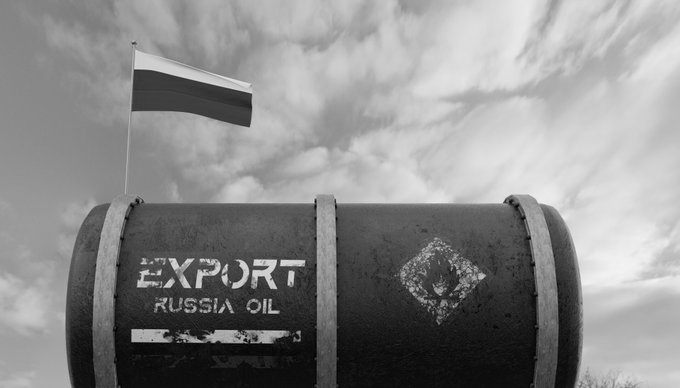
US Extends Russian Oil Waiver Again Until June 17 Amid Global Energy Strain
The United States has extended a sanctions waiver on Russian oil already at sea for another 30 days , effective from May 18 to June 17, 2026 , as surging global energy prices and the ongoing Iran war continue to strain supply chains worldwide.
The US Department of the Treasury issued the order on Monday, extending the waiver for Russian oil stranded at sea on or before April 17 , replacing the previous General License No. 134B , dated April 17, 2026, which expired on May 16, with the new General License No. 134C , issued by the Office of Foreign Assets Control (OFAC) .
Under the updated waiver, transactions "ordinarily incident and necessary" to the delivery, sale, or offloading of Russian crude oil and petroleum products loaded onto vessels on or before April 17 are authorised through June 17, 2026. The authorisation also applies to vessels previously blocked under existing Russia-related sanctions and includes services tied to vessel operations and cargo handling, including docking, anchoring, bunkering, insurance, classification, salvage, and emergency repairs .
Treasury Secretary Scott Bessent announced the extension, stating it would allow the most vulnerable nations to temporarily access Russian oil currently stranded at sea. "This general license will help stabilize the physical crude market and ensure oil reaches the most energy-vulnerable countries ," Bessent wrote on X, adding the extension would "provide additional flexibility" and that the Treasury would work with nations to provide specific licenses as needed.
This marks the second time Washington has permitted the relief measure to expire before quickly reinstating it. The initial waiver was issued in March 2026 and expired on April 11, 2026 , despite initial plans to let it lapse, following requests from energy-vulnerable nations.
A source familiar with the decision said the extension was requested by poor and vulnerable countries that cannot access Gulf oil shipments due to the US-Israeli war with Iran and the closure of key supply routes.
Adding to the urgency, IEA chief Fatih Birol warned on the same day that commercial oil inventories are depleting rapidly , with only a few weeks' worth remaining due to the Iran war and the closure of the Strait of Hormuz . The IEA now projects global oil supply will fall by 3.9 million barrels per day across 2026, nearly triple its earlier forecast of 1.5 million bpd. Birol noted that while the release of strategic reserves had added 2.5 million barrels per day to the market, those reserves "are not endless."
The announcement was made while Bessent was attending the G7 Finance Ministers and Central Bank Governors meeting in Paris . Bessent had previously defended the decision, telling US lawmakers in April that the waiver had allowed the Treasury to put "more than 250 million barrels on the water" and ease fears over supply.
The waiver is especially significant for India , one of the largest buyers of Russian seaborne crude. However, Indian officials made clear this week that Washington's waiver policy would not determine India's energy strategy , signalling New Delhi's intent to continue purchasing Russian oil regardless.
The general licence does not authorise any transaction involving a person, entity, or joint venture located in Iran, North Korea, Cuba , or occupied parts of Ukraine . The decision also partially suspends the broader sanctions measures that President Donald Trump originally put in place in October 2025 .
Ukrainian President Volodymyr Zelensky has publicly criticised the moves, with his country still locked in war with Russia since its 2022 invasion . Critics warn the waiver indirectly helps Russia finance its war against Ukraine , while supporters argue it is narrowly targeted and designed to prevent a broader global oil shock . The waivers have so far done little to meaningfully reduce oil prices, though they have provided considerable relief to India and other energy-dependent economies.