
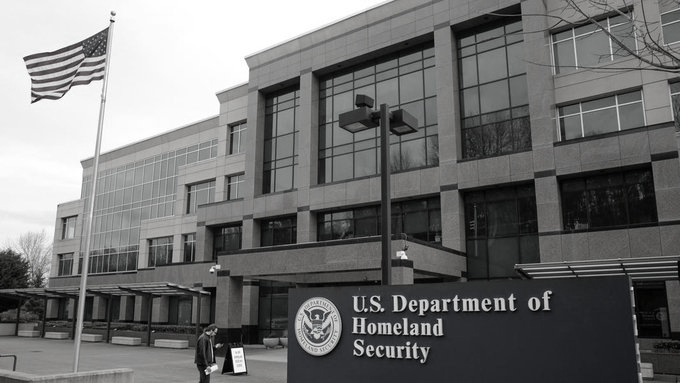
US expands facial recognition at borders to track non-citizens
The U.S. Department of Homeland Security (DHS) is expanding its biometric border control system, requiring all non-citizens to have their photographs and, in some cases, additional biometric data collected when entering or leaving the country starting December 26, 2025. This system is designed to strengthen national security, prevent visa overstays, and identify criminals or suspected terrorists by linking each traveler to a digital profile in DHS databases. AI-enhanced facial recognition and biometric analysis cross-reference current scans with historical travel records, automatically flagging overstays, identity mismatches, or security alerts without requiring personal interviews.
When a traveler is scanned, the system provides immigration officers with a near-instant comprehensive profile. The information displayed can be summarized as follows:
Information Available to Officers at Entry/Exit Points:
• Passport Details:
• Passport number, issuing country, issuing authority, expiry date, and passport photo
• Personal Information:
• Full name, date of birth, home address, driver’s license (if linked), previous names or aliases
• Visa and Travel Details:
• Visa type, status, number, expiry, I‑94 arrival/departure records, previous ports of entry, durations of stay, airline/flight details
• Biometric Information:
• Live facial scan, fingerprints (if collected), prior biometric captures, match confidence score
• Criminal and Security Alerts:
• Criminal records, outstanding warrants, sex-offender registry hits, intelligence flags, Interpol notices or international criminal records
• Other Integrated Records:
• SEVIS/student status for F‑1/J‑1 visas, work visa sponsor/employer information, prior encounters with CBP/ICE (detentions, interviews), contact information on file
• Automated AI Alerts:
• Overstay detection, identity mismatch detection, correlation with CCTV or other digital evidence
• Summarized on-screen for agents as “Everything I need to know”
• Operational Safeguards and Limitations:
• Records may be incomplete, sealed, or expunged
• Biometric matches can produce false positives, requiring secondary verification
• Legal protections like probable cause and due process remain in place
• Arrests are only made following standard legal procedures
The U.S. system differs significantly from India’s chip-enabled biometric e-passports, which have been rolled out in 13 cities, Nagpur, Bhubaneswar, Jammu, Goa, Shimla, Raipur, Amritsar, Jaipur, Chennai, Hyderabad, Surat, Ranchi, and Delhi. India’s system collects photographs, fingerprints, and signatures, storing them on an encrypted RFID chip embedded in the passport. At international borders, the chip is scanned to verify identity and reduce forgery, but it does not automatically track overstays, monitor visa compliance, or link to criminal or watchlist databases. It is primarily a document-centric verification system, unlike the monitoring-centric U.S. network.
China provides an example of extensive biometric surveillance. Airports like Beijing Capital International Airport and border crossings to Hong Kong and Macau use document-free facial recognition checkpoints that instantly identify travelers and cross-reference them with national databases. These systems are integrated into broader surveillance networks, including the social credit system, allowing authorities to monitor and control population movement efficiently. While the U.S. system is not as pervasive domestically as China’s, it uses a similar AI-driven model for non-citizens entering or exiting the country, providing automated identification and real-time enforcement capabilities.
If a person scanned by the system has a criminal record or an active warrant, the biometric match connects their identity to prior records, intelligence alerts, or law enforcement databases, enabling officers to take swift action. Arrests still follow standard legal procedures, including probable cause, warrants, and due process. The system’s automation accelerates detection but does not replace legal safeguards, and alerts are typically followed by human verification to avoid false positives.
Critics have raised concerns about privacy, civil liberties, and potential bias. Facial recognition and biometric systems have been shown to misidentify individuals, particularly among minority populations. Retention of biometric data creates risks of unauthorized access or misuse, and transparency regarding how data is shared across agencies remains limited. Organizations such as the Electronic Privacy Information Center (EPIC) have called for strict oversight, secure handling, and clear limits on data use to prevent mission creep.
The expanded U.S. biometric border system combines AI-enhanced identification, historical travel data, and real-time alerts to create a comprehensive network for monitoring non-citizens. It goes beyond India’s document-centric e-passports while drawing lessons from China’s large-scale facial recognition deployments, aiming to improve efficiency, security, and law enforcement capabilities at the nation’s borders. While offering clear benefits in terms of safety and processing speed, it also raises important questions about privacy, data protection, and potential errors, highlighting the need for careful oversight as these technologies become more deeply integrated into border management.