
US Blockade Pushes Iran Looking For Places To Store Oil Without Shutting Wells
When a nation sitting atop the world's third-largest oil reserves quietly hauls a rusting, thirty-year-old supertanker out of mothballs to float oil above its main export terminal, the desperation is visible from space, quite literally.
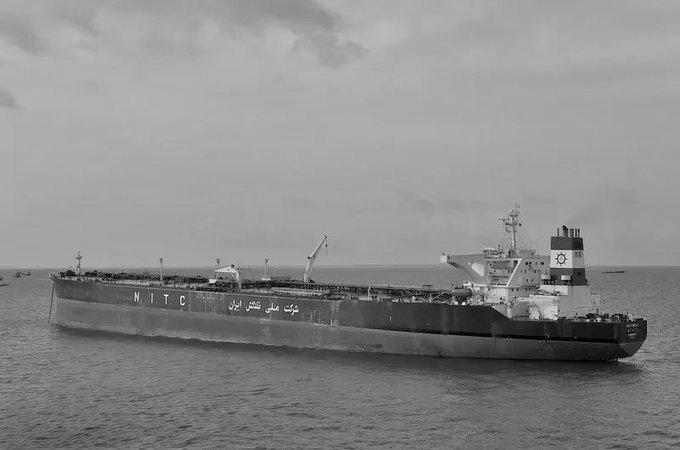
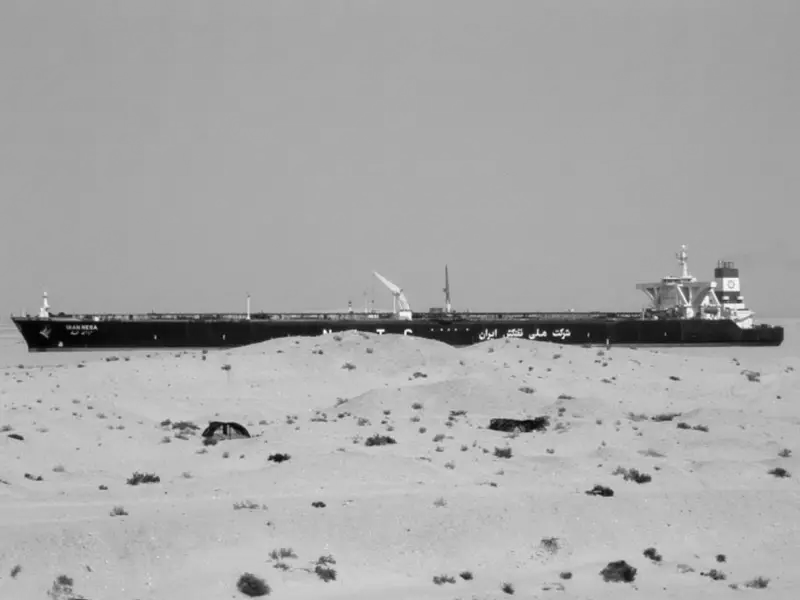
Iran has reactivated the NASHA (IMO 9079107), a 1996-built two-million-barrel Very Large Crude Carrier that had been anchored empty off Kharg Island for years. A voyage that should take a day and a half is taking four days, a crawling, halting journey that tells its own story. TankerTrackers confirmed her reactivation, and Gulf News, Iran International, and Fox News all picked it up within hours.
The arithmetic behind this act of institutional exhaustion is brutally mechanical. Kharg Island handles roughly ninety percent of Iran's crude exports, and its onshore tanks had approximately thirteen million barrels of spare capacity when the US blockade began on April 13. Net inflows have been running at one million to 1.1 million barrels per day because exports have collapsed to single digits of vessels while upstream production continues, placing the storage saturation point in late April .
The US blockade, described by Defense Secretary Pete Hegseth as "iron-clad," stretches from the Gulf of Oman to the open oceans, a strategy that avoids boots on Iranian soil while strangling the revenue artery that sustains the regime. Hegseth stated publicly that "the blockade is tightening by the hour."
The parallel escape routes are failing . Ship-to-ship transfers in the Riau Archipelago, AIS-dark transits, and sanctioned VLCCs attempting to slip through, Lloyd's List Intelligence tracked roughly twenty-six Iran-linked vessels evading since April 13. That shadow-fleet workaround cannot absorb a million barrels a day.
Kenneth Katzman, former Iran analyst at the Congressional Research Service, notes that Iran is not exporting new oil amid the blockade, but Tehran has between 160 and 170 million barrels already "afloat" on ships around the world. That legacy buffer is eroding. Iran earned at least $4.97 billion over the past month from ongoing exports, down sharply from roughly $3.45 billion per month before the war, a revenue collapse that compounds daily.
The deeper, less-visible danger is geological . If wells shut in, Iran's carbonate reservoir formations face simultaneous damage: water coning, fines migration into pore throats, formation compaction, and clay swelling. Analysts Maleki and Gordon estimate 300,000 to 500,000 barrels per day of permanent capacity loss if the current trajectory completes, damage measured in months to years, not days.
NASHA buys Iran approximately 48 hours of additional floating storage, equivalent to two days of unchecked production. It is not a strategy. It is what you reach for when you have run out of strategy.
If everything continues on this trajectory, Iran will not return to pre-war oil production for a long time. Well conservation often becomes an irreversible process , their restoration is technologically punishing, and Iran risks permanently losing a significant portion of any shut-in wells.