
U.S based Quantum pioneers win 2025 Nobel physics prize
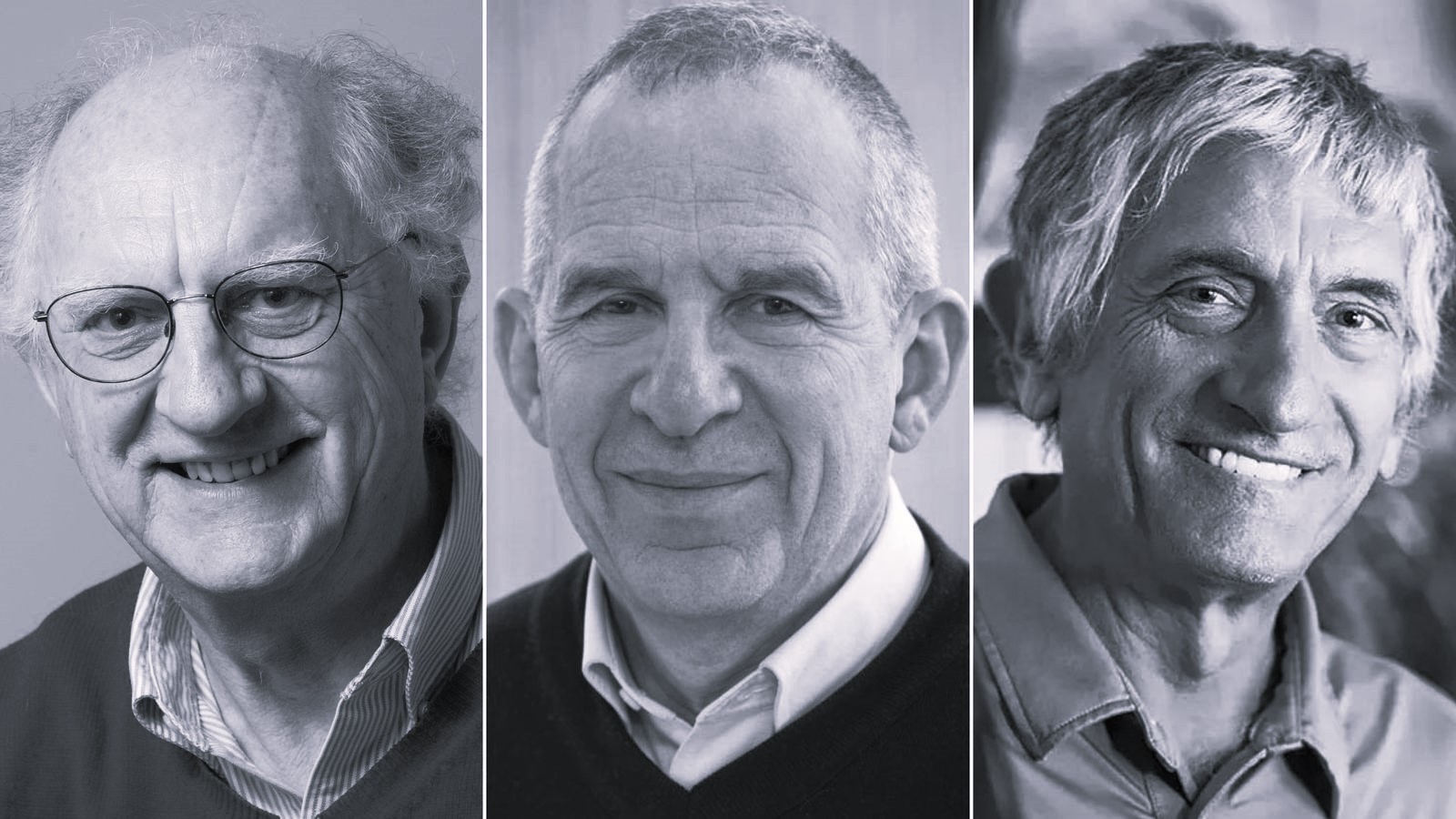
The 2025 Nobel Prize in Physics has been awarded to the U.S.-based scientists John Clarke, Michel Devoret, and John Martinis for pioneering experiments that revealed quantum physics in action, laying the foundation for the next generation of digital technologies.
The Royal Swedish Academy of Sciences announced the award on Tuesday, recognizing the trio’s mid-1980s work with superconducting electronic circuits that demonstrated quantum mechanical effects on macroscopic objects. Their experiments showed that quantum mechanics typically confined to the microscopic realm of atoms and subatomic particles can influence larger, everyday systems under specific conditions.
John Clarke, a British-born professor at the University of California, Berkeley, expressed surprise at the honor, saying during the Nobel press conference, “It had never occurred to me in any way that this might be the basis of a Nobel Prize.” He noted that modern technologies, such as cell phones, depend on quantum principles uncovered through this type of research.
Michel Devoret, born in France, is a professor at Yale University and the University of California, Santa Barbara. John.M.Martinis, an American and also a professor at UC Santa Barbara, previously led Google’s Quantum Artificial Intelligence Lab. He was part of the team that claimed “quantum supremacy” in 2019, when a quantum computer outperformed the world’s fastest classical supercomputer on a specific task.
Olle Eriksson, chair of the Nobel Committee for Physics, highlighted the continuing significance of the field, stating, “It is wonderful to be able to celebrate the way that century-old quantum mechanics continually offers new surprises. It is also enormously useful, as quantum mechanics is the foundation of all digital technology.”
The Royal Swedish Academy emphasized that the laureates’ research has opened new avenues for developing advanced quantum technologies, including quantum cryptography, quantum computing, and quantum sensors. The prize carries a total award of 11 million Swedish crowns (approximately $1.2 million), shared equally among the winners.
The Nobel Prize in Physics, first awarded in 1901, remains one of the most prestigious honors in science. It follows this week’s Nobel Prize in Medicine, with the Chemistry Prize set to be announced next. All laureates will receive their awards from the King of Sweden during a ceremony in Stockholm on December 10, the anniversary of Alfred Nobel’s death.