
“Urgent global imperative”: India pushes for fit-for-purpose UNSC reforms
India on Monday reiterated its call for comprehensive reforms of the United Nations Security Council (UNSC), describing them as an “urgent global imperative” to tackle contemporary challenges effectively.
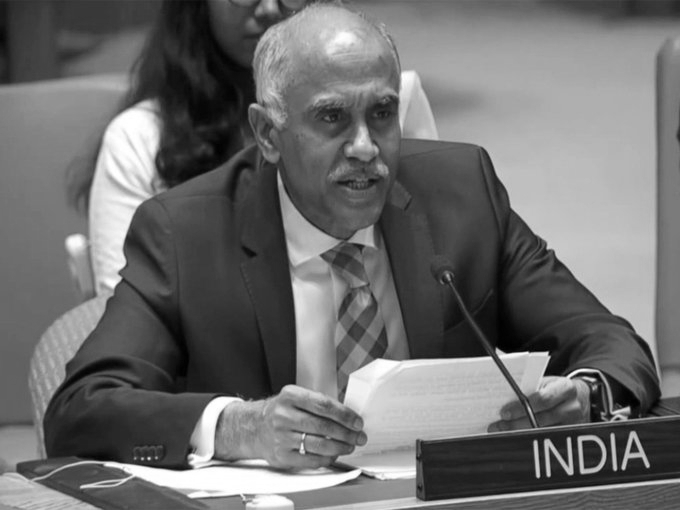
Speaking at the UNSC Open Debate on “Leadership for Peace,” India’s Permanent Representative to the UN, Ambassador Harish Parvathaneni , criticised the Council’s eight-decade-old structure, calling it outdated and largely frozen in time. He said the current configuration no longer reflects present-day geopolitical realities and increasingly acts as an obstacle to maintaining international peace and security.
“Structural and systemic elements in the eight-decade-old architecture of the Council act as retardants in efforts to maintain international peace and security,” Parvathaneni said, quoting UN Secretary-General Antonio Guterres: “We can’t create a future fit for our grandchildren with systems built for our grandparents.”
India highlighted that the Intergovernmental Negotiations (IGN) framework, established to advance Council reforms, has so far produced little concrete progress. Parvathaneni urged that it must now move toward time-bound, text-based negotiations to enhance representation from under-represented and unrepresented regions, in both permanent and elected categories of membership.
India’s criticisms of the UNSC include: its under-representation of major regions , ineffectiveness in addressing modern security threats , lack of transparency and accountability , and structural rigidity that impedes timely action. The country stressed that reforms are necessary not only for fairness but also to strengthen the Council’s legitimacy and ability to tackle contemporary global issues , including terrorism, cyber threats, nuclear proliferation, and climate-related conflicts.
The Indian envoy also acknowledged the political and procedural challenges to reform, including the veto power of the five permanent members, regional disagreements over seat allocation, and the complex consensus required under the UN Charter. He called for coalition-building, diplomatic engagement with P5 members, and incremental or innovative approaches to overcome these obstacles.
India has consistently advocated that a reformed Security Council could be more representative, inclusive, transparent, and effective , while highlighting its contributions to UN forces, where India contributes significantly. The country reiterated that achieving meaningful reforms is critical to ensuring a credible, fit-for-purpose multilateral system capable of responding to the challenges of the 21st century.