
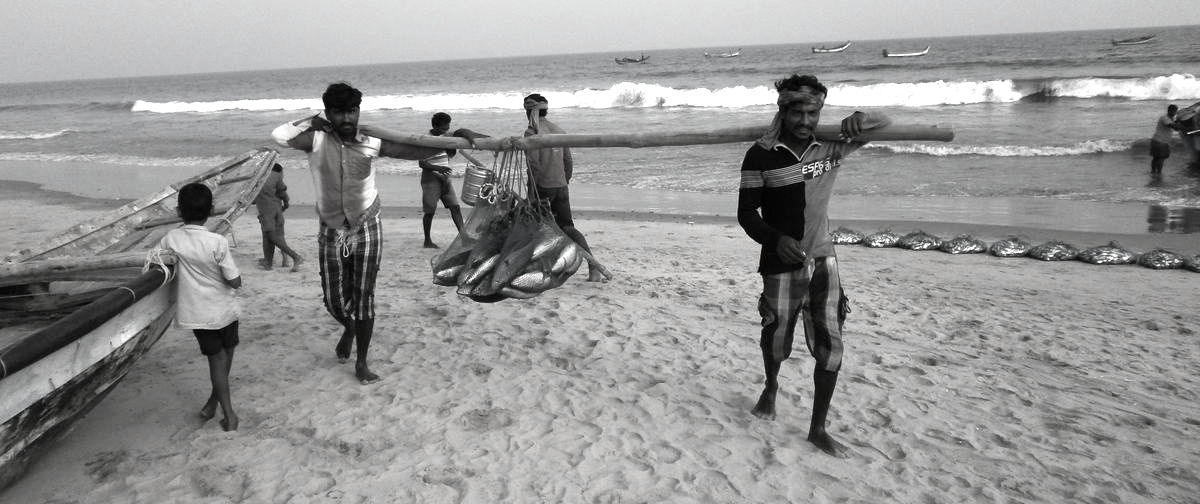
Uppada Fishermen Trained in Modern Fishing Practices in Kerala, Tamil Nadu
As part of the Andhra Pradesh government’s efforts to improve the livelihoods of coastal communities, a group of fishermen from Uppada in Kakinada district underwent a week-long training and exposure programme in Tamil Nadu and Kerala, focusing on modern, sustainable and economically viable fishing practices.
The programme was organised by the Andhra Pradesh Fisheries Department as part of the 100-day action plan announced by Deputy Chief Minister Pawan Kalyan. The initiative aimed to study advanced technologies and best practices adopted in neighbouring coastal states and explore their replication in Uppada and the Kakinada coastal belt. The programme was funded through departmental allocations of the Fisheries Department.
A total of 60 traditional fishermen from Uppada participated in the programme. They were divided into two batches and deputed to Tamil Nadu and Kerala on December 8. While Fisheries Department officials coordinated the visits, the fishermen received hands-on training and field-level exposure from experts at leading marine research institutions. The training programme concluded successfully after one week.
According to officials, the core objective of the programme was to enable fishermen to achieve sustainable economic development by adopting scientific methods in fishing, aquaculture and post-harvest handling, without depleting marine resources. The training covered cage culture, reef culture, marine biodiversity conservation, scientific fisheries management and modern marketing systems.
The programme combined classroom sessions with field visits. Training began with detailed presentations explaining the technologies and management models followed in Tamil Nadu and Kerala, followed by on-site demonstrations at fishing harbours, hatcheries and fish markets.
The first batch of fishermen visited the Central Salt and Marine Chemicals Research Institute (CSMCRI) near Mandapam in Tamil Nadu. Marine scientists at the institute provided training on cage culture and reef culture, explaining both artificial and natural methods of fish farming in open waters.
The fishermen were introduced to the use of hatchery-produced fish seed, formulated feed and scientific monitoring of fish growth, health and survival. Experts also explained how cage and reef culture can increase fish availability while reducing pressure on natural fishing grounds.
Special sessions were held on marine biodiversity conservation, with scientists highlighting the importance of protecting coral reefs, avoiding destructive fishing practices and following seasonal fishing bans to ensure long-term sustainability of marine resources.
As part of the exposure visit, the fishermen toured the Golden Marine Harvest hatchery in Villupuram district, where they studied modern techniques used for fish seed production and incubation. They were also taken to an advanced fish market near Marina Beach in Chennai, equipped with cold storage, hygienic handling facilities, grading and auction systems, waste management mechanisms and an organised supply chain. Officials said the visit helped the fishermen understand how modern infrastructure and clean marketing practices can significantly improve incomes.
The second batch of fishermen visited Kerala, where they underwent three days of training under the supervision of experts at the National Institute of Post Harvest Technology (NIPHT). The training focused on the use of technology in fishing operations, post-harvest handling and methods to ensure stable and profitable income.
The fishermen also visited the Model Fishing Harbour at Munambam, where they observed advanced net-making techniques, quality control standards and organised marketing systems. They were shown modern methods of fish egg incubation and hatchery operations for different fish species.
Officials said the Kerala visit gave fishermen direct exposure to how scientific practices, value addition and proper post-harvest management can improve product quality and enhance market value.
Deputy Chief Minister Pawan Kalyan had earlier instructed Fisheries Department officials to study the feasibility of adopting similar technologies and infrastructure in Andhra Pradesh. Based on the learnings from Tamil Nadu and Kerala, officials are expected to examine the scope for introducing cage culture, reef culture, improved harbours and modern fish markets in Uppada and Kakinada coastal areas.
Officials said the programme was designed to train grassroots-level fishermen so that the knowledge gained could be directly applied at the village level, leading to improved incomes and long-term conservation of marine resources.
The department said similar capacity-building initiatives may be taken up in the future as part of the government’s broader plan to strengthen the fisheries sector and enhance the livelihoods of coastal communities.