
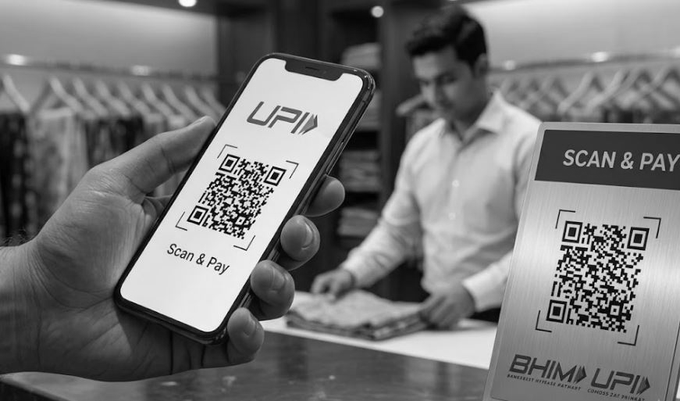
UPI Fee Row: Congress Sees US Pressure, Centre Says Charge Is On Merchants, Not Users
The government’s decision to introduce a 0.4 per cent Merchant Discount Rate (MDR) on certain high-value UPI merchant payments has triggered a fresh political confrontation, with Opposition parties alleging that the move reflects pressure from the United States.
The new framework will take effect from October 15 and apply to specified person-to-merchant UPI transactions above ₹2,000. The MDR will be capped at ₹300 per transaction. Person-to-person transfers and UPI payments of up to ₹2,000 will remain free.
Congress general secretary Jairam Ramesh questioned the rationale behind the 0.4 per cent rate and alleged that the decision could help American card companies compete with UPI. He pointed to earlier criticism from the US Trade Representative of India’s zero-MDR model and asked whether the new rate was linked to pressure from the US payment industry.
Ramesh also attacked Prime Minister Narendra Modi, describing the move as “Narendra’s Ongoing Trump Appeasement”, while linking the UPI decision to wider US-India trade and immigration tensions. These remain political allegations by the Congress and have not been established as the reason for the government’s decision.
TMC MP Saugata Roy backed the criticism, arguing that although customers are not directly charged, merchants could face higher costs. RJD MP Manoj Jha went further, alleging that the government had bowed to “American imperialism” and questioning why the UPI system was being changed after years of promoting digital payments.
The government, however, has maintained that customers will not pay the MDR. The Finance Ministry has said the charge belongs to the merchant-payment ecosystem and that consumers will continue to have unlimited free UPI usage. The BJP has also accused the Opposition of spreading misleading information about the policy.
The policy is being presented as a way to create a more sustainable financial model for UPI, with funds supporting payment infrastructure, cybersecurity and other ecosystem requirements.
The debate now goes beyond the 0.4 per cent rate. It raises a larger question over who ultimately bears the cost of digital payments and how India should finance one of the world’s largest real-time payment systems.