
Union Minister Somanna Calls for Sustainable Water Management at High-Footfall Pilgrimage Sites
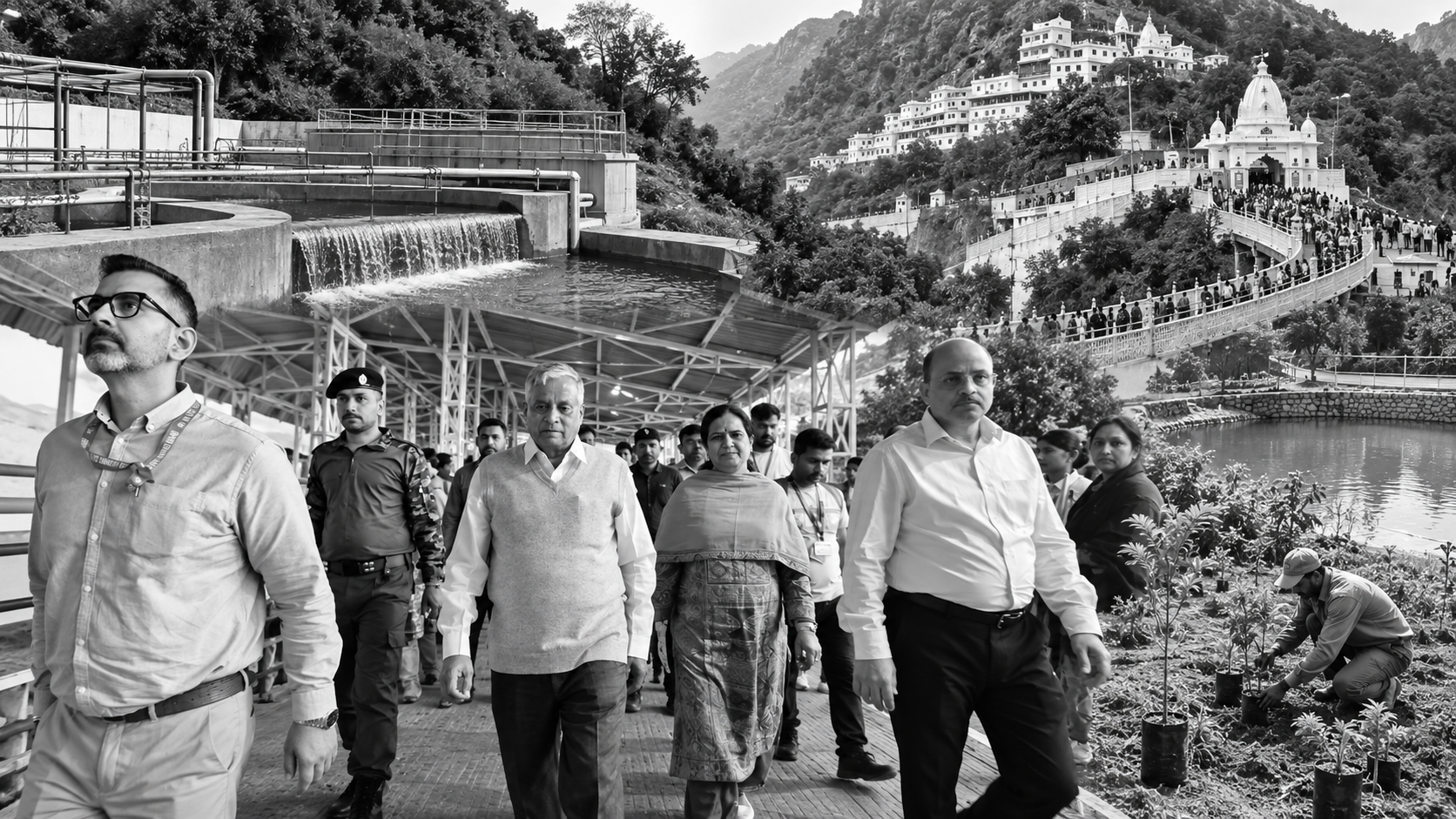
Union Minister of State for Railways and Jal Shakti V Somanna on Saturday stressed the need for sustainable water management and environmental conservation in pilgrimage areas that receive large numbers of visitors throughout the year, during a review of water conservation and environmental sustainability initiatives undertaken by the Shri Mata Vaishno Devi Shrine Board (SMVDSB) in Katra.
Somanna reviewed measures being implemented to conserve water resources and maintain the ecological balance around the shrine atop the Trikuta Hills in Reasi district. Alok K Maurya, Additional Chief Executive Officer of the Shrine Board, briefed him on rooftop rainwater harvesting, groundwater recharge, liquid sewage treatment and afforestation initiatives.
The focus assumes significance given the scale of the pilgrimage. Official Shrine Board data shows 69.79 lakh pilgrims visited the shrine in 2025, compared with 95.22 lakh in 2023 and 94.84 lakh in 2024. Annual footfall has risen sharply since the Board began managing the shrine in 1986, when 13.96 lakh pilgrims visited. The figure crossed one crore in 2011, reaching 1.0115 crore, and rose to 1.0495 crore in 2012.
The sustained footfall places pressure on drinking water, sanitation and sewage-treatment infrastructure, particularly during peak pilgrimage periods. To address this, the Board has incorporated rainwater-harvesting systems at several facilities, including buildings associated with the Shri Mata Vaishno Devi Institute of Medical Excellence and the SMVD Narayana Superspeciality Hospital at Kakryal. Its Forest Wing has also developed water-harvesting ponds, dry-rubble stone works and vegetative check dams to support groundwater recharge and reduce soil erosion.
Wastewater management is another key component. The Board operates sewage-treatment infrastructure and continues to strengthen capacity, including a 30-KLD Membrane Bio Reactor-based STP at Banganga. Treated sewage water is reused for non-potable purposes, including flushing, landscaping and track-related activities. Treated water stored at Hut, Thanda Nalla and Himkoti is also planned for forest-fire control and slope wetting.
The Board’s environmental programme includes extensive afforestation, with more than 1.5 lakh saplings planted annually according to recent accounts, alongside ecosystem restoration and Banganga river rejuvenation measures.
The initiatives have received national recognition. The Board was felicitated under the Jal Prahari Samman in 2023 and received the Jal Yodha Samman in 2026 for water-management and conservation efforts.
Somanna appreciated the Board’s work in water conservation, wastewater management and afforestation, stressing that sustainable resource management is essential at high-footfall pilgrimage destinations. After the review, he and his spouse paid obeisance at the Vaishno Devi shrine, officials said.