
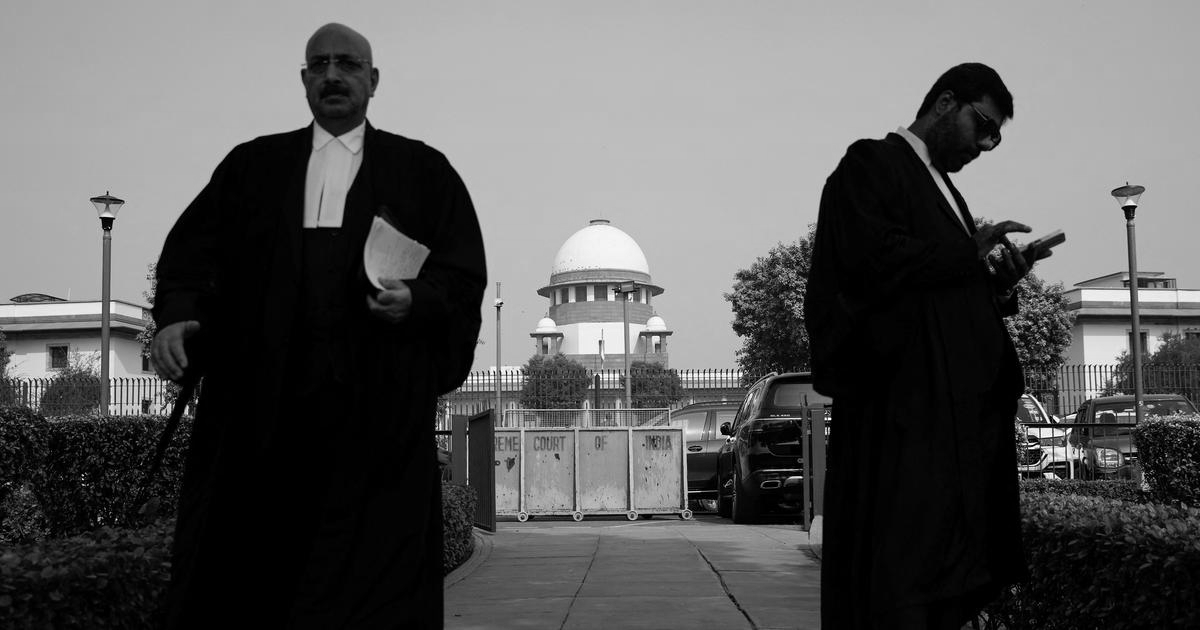
Union Cabinet Approves Expansion of Supreme Court Strength from 34 to 38 Judges
The Union Cabinet , chaired by the Prime Minister, has approved a proposal to expand the Supreme Court of India’s sanctioned strength from 33 to 37 judges, excluding the Chief Justice of India , taking the total strength to 38 including the CJI.
The decision will be implemented through the proposed Supreme Court (Number of Judges) Amendment Bill, 2026 , which will amend the Supreme Court (Number of Judges) Act, 1956 and is expected to be introduced in the upcoming session of Parliament.
At present, the Supreme Court functions with 34 sanctioned posts, including the CJI, but is operating with two existing vacancies , further affecting its capacity to handle cases efficiently.
The move comes amid a significant judicial burden, with reports indicating over 92,000 pending cases across different categories including constitutional, civil, and criminal matters. Some reports also note that the court’s internal workload analysis shows a large number of matters pending before different bench formations, including over 1,200 cases before two-judge benches , around 160 before five-judge benches, and several constitutional matters before larger benches.
According to official and media sources, the proposal follows a recommendation from the Chief Justice of India , who had sought an increase in judge strength earlier this year to improve bench availability and reduce delays in hearings.
Internal assessments cited in reports also suggest that the Supreme Court had examined a requirement of up to 10 additional judges (taking strength to 43 excluding the CJI) , though the Cabinet has cleared a lower increase of four judges at this stage.
The Supreme Court’s structure has evolved significantly since independence. At its inception under the Constitution in 1950, it consisted of the Chief Justice and seven judges, with Parliament empowered under Article 124 to expand its strength. Over time, the number has been increased through amendments in 1956, 1960, 1986, 2009, and 2019, when it was last raised to 33 judges (excluding the CJI).
In its current functioning, the Supreme Court hears cases through division benches of two judges , three-judge benches , and larger constitutional benches of five, seven, or nine judges , depending on the complexity of the legal questions involved.
The government has stated that the expansion is intended to improve judicial efficiency, reduce pendency, and allow more benches to operate simultaneously, thereby speeding up the delivery of justice.
The estimated additional expenditure for the expansion, including salaries, infrastructure, and support staff, is expected to be met from the Consolidated Fund of India , with some reports placing the annual cost impact at around ₹15 crore.
Once the Bill is passed by Parliament and receives presidential assent, the sanctioned strength of the Supreme Court will formally rise to 38 judges, including the Chief Justice of India.
The proposal now awaits legislative consideration in Parliament.