
Union Budget Sets India on Path to Rare Earth Manufacturing Independence
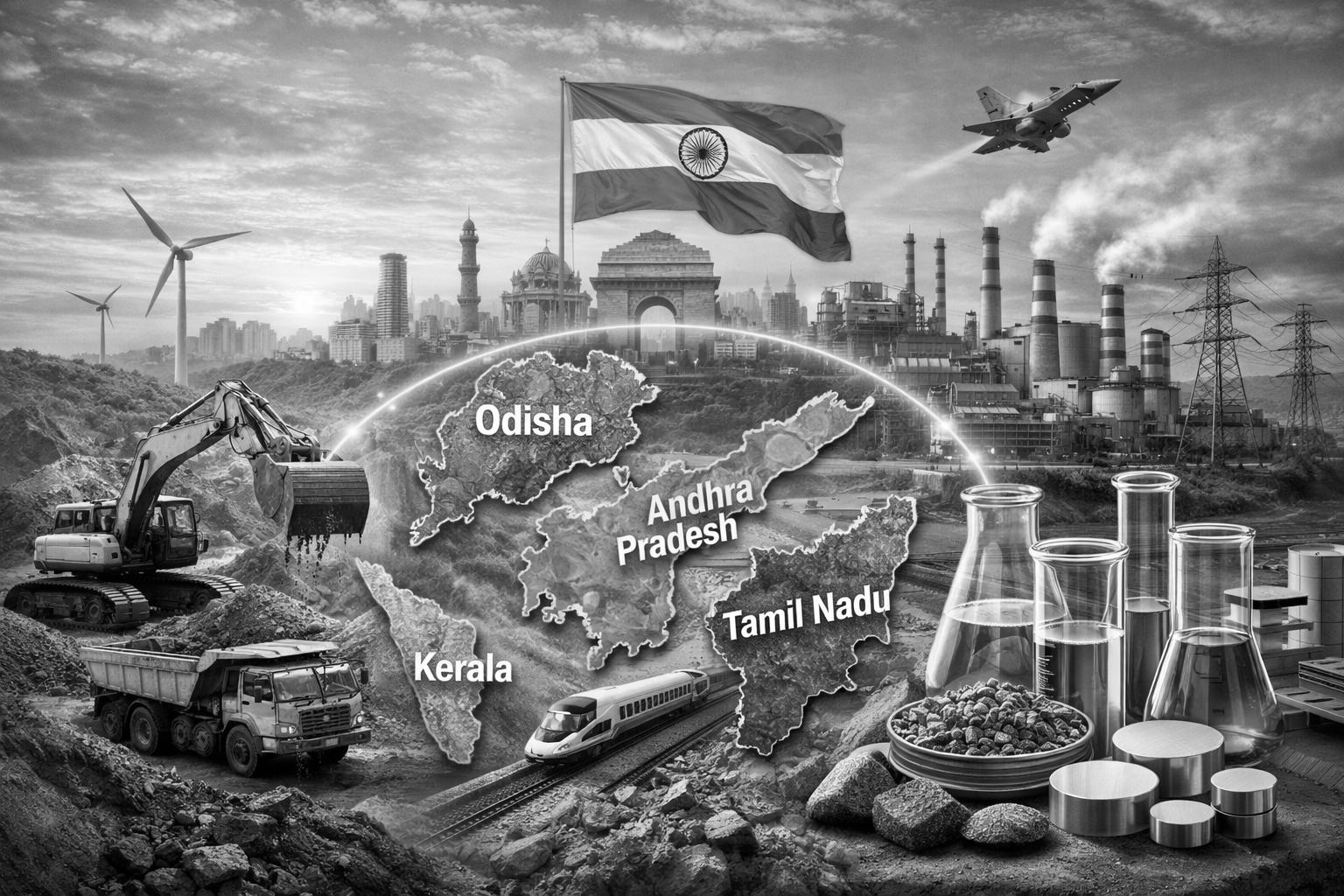
India’s push into the rare earth elements sector gained fresh momentum with the Union Budget 2026–27 announcement of dedicated Rare Earth Corridors across mineral-rich coastal states, including Odisha, Kerala, Andhra Pradesh and Tamil Nadu . The move is part of a broader strategy to strengthen India’s domestic capacity in critical minerals and reduce dependence on imports in strategically important sectors. Industry bodies such as the Confederation of Indian Industry have welcomed the decision, stating that integrated corridors could help the country build long-term leadership in rare earth magnets and advanced materials manufacturing.
Rare earth elements are essential for modern technologies including electric vehicles , wind turbines, electronics, robotics , and defence systems . Although India holds significant reserves, its production and processing capacity remains limited compared to global leaders. The newly proposed corridors aim to develop a complete value chain within the country covering mining , mineral concentration, chemical separation, metal and alloy production, research, and magnet manufacturing thereby moving India from being primarily a raw material holder to a value-added producer.
The policy push aligns with India’s broader goal of self-reliance in critical technologies. At present, the country imports a large share of rare earth magnets used in EV motors, renewable energy systems, and precision electronics, leaving domestic industries exposed to global supply disruptions. By strengthening domestic infrastructure and encouraging investment and technology partnerships, the government hopes to enhance supply-chain security , support clean energy expansion, and reinforce national security capabilities.
However, India faces major challenges in becoming a global leader in this sector. The most significant hurdle is the technological gap in processing and separation. Rare earth elements occur together in nature and require highly advanced chemical extraction techniques to isolate individual materials, an area where China built dominance over decades. China currently accounts for around 60% of global rare earth production and controls nearly 92% of the world’s processing and refining capacity , in addition to leading magnet manufacturing. This overwhelming control across the value chain gives China a powerful cost, technology, and scale advantage, making it difficult for emerging producers like India to compete quickly.
Environmental and regulatory issues add further complexity. Rare earth processing generates chemical waste, and monazite sands often contain radioactive thorium, requiring strict safety and disposal systems. Projects must navigate environmental clearances, local concerns, and compliance costs, which can delay implementation. At the same time, the sector demands substantial capital investment in processing plants, metal refineries, and magnet factories, while investors remain cautious due to long gestation periods and volatile global prices.
India also needs to strengthen research and development , build a skilled workforce in advanced metallurgy and chemical engineering, and expand domestic downstream industries that consume rare earth magnets. Without strong demand from EV, renewable energy, and electronics manufacturers, new production facilities may struggle to operate at scale. Coordination across multiple ministries and regulatory frameworks further complicates project execution.
In essence, India’s rare earth ambitions are not constrained by resource availability but by the need to build technology, infrastructure, capital, and industrial ecosystems at global scale. The Rare Earth Corridors represent a strategic step toward that transformation, aiming to position India as a more significant player in the global critical minerals supply chain while reducing long-term external dependence.