
UN Warns Of Escalating Conflict In Western Sahara As 35-Year Peacekeeping Mission Ends
The United Nations has warned of a possible escalation of hostilities in Western Sahara after its 35-year peacekeeping mission officially ended, raising concerns about regional stability and the future of the disputed territory. UN Secretary-General António Guterres said he remained concerned about the security situation and urged all parties to exercise restraint following the failure of the Security Council to renew the mission's mandate.
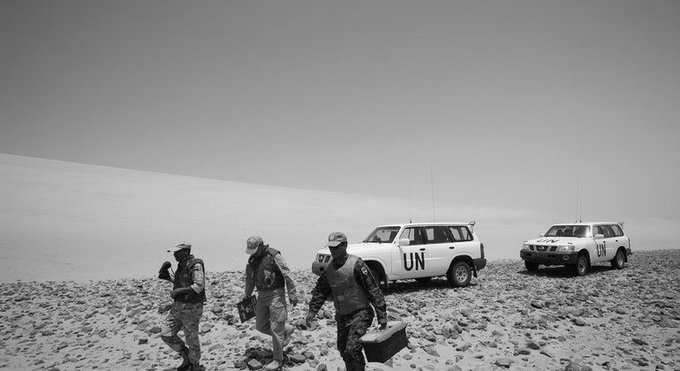
The United Nations Mission for the Referendum in Western Sahara (MINURSO) began winding down on November 1 after the Security Council failed to reach an agreement on extending its mandate. Established in 1991 following a ceasefire between Morocco and the Algeria-backed Polisario Front, the mission was tasked with monitoring the truce and preparing a referendum to determine the territory's future. However, the proposed referendum never took place because of disagreements over voter eligibility and the terms of a political settlement.
Guterres confirmed that the mission had entered its liquidation phase, with equipment and assets being transported back to troop-contributing countries. He said the UN remained committed to supporting dialogue and finding a peaceful resolution to the decades-long dispute, despite the conclusion of MINURSO's peacekeeping operations.
The latest developments followed a contentious Security Council meeting on October 30. The United States-sponsored resolution received 11 votes in favour but was vetoed by Russia, while China, Pakistan and Somalia abstained. The proposal sought to renew the mission for another year, rename it and make Morocco's autonomy plan the basis for further negotiations. A competing Russian resolution seeking a straightforward one-year extension was also defeated, receiving only three votes in favour, one against and 11 abstentions.
The dispute centres on Western Sahara, a former Spanish colony in northwest Africa that Morocco has considered part of its territory since 1975. The Polisario Front, which represents the Indigenous Sahrawi people and is backed by Algeria, seeks independence and the establishment of the Sahrawi Republic. Morocco instead proposes autonomy for the territory under Moroccan sovereignty.
Morocco's royal palace described the failure to renew MINURSO's mandate as a significant development, while Algeria expressed deep regret, accusing Washington of excessive bias towards Morocco. The Polisario Front also voiced concern over the Security Council deadlock. US Ambassador to the UN Mike Waltz defended Washington's proposal, arguing that the status quo was unacceptable. Russia's ambassador Vassily Nebenzia, however, said the US draft favoured one side and warned against prejudging questions of sovereignty.
The mission's closure has also renewed attention on the humanitarian consequences of the unresolved conflict. In Algeria's Tindouf region, the Polisario administers five refugee camps where more than 160,000 people are estimated by Algeria and the movement to be living. Morocco disputes those figures, while the UN refugee agency assists around 90,000 vulnerable refugees. More than 80 per cent of camp residents reportedly depend on food assistance, with families facing water shortages and difficult living conditions.