
UN General Assembly Backs World Court Climate Ruling, US Among Opponents
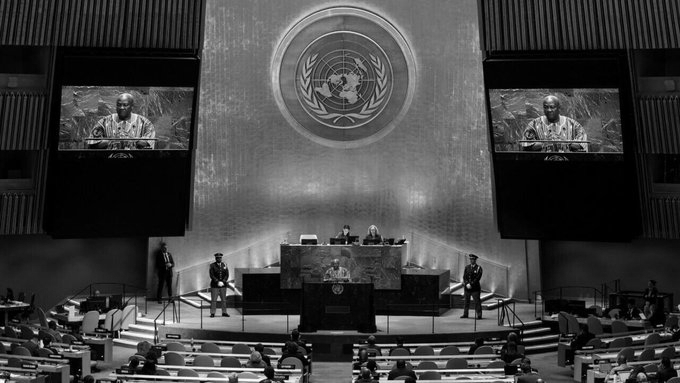
The United Nations General Assembly (UNGA) has overwhelmingly adopted a nonbinding resolution endorsing a landmark International Court of Justice (ICJ) advisory opinion on climate responsibility, in a major diplomatic push for stronger global climate accountability despite opposition from the United States and several fossil fuel-producing nations.
The resolution passed with a 141–8 vote and 28 abstentions , reaffirming that states have legal obligations to prevent climate harm and align policies with limiting global warming to 1.5 degrees Celsius . It calls for stronger national climate action plans , faster phase-out of fossil fuel subsidies , and compliance with international commitments under the Paris Agreement .
Initiated by Vanuatu and supported by other small island developing states , the draft underwent extensive negotiations to secure broader backing. Stronger provisions, including an International Register of Damage , were removed during consultations to achieve consensus among UN members.
The resolution formally endorses the ICJ’s 2025 advisory opinion, which states that failure to address climate change may violate international law and human rights obligations. Legal experts say it is already influencing climate litigation and international policy debates .
The United States , along with Russia, Iran, Saudi Arabia, Israel, and others, opposed the measure. US Deputy Ambassador Tammy Bruce called it “highly problematic” , arguing it imposes political constraints on energy policy and risks harming domestic industry.
UN Secretary-General António Guterres welcomed the vote as a strong affirmation of climate justice and international law , reiterating that fossil fuels are the primary driver of global warming and urging an accelerated energy transition.
Small island nations such as Vanuatu and Tuvalu warned that rising seas, droughts, and food insecurity already threaten their survival, stressing that countries least responsible for emissions are bearing the greatest impact.
Despite its nonbinding nature, the resolution is increasingly seen as a foundational reference for future climate lawsuits and negotiations , highlighting widening divisions between vulnerable states demanding accountability and major emitters resisting stricter legal interpretations.