
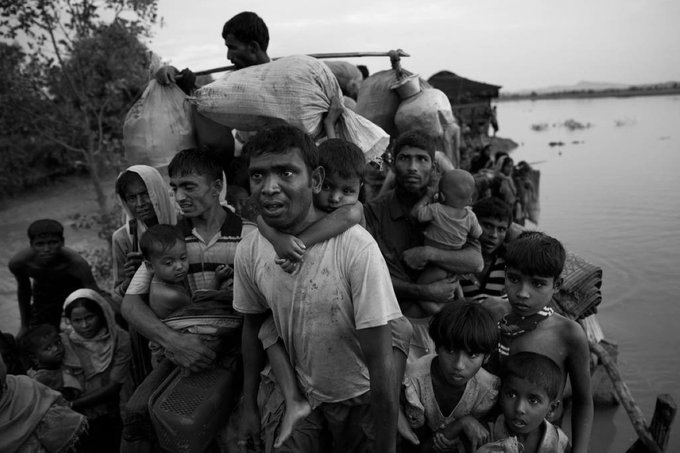
UN Court Rules Myanmar Committed Genocide Against Rohingya During 2017 Military Crackdown
The International Court of Justice (ICJ), the United Nations' top court, on Thursday ruled that Myanmar committed genocide against the Rohingya Muslim minority during its 2017 military crackdown, marking the first time the court has held a state responsible for committing genocide. The landmark judgment was delivered by a 9-6 majority in a case brought by Gambia.
ICJ President Yuji Iwasawa said evidence showed Myanmar's security forces killed approximately 10,000 Rohingya civilians, perpetrated widespread sexual violence, committed extreme acts of violence against children and attacked people fleeing towards Bangladesh.
The court found that Myanmar's actions demonstrated genocidal intent, concluding that the only reasonable inference from the evidence was an intention to destroy a substantial part of the Rohingya population. It identified four genocidal acts, including mass killings, forced displacement, serious physical and mental harm, and measures preventing births. The judges also noted that Rohingya women were subjected to a birth-control programme.
The proceedings stem from military operations launched in October 2016 and intensified in August 2017 after attacks by the Arakan Rohingya Salvation Army (ARSA) on security posts. Myanmar described the offensive as a counterterrorism operation. However, the crackdown forced more than 730,000 Rohingya to flee to Bangladesh.
Gambia filed the case in 2019, backed by the Organisation of Islamic Cooperation, accusing Myanmar of violating the 1948 Genocide Convention. The court also found that Myanmar failed to fulfil its obligations to prevent and punish genocide, including failing to act against the risk posed by armed civilians participating in the campaign.
The ICJ ordered Myanmar to investigate suspected perpetrators, facilitate the safe, voluntary and dignified return of refugees, restore or replace damaged property, trace missing people, ensure proper burials and provide physical and psychological rehabilitation. Compensation will be determined separately.
The crisis remains unresolved, with approximately 1.2 million Rohingya in Bangladesh and more than 1.3 million displaced across South and Southeast Asia. The community also faces shrinking humanitarian assistance and continued insecurity in Rakhine State.
Amnesty International welcomed the verdict, calling for effective investigations and accountability. The judgment does not establish individual criminal guilt, which must be pursued through separate legal proceedings.
The ruling could influence other genocide cases, including South Africa's case against Israel over Gaza. Although ICJ judgments are legally binding, enforcement remains dependent on international pressure and the UN Security Council.