
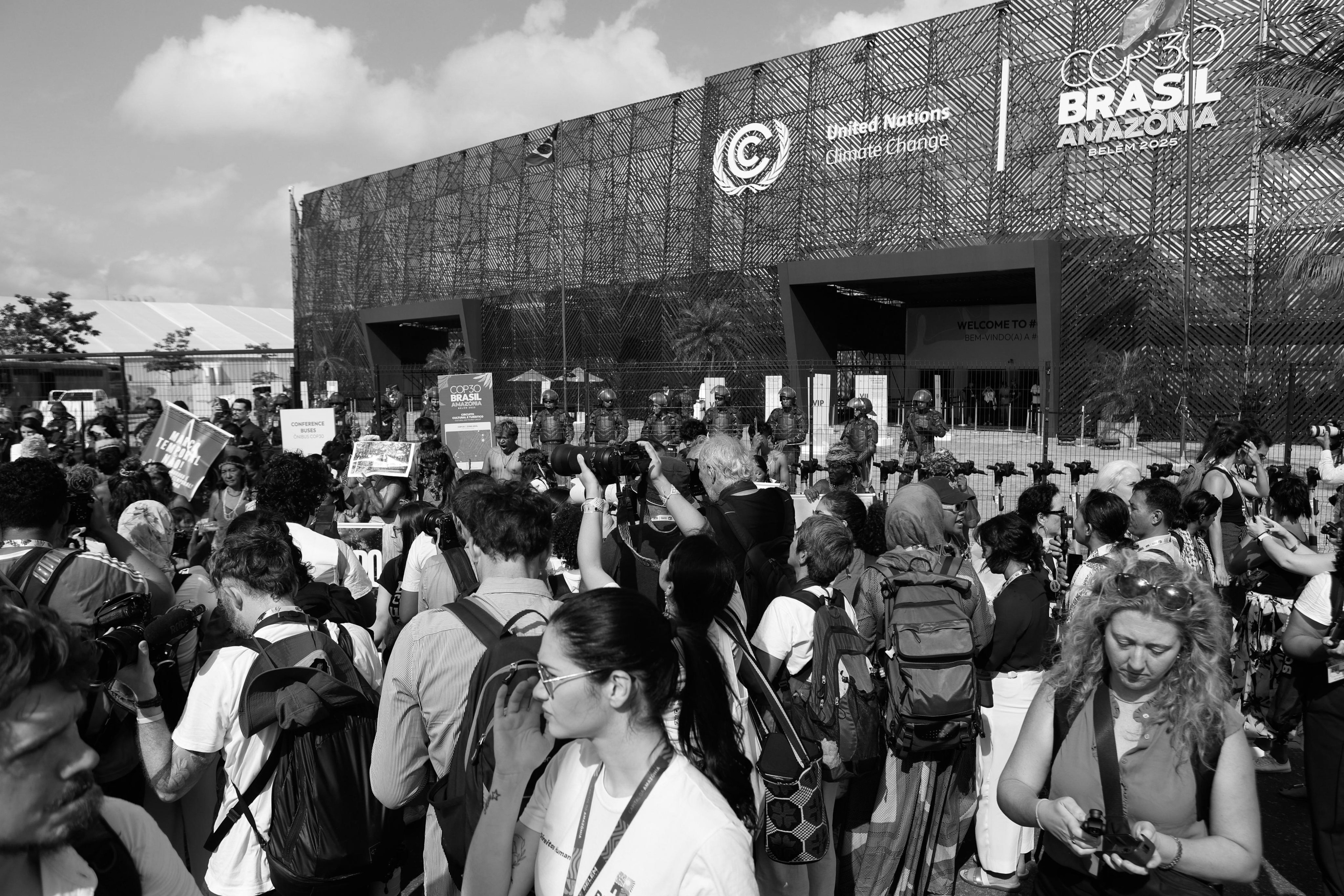
UN COP30 releases draft Belem Political Package as Climate talks enter final phase
The UN COP30 Climate Summit has entered its critical final stage with the release of the draft Belem Political Package, a comprehensive set of proposed decisions aimed at guiding global climate action and shaping the next cycle of international climate commitments. The summit, held in Belem, Brazil’s Amazon region from November 10 to 21, is attended by negotiators from more than 190 countries.
The draft, prepared by the COP30 Presidency, is intended to serve as the summit’s main outcome document. COP30 President Andre Correa do Lago, in a letter to participating nations, urged delegates to work “side by side, in task-force mode” to finalise the package swiftly, fairly, and with care. Presidency-led deliberations on the draft are expected to conclude on Wednesday, with remaining technical and ministerial documents likely ready by Friday.
Titled “Global Mutirão: Uniting Humanity in a Global Mobilization Against Climate Change,” the draft recognises climate change as a common concern of humankind and stresses the importance of upholding human rights obligations while implementing climate action.
On Nationally Determined Contributions (NDCs), the draft commends 123 countries that have submitted updated targets for the next policy cycle and urges remaining nations, including India, to submit revised targets promptly. India’s Environment Minister Bhupender Yadav said the country plans to publish its 2035 NDC by December.
Climate finance is a central element of the package. It calls for scaling up support for developing countries to USD 1.3 trillion per year by 2035, highlighting that the existing USD 100 billion annual goal remains unmet, with only around USD 60 billion delivered on average. The draft encourages mobilising resources through initiatives like the Baku-to-Belem Roadmap and emphasises predictability, clarity, and flexibility in finance flows. The Green Climate Fund has recently approved USD 19.3 billion for 336 projects across 134 developing countries.
The package also addresses other core Paris Agreement issues, including:
• Climate-related trade restrictions and transparency measures.
• Articles 9.1 and 13, concerning finance and reporting obligations.
• The Global Goal on Adaptation, supporting vulnerable countries.
• The global stocktake, which monitors collective progress.
• Coordination through the Standing Committee on Finance and the Global Environment Facility.
Support and Reservations
Developing countries, particularly the G77, LMDCs, LDCs, and small island states, support the package, citing the need for predictable and grant-based climate finance to meet mitigation and adaptation goals. Brazil, as COP30 host, is actively promoting the package through initiatives such as the COP30 Circle of Finance Ministers.
However, several developed nations, including the EU, UK, Canada, and Norway, have expressed reservations. They are cautious about binding finance commitments and oppose strict ex-ante reporting under Article 9.5, preferring flexibility in how funds are mobilised. Disagreements also exist over adaptation finance, “just transition” measures, and how quickly developing countries should shift away from fossil fuels. Some developing nations, such as Cuba, have raised concerns that human-rights language should be balanced with recognition of the right to development.
The Paris Agreement, adopted in 2015, aims to limit global temperature rise well below 2°C, while pursuing efforts to keep it within 1.5°C above pre-industrial levels. The world has already warmed by 1.3°C, and the UN Emissions Gap Report warns that current policies could push temperatures up by 2.8°C by 2100, far above safe limits.
Looking ahead, COP30 negotiators are already considering the agenda for COP31 and COP32, which will focus on implementing COP30 decisions, reviewing NDC progress, mobilising finance, and strengthening adaptation and mitigation measures. The Belem Political Package represents a key step in uniting countries, businesses, and civil society to accelerate climate action while supporting developing nations in their transition to low-carbon pathways.