
Ukraine War Could Repeat Bengal Famine’s Tragedy For Global South, India Warns At UNSC
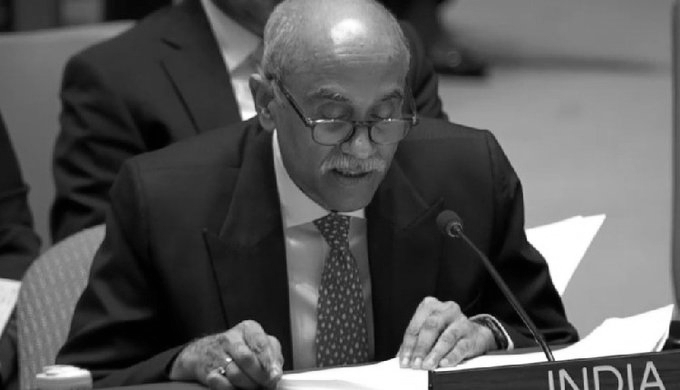
India has invoked the 1943 Bengal famine, which killed more than three million people, at the United Nations Security Council (UNSC), warning that the Russia-Ukraine war could trigger devastating food insecurity across the Global South. India’s Permanent Representative to the UN, Ambassador Harish Parvathaneni, delivered the warning on November 23 at a high-level briefing on protecting critical energy infrastructure and Black Sea food supply routes.
“The costs of conflict are not shared equally,” Parvathaneni said, pointing out that developing countries were bearing the brunt of shortages of food, fuel, fertilisers and energy. Drawing parallels with World War II, he said the Bengal famine demonstrated how people unconnected to a conflict could become victims of distant wartime decisions.
The Ukraine conflict, now in its fifth year, has disrupted interconnected supply chains, affecting agriculture, transportation, energy supplies and humanitarian access. Parvathaneni noted that the Black Sea region and India together account for nearly one-fifth of global cereal production, while Russia and Ukraine contribute almost one-quarter of global wheat, maize and barley exports.
India urged the Security Council to prioritise humanitarian access, protect civilian infrastructure and ensure freedom of navigation. It also called for an end to attacks on commercial vessels and seafarers, citing the deaths of Indian crew members in Black Sea incidents. India is engaging both sides on shipping safety and grain corridors and highlighted its Group of Friends on Safety and Security of Shipping and Seafarers, launched with Liberia in September to support the International Maritime Organisation and International Labour Organisation.
The warning comes amid mounting concerns over grain shipments. World Food Programme (WFP) Executive Director Luke Lindberg told the Council that around 10 million tonnes of Russian and Ukrainian wheat, enough to feed an estimated 44 million people, could fail to reach global markets this year. He called for humanitarian corridors and warned against famines, weaponisation of food and attacks on humanitarian workers. The WFP also warned that shipping disruptions could put food assistance for another 7.3 million people at risk by mid-2027.
UN Under-Secretary-General Rosemary DiCarlo separately warned that drone attacks were threatening Black Sea navigation and disrupting grain exports, while attacks on Ukrainian energy infrastructure were worsening civilian hardship ahead of winter.
India cited its humanitarian assistance, including wheat to Afghanistan, rice to Sudan and aid to Palestine. Recalling Prime Minister Narendra Modi’s call to move from “endless war to the end of war”, Parvathaneni said, “For the Global South, peace is not in the abstract. It is achieved when hungry mouths are fed, when a ship reaches a port, and when a seafarer returns home safe.”