
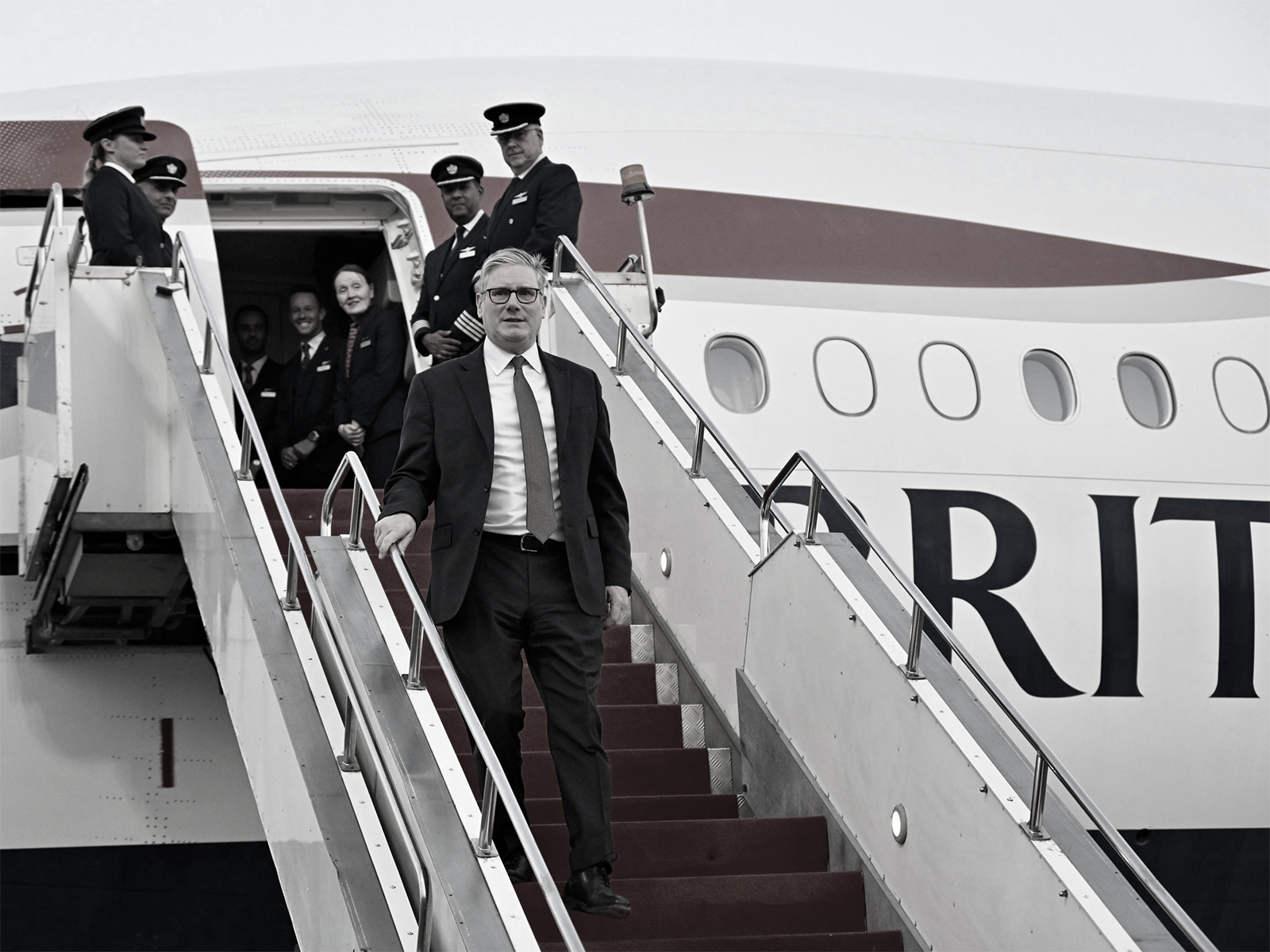
UK Prime Minister Keir Starmer’s Surprise Visit to India Raises Questions Beyond Optics
In an unexpected diplomatic move, UK Prime Minister Keir Starmer arrived in Mumbai on October 8, 2025 , on what officials describe as his first visit to India — a trip announced less than a week in advance . The brevity and scope of the visit — just two days split between Mumbai and Delhi — contrast sharply with the size of his delegation , a surprising 125 members , sparking speculation about what prompted such a large entourage on such short notice.
Starmer, who took office in July 2024 , is scheduled to meet Prime Minister Narendra Modi in New Delhi today , where the two leaders are expected to discuss trade, technology, and strategic cooperation under the Vision 2035 roadmap. While the visit is being presented as a gesture to deepen ties, the timing and intent have raised diplomatic eyebrows.
Timing and Geopolitical Undertones
Though the visit could be viewed as reciprocation for Prime Minister Modi’s London trip earlier this year, its timing — just weeks before Russian President Vladimir Putin’s planned India visit — invites questions about a possible ulterior agenda . Diplomatic observers suggest Starmer may be seeking to repair frayed ties with the West , especially the United States , amid tensions over trade and global alignments.
Some analysts even draw parallels with Boris Johnson’s 2022 visit to Kyiv , which reportedly delayed a potential Ukraine–Russia peace deal. While circumstances differ, the political choreography surrounding Starmer’s India trip — short, sudden, and symbolic — suggests more than routine diplomacy.
Optics and Authority
Starmer’s engagements in Mumbai included a visit to Yash Raj Films (YRF) studios, where he announced new UK–India film collaborations, and participation in a Premier League football event , highlighting cultural diplomacy. Yet, critics note that his political stature lacks the gravitas of past British leaders like Margaret Thatcher or Tony Blair , whose international pronouncements carried the weight of national consensus.
Without similar authority, Starmer’s ability to meaningfully influence India–UK ties may be limited — especially when much of the substantive work, such as ratifying the India–UK Free Trade Agreement (FTA) , remains pending.
FTA and the Limits of Symbolism
The FTA, formally signed in July 2025 , still awaits parliamentary ratification in both countries. Analysts caution that unless Delhi and Westminster move swiftly, the agreement may not take effect before late 2026 , reducing the visit’s practical impact.
For all its pomp, the trip risks being remembered as a gesture without gain — more about diplomatic optics than strategic progress — unless today’s talks between Modi and Starmer produce a breakthrough that accelerates the FTA’s implementation.