
UK Museum Wellcome Collection to Return 2,000 Historic Jain Manuscripts
The Wellcome Collection has announced plans to return more than 2,000 historic Jain manuscripts to the Jain community, in one of the largest restitutions of South Asian religious texts by a British institution.
The manuscripts, believed to be the largest collection of Jain texts outside South Asia , have been housed in London for more than a century. The agreement follows discussions between the Wellcome Collection, the Institute of Jainology and the University of Birmingham. A memorandum of understanding was signed on May 14, with a final legal agreement expected later.
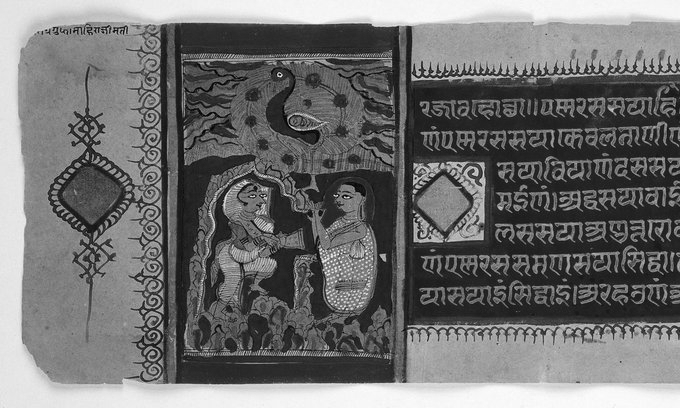
The collection includes manuscripts dating from the 15th to the 19th centuries covering religion, medicine, literature and culture in Prakrit, Sanskrit, Gujarati, Rajasthani and early Hindi. Among the texts are a 16th-century illustrated copy of the Kalpasutra and a 1688 manuscript believed to be the earliest surviving copy of Vaidyamanotsav , an early Hindi medical treatise by Nainsukh.
Another manuscript contains ideas linked to Mahatma Gandhi’s independence movement and criticism of British colonial rule in India.
According to the museum, more than half the collection was acquired during the colonial period by Sir Henry Wellcome , including nearly 1,200 manuscripts purchased in 1919 from a Jain temple in Punjab, now in Pakistan. The institution stated that several items had been obtained at low prices and against the interests of their original owners. Some manuscripts reportedly remain wrapped in newspapers used during their transport to Britain more than 100 years ago .
The manuscripts will initially be transferred to the Dharmanath Network in Jain Studies at the University of Birmingham for cataloguing, digitisation, translation and research access. The network is funded by Jain communities in India, the UK and the US.
Researchers Dr Kanhaiyalal Virji Sheth and Dr Kalpana Sheth catalogued much of the collection in the early 2000s through work supported by the Art Fund and Headley Fellowship. Officials involved in the project said the agreement could influence future discussions on the return of colonial-era cultural collections.