
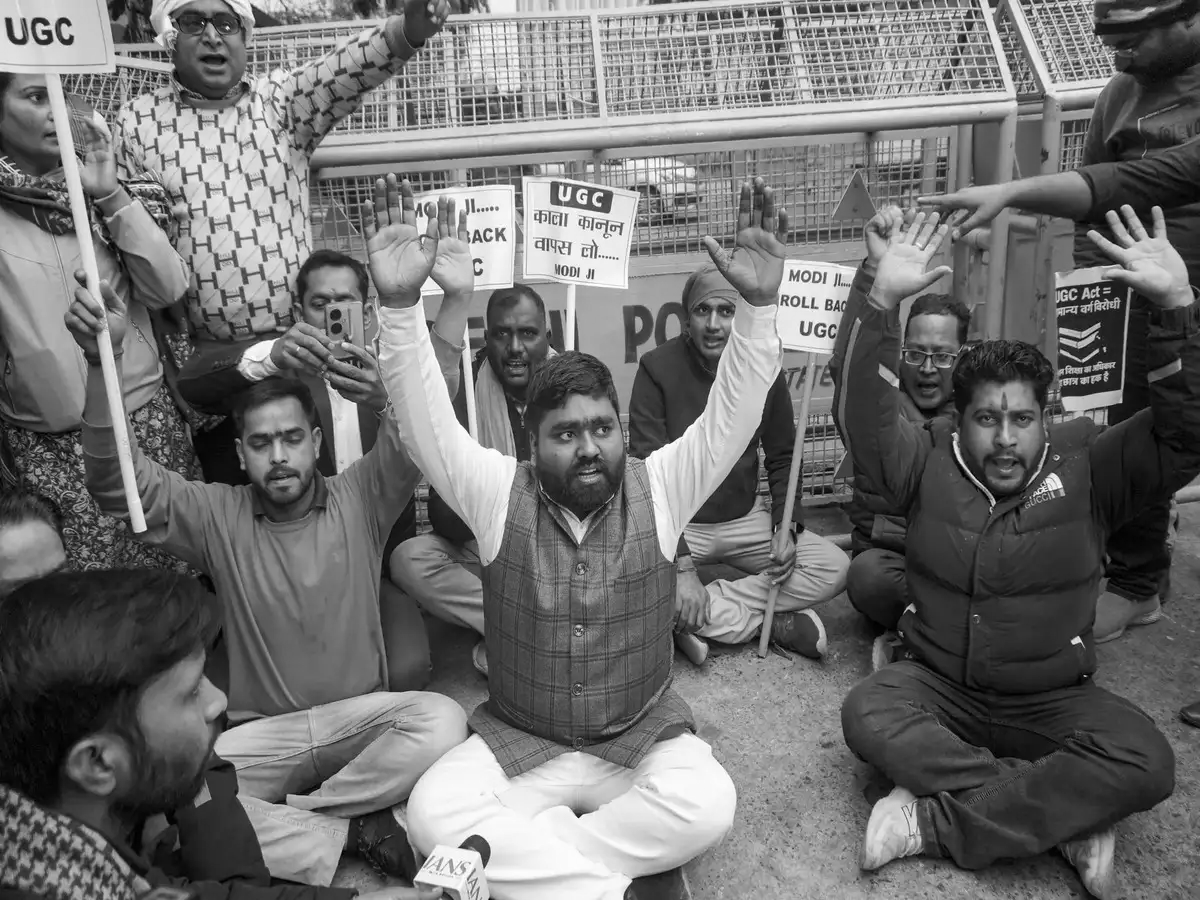
UGC Equity Rules Spark Protests, Court Challenge and Officer’s Resignation
The UGC’s Promotion of Equity in Higher Education Institutions Regulations, 2026 have set off a widening national controversy, triggering campus protests, a petition in the Supreme Court, and the resignation of a senior Uttar Pradesh civil servant, with opposition now emerging even from sections of BJP activists.
General category students have called for a large protest outside the UGC headquarters in Delhi, arguing that the new framework notified on January 13 could create “chaos” on campuses. The regulations require colleges and universities to establish special committees, equity monitoring teams, helplines and grievance redressal systems to address complaints of caste-based discrimination, particularly involving Scheduled Castes (SC), Scheduled Tribes (ST) and Other Backward Classes (OBC). Protest organisers say that while preventing caste bias is essential, the rules are “draconian” and prone to misuse. Alokit Tripathi, a PhD scholar at Delhi University, alleged that the onus of proof is shifted entirely onto the accused and warned that proposed monitoring squads would create an atmosphere of surveillance and mistrust.
Simultaneously, advocate Vineet Jindal has approached the Supreme Court challenging Regulation 3(c), which defines caste-based discrimination strictly as discrimination against SC, ST and OBC communities. The plea argues that the definition is exclusionary, denies safeguards to unreserved categories, and violates Articles 14, 15(1) and 21 of the Constitution. It seeks a caste-neutral definition and interim directions to ensure Equal Opportunity Centres, Equity Helplines and Ombudspersons are accessible to all students and faculty. The petition also cites past incidents such as anti-Brahmin and anti-Baniya slogans at JNU to argue that grievance systems must protect every caste identity.
Amid the backlash, Bareilly City Magistrate Alankar Agnihotri , a 2019-batch PCS officer, resigned on Monday, calling the UGC rules a “black law” that could fuel caste tensions and harm the academic environment. He emailed his resignation to Governor Anandiben Patel and District Magistrate Avinash Singh. Agnihotri alleged he was held hostage and verbally abused at the DM’s residence, claims dismissed as baseless by Singh.
Political reactions followed. Congress leader Ajay Rai and Samajwadi Party’s Praveen Singh Aron termed the episode serious and linked it to constitutional values and administrative dignity. Brahmin groups gathered in Bareilly, Mayor Umesh Gautam visited Agnihotri, and local BJP activists also voiced objections to aspects of the regulations. The Centre maintains the rules are meant to ensure fairness and accountability. The Supreme Court is expected to hear the matter soon.