
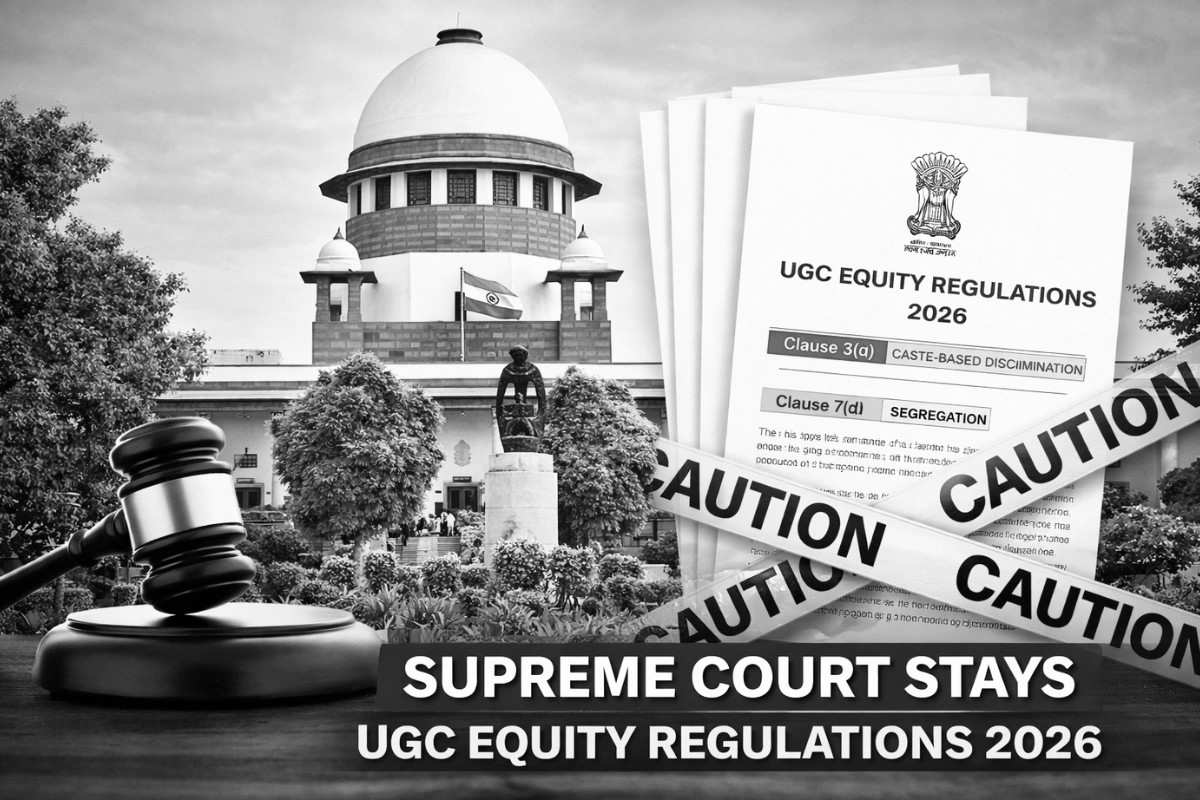
UGC Equity Regulations 2026: Supreme Court Concerns Force Centre to Reconsider Key Provisions
The Centre’s reconsideration of the University Grants Commission (UGC) Promotion of Equity in Higher Education Institutions Regulations, 2026, has opened the possibility of changes to a framework designed to curb discrimination on campuses. The move follows the Supreme Court’s decision to keep the regulations in abeyance after questioning their wording.
At the heart of the controversy is Regulation 3(1)(c), which defines “caste-based discrimination” as discrimination only on the basis of caste or tribe against members of Scheduled Castes, Scheduled Tribes and Other Backward Classes. The Supreme Court questioned why a separate definition was needed when Regulation 3(1)(e) already provides a broader definition of discrimination.
The Court also described parts of the framework as “prima facie vague”, warning that unclear provisions could be capable of misuse and have “very sweeping consequences.” It additionally questioned the exclusion of ragging, despite its being a common form of harassment in educational institutions.
These concerns are now central to the reconsideration. The Centre could examine the precision of definitions, safeguards against misuse, complaint procedures and the scope of prohibited conduct. However, as of August 20, no revised version has been announced.
The legal position remains settled. On January 29, the Supreme Court directed that the 2026 regulations remain in abeyance. Exercising its powers under Article 142 of the Constitution, it ordered that the 2012 UGC equity regulations continue to operate and remain in force until further orders. This ensured that students would not be left without an operative equity framework while the challenge continued.
On August 20, Solicitor General Tushar Mehta told a bench headed by Chief Justice Surya Kant that the regulations were under reconsideration. The Court asked the UGC to file a comprehensive counter-affidavit within four weeks, with petitioners allowed two weeks thereafter to file rejoinders.
Thus, the 2026 framework is neither finally struck down nor currently enforceable. The 2012 regulations remain operative, while the Centre and UGC reconsider the provisions and the Supreme Court reviews their legality.