


UAE Hit As Iran Warns Europe Could Be Next Target As US Plans Major Troop Shift
The latest escalation came on Tuesday when UAE air defences detected two ballistic missiles launched from Iran toward maritime areas near the country. Both missiles fell into the sea, according to reports. Iran rejected the accusation, with its Foreign Ministry calling the claim baseless.
Abu Dhabi responded by suspending all trade, commercial exchanges and financial transactions with Iran until further notice. The decision is a major step by the UAE, which has maintained deep commercial links with Iran despite political tensions and US sanctions. Trade between the two countries has been worth tens of billions of dollars in recent years, making the move significant for both sides.
Trump said there are currently no talks or negotiations scheduled with Tehran and claimed the strait is open and operating. Iran continues to dispute Washington's position.
The diplomatic route has narrowed sharply. A June US-Iran memorandum was supposed to halt fighting and give both sides 60 days to negotiate a wider agreement, including arrangements for Hormuz. That deadline has now expired without a final deal. Trump has rejected extending the arrangement, while Iran has threatened to adopt a fully offensive military posture if diplomacy fails.
CNN now reports that Trump has shifted away from an approach aimed at quickly overwhelming Iran and toward a longer strategy of attrition, designed to put sustained economic and military pressure on Tehran. His administration has also instructed its negotiating team, including JD Vance, Steve Witkoff and Jared Kushner, to stop engaging with Iran for now.
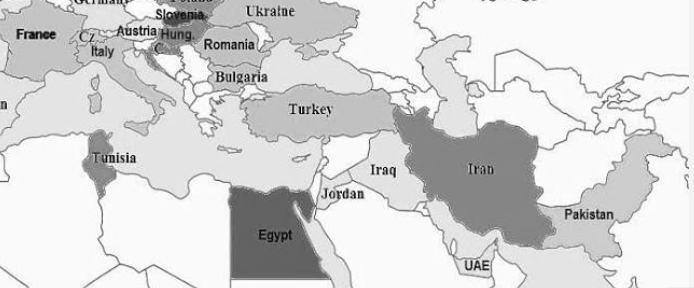
That could push the war into Europe. The Financial Times reported that Iranian forces have considered attacks on US military assets in southern and southeastern Europe if Trump orders another offensive. Bulgaria is reportedly among the locations examined after it approved the use of Bezmer Air Base by US refuelling aircraft. Cyprus is also a concern because Britain operates the Akrotiri airbase there.
Tehran has reportedly also examined attacks on undersea fibre optic cables in the Strait of Hormuz, potentially opening another front against critical communications infrastructure. Iranian officials have warned that if Washington goes too far, the conflict could move beyond West Asia and reach Europe.
Iran's ability to strike deep into Europe remains uncertain. Its medium range ballistic missiles face major limits at longer distances. Earlier attempts to hit the US and British base at Diego Garcia failed to reach the target, with one missile reportedly failing and another being intercepted. But Iranian forces have since demonstrated improved precision against US targets closer to the region, including a reported strike on a US base in Jordan.
The threat to Europe is therefore not being treated simply as empty rhetoric. The British base at Akrotiri in Cyprus was hit by a drone in March, although Western officials suspected the attack was carried out by regional proxy forces rather than directly by Tehran.
While Tehran hardens its military posture, Washington is questioning its own presence in the region.
The Washington Post reported that the Pentagon is studying whether damaged US bases in the Gulf should be rebuilt in their previous form. The assessment is not yet a formal review, but the Pentagon's policy office, Joint Staff and US Central Command are examining whether American troops, weapons and equipment should be positioned differently.
The US normally has around 40,000 troops across nearly 20 sites stretching from Jordan to Oman. Iranian missile and drone attacks have exposed the vulnerability of these fixed bases. The damage now gives Washington an opportunity to consider a smaller or more dispersed military footprint rather than simply rebuilding everything as it was.
Then comes another major complication.
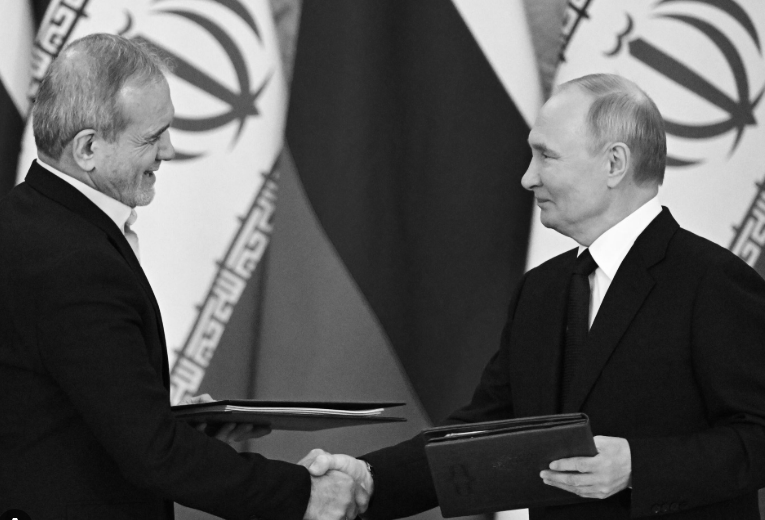
A European government document obtained by NBC News reportedly shows Russia supplying Iran with explosives, ammunition and drone components through the Caspian Sea. Satellite imagery has also pointed to military supplies moving toward Iran. The reported shipments could help Tehran replenish weapons stocks depleted by the US and Israeli campaign.
The route matters. Russian vessels are reportedly travelling from Russian ports across the Caspian Sea toward Iran's Amirabad port. The waterway is surrounded by only Russia, Iran, Kazakhstan, Turkmenistan and Azerbaijan, keeping it outside the normal operating area of Western navies. Reports say thousands of Russian vessels have made the journey, with many already under US or EU sanctions.