
Two Indian LPG Tankers Safely Navigate Strait of Hormuz Amid West Asia Tensions
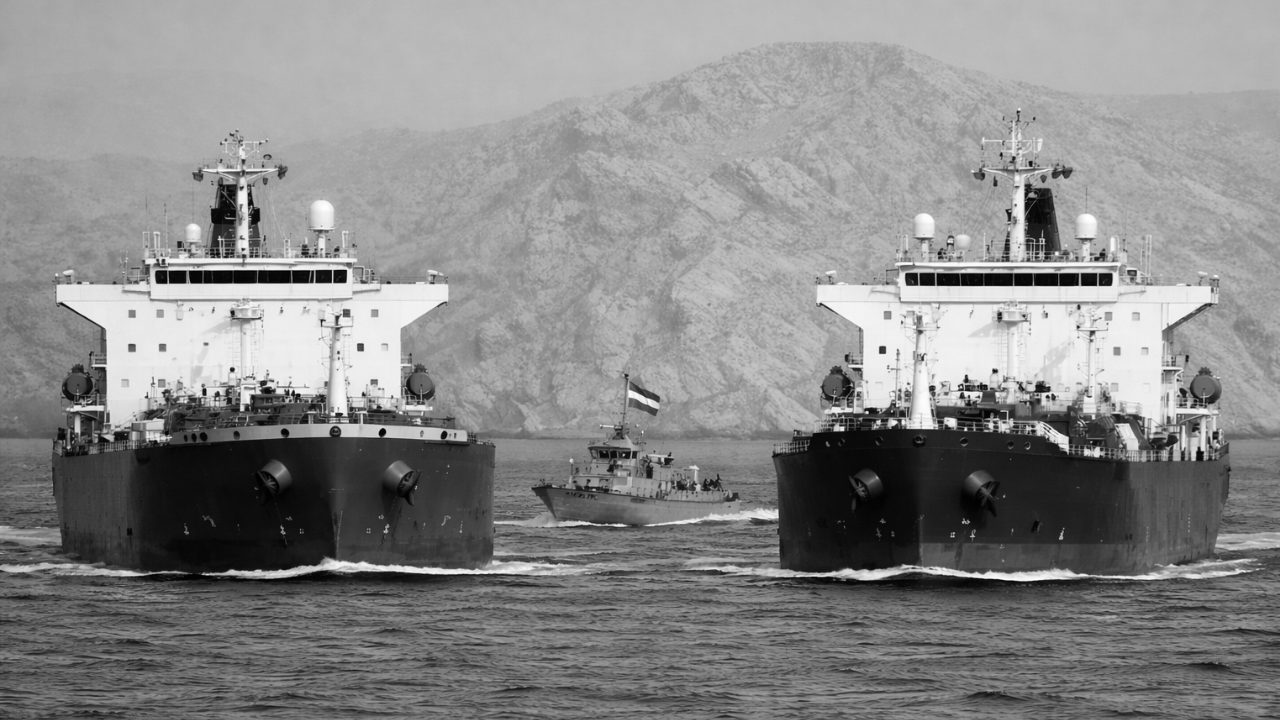
Two Indian-flagged LPG tankers , Pine Gas and Jag Vasant , carrying roughly a day’s supply of the country’s cooking gas , have safely navigated the war-hit Strait of Hormuz and are expected to reach Indian shores within the next two days. The vessels departed the Persian Gulf on Monday morning, sailing close to each other through the Larak-Qeshm channel , likely to signal their identity to Iranian authorities .
The two ships are transporting about 92,000 tonnes of LPG , according to Rajesh Kumar Sinha , Special Secretary in the Ministry of Ports, Shipping, and Waterways . He said the typical transit time from the Gulf to India is two to two-and-a-half days , without disclosing the final port of destination.
These vessels are part of a larger group of Indian-flagged ships stranded in the Persian Gulf after the outbreak of the West Asia conflict following US-Israel attacks on Iran. Originally, 28 Indian vessels were present in the strait 24 on the west side and four on the east side . So far, two vessels from each side have managed to sail safely. Earlier, MT Shivalik and MT Nanda Devi , carrying about 92,712 tonnes of LPG , reached Mundra and Kandla ports in Gujarat, respectively.
In addition, other tankers, including Jag Laadki carrying crude oil from the UAE and Jag Prakash transporting gasoline from Oman to Africa, have also successfully navigated the strait. Currently, 600 Indian seafarers remain onboard the remaining vessels, with the safety, food, and water supply fully ensured.
On the west side of the strait, the stranded fleet includes six LPG carriers, one LNG tanker, four crude oil tankers, one chemical products vessel, three container ships, and two bulk carriers , along with a dredger, an empty vessel now loaded with LPG, and three vessels undergoing dry dock maintenance. After Pine Gas and Jag Vasant’s successful transit, the number of vessels on the west side will reduce to 20 , including five LPG carriers .
The LPG carriers have been chartered primarily by Bharat Petroleum Corporation Ltd (BPCL) and Hindustan Petroleum Corporation Ltd (HPCL) , while crude oil tankers are operated by Indian Oil Corporation (IOC), Reliance Industries Ltd, and BGN International . Analysts note that Iran appears to allow select vessels to transit after verifying ownership and cargo, often through a short diversion via the Larak-Qeshm channel.
India imports about 88% of its crude oil, 50% of natural gas, and 60% of LPG , with the Strait of Hormuz being a crucial route. While disruptions in crude oil have been partially mitigated through alternate sources such as Russia, West Africa, the US, and Latin America , gas and LPG supplies to industrial and commercial users remain constrained. The government continues to prioritise the safe passage of all Indian vessels and the well-being of seafarers in the region.