
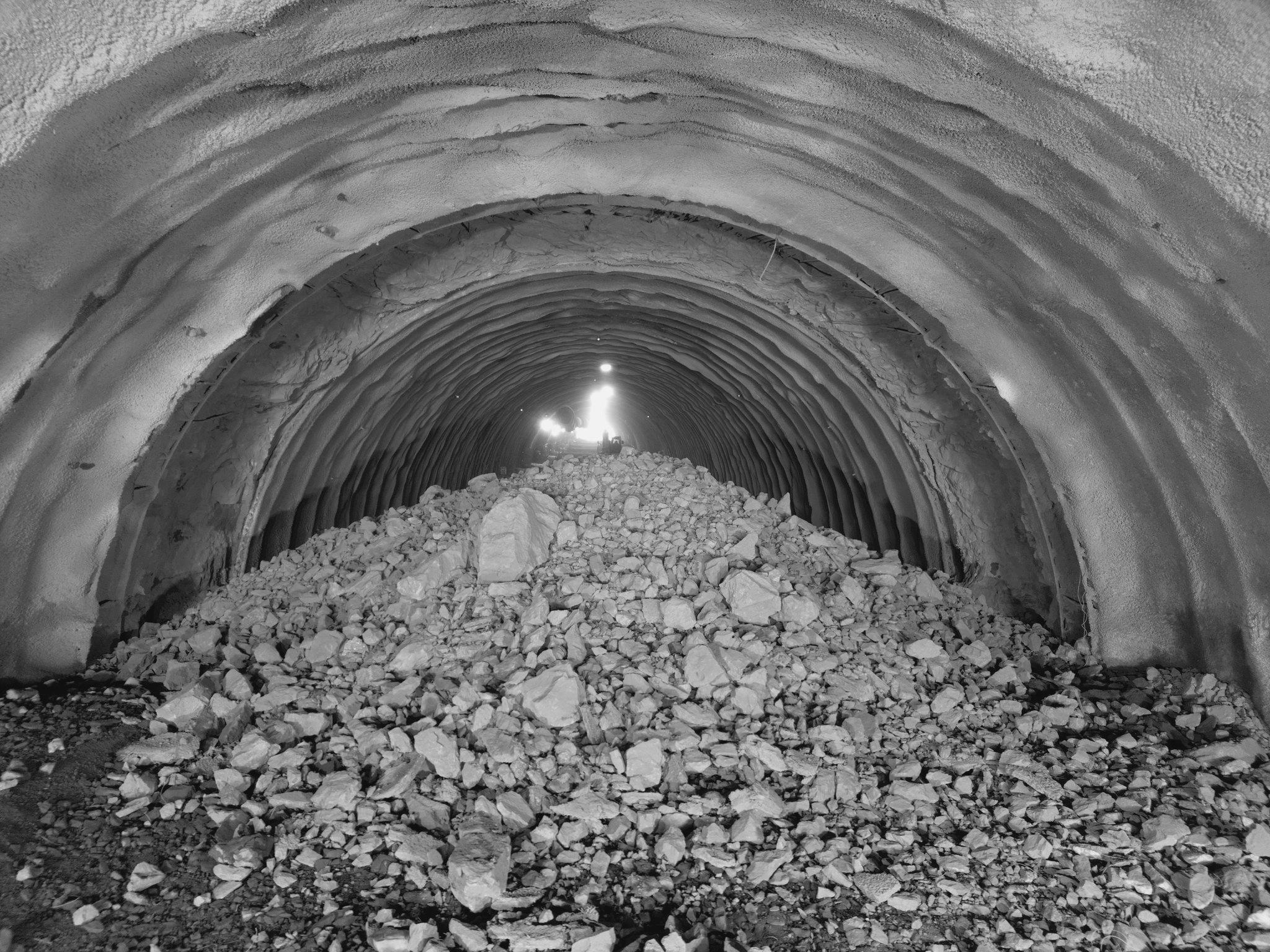
Tunnel breakthrough achieved in Palghar for Mumbai–Ahmedabad bullet train project
The Mumbai–Ahmedabad bullet train project achieved a major construction milestone on Tuesday with a tunnel breakthrough in Palghar district of Maharashtra , underscoring steady progress on India’s first high-speed rail corridor.
Railway Minister Ashwini Vaishnaw witnessed the breakthrough of the MT-6 tunnel near Saphale village virtually from New Delhi. The tunnel is 454 metres long and 14.4 metres wide and will accommodate both up and down tracks of the high-speed rail line, officials said.
This marks the second tunnel breakthrough in Palghar within a month , following the completion of the MT-5 tunnel near Saphale on January 2. Officials said the MT-6 tunnel was excavated from both ends using the New Austrian Tunnelling Method (NATM), a drill-and-controlled blasting technique suited for regions with complex and variable geological conditions such as fractured rock formations and groundwater presence.
Under NATM, excavation and support systems are continuously adapted based on ground behaviour, allowing the surrounding rock to act as a natural load-bearing structure while ensuring safety through real-time monitoring and immediate stabilisation using shotcrete and rock bolts. The tunnel excavation was completed within 12 months , officials added.
The 508-km Mumbai–Ahmedabad high-speed rail project , which passes through Maharashtra, Gujarat and Dadra and Nagar Haveli, is designed to operate bullet trains at speeds of up to 320 kmph. It is India’s only high-speed rail corridor and is being developed with Japanese assistance, incorporating advanced technologies in signalling, safety systems, tunnelling and earthquake-resistant design.
Officials said construction of seven bullet train tunnels is currently underway in Palghar, with excavation and allied works at various stages. Work is also progressing at multiple locations in Maharashtra, including river bridges over the Vaitarna, Ulhas and Jagani rivers, station buildings, highway crossings and a 21-km underground tunnel between the Bandra-Kurla Complex and Shilphata.
As of January 27 , around 334 km of viaducts , 17 river bridges and 12 major crossings over national highways, railways and other infrastructure have been completed. Track laying and electrification works have gathered pace in the Gujarat section .
Once operational, the high-speed corridor is expected to cut travel time between Mumbai and Ahmedabad to about two hours , significantly improving inter-city connectivity. Officials said the project is expected to spur economic activity, boost industrial and urban development along the route, create employment, ease congestion on existing transport networks and support cleaner, sustainable mobility.