
Trump's Tariff War Returns! India, China Among 14 Economies In US Firing Line
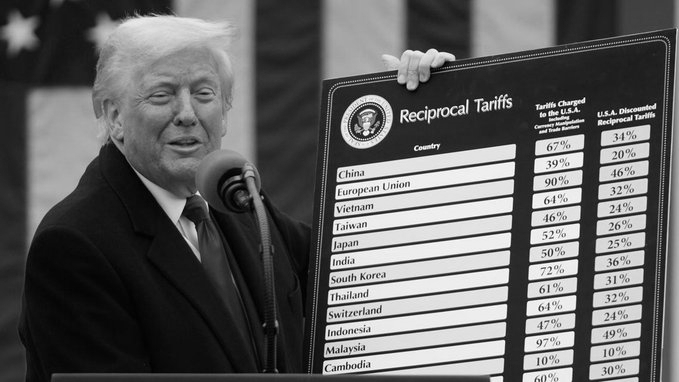
US President Donald Trump is preparing another round of tariffs, targeting 14 economies, including India and China, nine months after the US Supreme Court struck down his sweeping global duties. Even countries that already have trade agreements with Washington are on the list, raising fresh questions about the future of global trade.
The proposed tariffs follow an eight-month investigation by the US Trade Representative's (USTR) office into what Washington calls excess industrial capacity. The US argues that countries are producing more goods than their domestic markets can absorb, with government subsidies and industrial policies sustaining overproduction. It says the resulting flood of cheap goods undercuts American manufacturers.
The investigation covered 16 economies, but Washington has proposed tariffs on 14, including India, China, the European Union, Japan, South Korea, Vietnam and several other Asian economies. Mexico and Norway have been excluded for now.
The proposed rates vary by country. China faces a 20 per cent tariff, in line with the ceiling under its current trade truce with Washington. If that agreement collapses, the rate could rise to 40 per cent. The European Union, Japan, South Korea and Switzerland face proposed rates of 15 per cent, potentially rising to 20 per cent. Malaysia's ceiling is 19 per cent.
For India, the proposed tariff is 17 per cent if New Delhi concludes a trade agreement with Washington. Without a deal, the rate could climb to 25 per cent.
The new approach follows a February setback, when the US Supreme Court ruled that Trump had exceeded his authority by using a 1977 emergency powers law to impose sweeping global tariffs. The administration subsequently turned to another provision of the Trade Act to introduce temporary global duties for 150 days. That period ended in July.
Meanwhile, Washington had launched separate investigations into forced labour and excess industrial capacity. The forced-labour probe resulted in 10 per cent and 12.5 per cent tariffs on goods from 60 economies in July. The latest excess-capacity investigation is now paving the way for another round of proposed duties. However, these tariffs will not be added to the July duties. Where both apply, only the higher rate will be charged.
The proposals must undergo a public comment period and hearing, meaning the earliest they could take effect is January 2027.
China has already rejected Washington's allegations. Its Foreign Ministry said Beijing's position on US-China economic and trade relations remained consistent, arguing that tariff wars serve neither country's interests. It called the overcapacity allegation a false premise and urged both sides to resolve disputes through consultations based on equality, mutual respect, reciprocity and mutual benefit.
The timing is particularly significant. The existing US-China trade truce is due to expire in January, while Trump and Chinese President Xi Jinping have recently met at the APEC summit in Shenzhen and are expected to meet again at the G20 summit in December. Another tariff confrontation could undermine efforts to stabilise trade relations.
For India, the stakes are different. New Delhi is already negotiating a trade agreement with Washington. Under a framework agreed in February, the US would reduce reciprocal tariffs on several Indian products to 18 per cent. However, final terms remain under discussion. The proposed 17 per cent rate is slightly lower, while the 25 per cent alternative without an agreement would be significantly higher.
India has maintained that it wants a comparative advantage over competing economies and has reserved the right to revise its trade concessions if Washington goes beyond agreed terms.