
Trump's “Start Your Engines” Call Falls Flat as Only 7 Ships Move Through Hormuz, Leaving 580 in Limbo
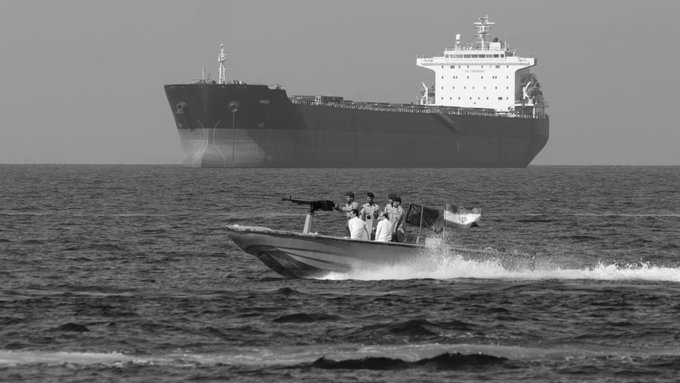
When US President Donald Trump took to Truth Social on Sunday to declare " Ships of the World, start your engines. Let the oil flow!" the world's shipping industry collectively looked at the Strait of Hormuz and did precisely nothing. Three days after the landmark US-Iran peace deal was announced, only seven ships have passed through the strait, according to shipping monitor MarineTraffic, while more than 550 vessels remain stranded on either side waiting to transit. Industry estimates put the true backlog closer to 580 ships , nearly 250 tankers and over 330 cargo ships , with roughly 75 percent sitting completely stationary. That number is almost certainly an undercount because a significant number of captains have quietly switched off their AIS transponders , disappearing from satellite tracking to avoid becoming targets. The real queue is longer than anyone is publishing.
The reason ships are not moving is not merely geopolitical caution. Secretary of State Marco Rubio told the Senate Foreign Relations Committee that Iran has mined "large segments" of the Strait of Hormuz, and analysts say ship traffic is unlikely to return to normal until a full demining operation is completed. Global shipping group Bimco has warned that the threat of sea mines remains a major concern even after the deal. Insurance underwriters, unmoved by presidential proclamations, are demanding clarity before they cover any transit.
To make matters more brazen, Iran is now openly monetising the blockade it created. Iran established the Persian Gulf Strait Authority, which it said would manage "safe passage permits," and Iranian and Omani officials discussed a payment system based on fees for services. Reports indicate Iran is charging around $2 million per tanker for passage. When pressed on whether this constitutes an illegal toll, Iranian foreign ministry spokesman Esmaeil Baghaei said Iran was "not seeking to levy transit tolls; however, fees will be charged in exchange for the services that are provided." A toll by any other name still empties your wallet. For context, the Panama Canal and the Suez Canal charge passage fees too, but those were engineered and built by human hands over decades. The Strait of Hormuz is a natural waterway. Iran did not dig it, did not build it, and has no legal basis to charge for it. The distinction between a "toll" and a "service fee " is the kind of wordplay that sounds clever in a press briefing and outrageous to every maritime lawyer on earth.
Meanwhile, the peace deal itself was announced to the world without anyone apparently reading the fine print, because there does not appear to be any. Netanyahu's office clarified that the deal applies only to direct hostilities between the United States and Iran, and does not extend to Lebanon, where Israeli operations against Hezbollah continue. Beirut , in other words, was not invited to the peace party. Israeli airstrikes on Lebanon have continued regardless.
Trump himself appears exasperated with his closest regional ally. He said he " didn't like" the Israeli strike on Beirut's southern suburbs during the final stages of negotiations, calling it "vicious" and "too much," and suggested that Israel should "l et Syria take care of Hezbollah. " He reportedly told the New York Times that Netanyahu "has no fucking judgment" and is "a very difficult guy." Netanyahu, for his part, faces Israeli elections in October and has every electoral incentive to keep bombing things. Facing the most formidable challenge to his decades of rule, support from northern Israelis and his right-wing coalition partners could prove critical to his bid to remain in power. A man who returned to power and immediately resumed strikes on neighbouring territories is now being criticised for doing exactly what he has always done.
National Security Minister Itamar Ben Gvir said flatly that "Trump's agreement does not bind us. Israel is not subordinate to the United States . We are an independent and sovereign country." This from a government that receives billions in American military aid annually. The audacity would be impressive if it were not so familiar. Iranian officials have also yet to confirm that vessels can transit freely, and shipowners are waiting for the planned formal signing on June 19 in Switzerland before risking their crews and cargo.
Trump can write poetry about engines. The ships will move when it is safe.