
Trump’s Sleepy Moments Return As US President Appears To Doze Off Again
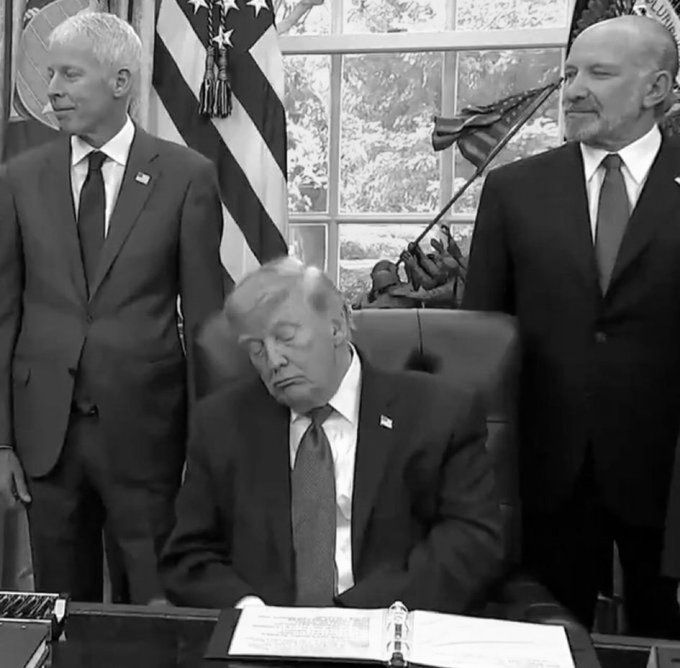
US President Donald Trump appeared to struggle to keep his eyes open during a September 28 Oval Office event announcing a proposed $15 billion steel plant in Iowa by Mesabi Metallics, owned by India's Essar Group. As Energy Secretary Chris Wright spoke, Trump appeared to close his eyes and lower his head for periods while Mesabi chairman Rewant Ruia spoke.
The footage quickly sparked online commentary, with some describing it as another instance of Trump dozing off. However, the footage itself does not establish that he was asleep or reveal any medical cause. Trump also appeared tired and gave brief answers to reporters, with his remarks moving between the economy, crime and Iran.
The episode has renewed scrutiny because Trump, 80, has repeatedly mocked former President Joe Biden as “Sleepy Joe” while questioning his energy and age. Trump has himself appeared to nod off at public events, including a Pentagon 9/11 remembrance ceremony and Senator Lindsey Graham's funeral. His allies, meanwhile, highlight his demanding schedule. Vice President JD Vance said Trump often works late and sometimes calls officials around 2:30 am, while Secretary of State Marco Rubio has also described his unusual working hours.
Trump and his team maintain that he is physically and mentally fit, and Trump has repeatedly cited strong performances on cognitive tests. The latest episode therefore adds to an existing political debate, rather than establishing a medical diagnosis.
It comes as Republicans face a challenging midterm environment. Republican groups have booked about $888 million in advertising for the final six weeks before the November 3 election, compared with roughly $666 million for Democrats, according to AdImpact figures. Yet Democrats continue to lead several national congressional polls. A September NPR/PBS News/Marist poll put Democrats at 53 per cent and Republicans at 41 per cent among registered voters on the generic congressional ballot.
Republicans have also been spending heavily in traditionally safe states, including Texas, Iowa, Ohio, Kansas and Alaska, as more races become competitive. The heavy spending has not erased Democratic leads in national polling, although individual House and Senate contests vary considerably.
The midterms will determine all 435 House seats and roughly one-third of the 100-member Senate. The House represents population-based districts, with every seat contested every two years, while the Senate gives every state two senators serving six-year terms. Both chambers generally must approve legislation before it reaches the president; the House has key powers over revenue and impeachment, while the Senate confirms presidential nominees and handles treaty ratification.
The results will shape Trump's final two years in office. A changed House could affect investigations and spending, while Senate control would remain important for judicial and executive appointments. With Trump deeply involved in the Republican campaign, his public appearances, approval ratings, campaign spending and voters' views of his presidency are all part of the political backdrop to November 3.