
Trump’s new security strategy: leave Latin America to the U.S., tell Europe to fend for itself, India barely finds a mention
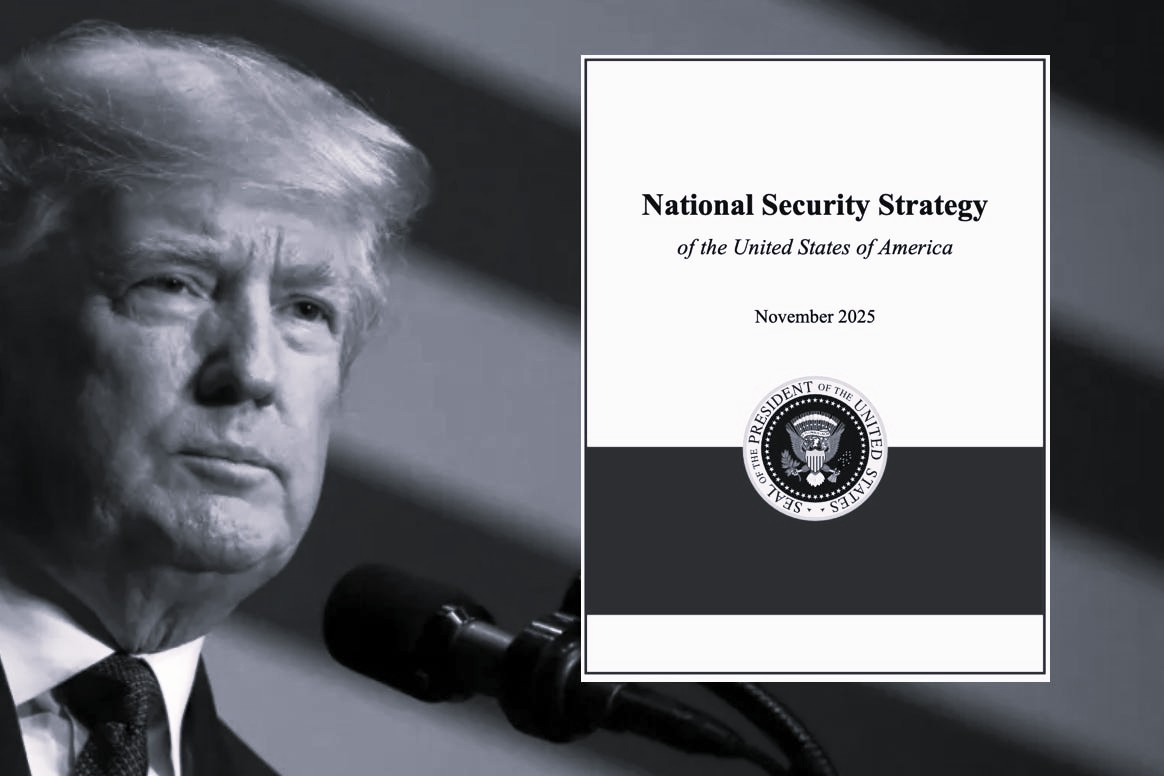
The Trump administration released its new National Security Strategy, a sweeping document that outlines a dramatic repositioning of America’s global priorities: the U.S. will tighten its grip over Latin America, push Europe to take responsibility for its own defense, and reduce its role as a global crisis manager- all while giving India only passing references. The strategy briefly notes that Washington helped prevent an India-Pakistan war earlier this year, but this mention serves more to highlight Trump’s desire to claim diplomatic victories than to outline any substantive policy toward New Delhi.
The NSS, a mandatory document every president must periodically submit to the U.S. Congress, is far more consequential this time. It openly declares what earlier administrations only practiced quietly: America will no longer act as the world’s policeman or bankroll the security of allies who do not contribute meaningfully. What had been Trump’s political rhetoric is now official U.S. doctrine, signaling a historic turn inward as America focuses on its mounting domestic challenges, economic fragility, and strategic overstretch.
To illustrate the shift, the strategy reads like the story of an overburdened class representative expected to settle disputes, organize events, maintain order, and manage everyone else-until their own grades begin to collapse. At that point, stepping down becomes a matter of survival. Likewise, the U.S. is grappling with rising national debt, unemployment pressures, a weakened industrial base, fragile supply chains, energy vulnerability, and growing social demands. The NSS argues that these domestic weaknesses make it impossible for America to continue carrying global responsibilities that drain resources without delivering proportional benefits.
Abroad, the document makes clear that the U.S. will intervene selectively and only when its direct interests are threatened. In Europe, Washington signals that the era of automatic American protection is over. European nations, particularly NATO members, are told they must defend themselves against threats such as Russian aggression in Ukraine, while the U.S. maintains deterrence without assuming unlimited obligations. This formalizes Trump’s long-standing stance: why should America remain Europe’s big brother?
The Indo-Pacific strategy focuses almost entirely on countering China, and even here India receives only utilitarian mentions. The NSS encourages continued commercial ties with New Delhi and notes India’s role in the Quad, but positions India as just one among several Asian partners expected to help keep the South China Sea open and prevent it from falling under Chinese control. Beyond that, India is largely absent from the document.
The most assertive section revives a modernized form of the Monroe Doctrine, declaring that Latin America and the Caribbean fall squarely within the U.S. sphere of influence. The strategy emphasizes restricting foreign powers from gaining footholds in the region, tightening migration controls, combating cartels, and ensuring that no external actor challenges U.S. primacy in the Western Hemisphere. While the U.S. steps back from Europe’s wars and Asia’s disputes, it is doubling down on its own neighborhood.
Domestically, the strategy prioritizes rebuilding the American economy through industrial revival, supply chain security, energy independence, and technological dominance in areas such as AI, biotech, and quantum computing tools seen as essential for countering China’s ambitions. Military readiness remains central, with investments in nuclear modernization, missile defense, and advanced capabilities designed to keep U.S. power unmatched without engaging in long, costly wars.
Overall, Trump’s new National Security Strategy transforms America First from campaign rhetoric into binding policy. It envisions a nation that fixes its internal weaknesses, limits its foreign burdens, demands more from allies, and concentrates power where it matters most. The message is unmistakable: the United States will engage abroad only when it clearly benefits Americans, even as it asserts control over its own hemisphere and reshapes the global balance on its own terms.