
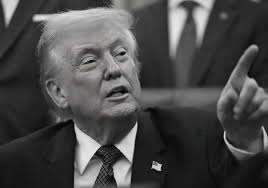
Trump’s new defence strategy signals shift towards U.S. unilateralism
The Trump administration’s newly released National Defense Strategy (NDS) marks a clear departure from previous U.S. defence policy, signalling a move away from alliance-led security towards a more unilateral, interest-driven approach that places greater responsibility on America’s allies for their own defence.
The 34-page document, the first defence strategy issued since 2022, openly criticises long-standing U.S. partners in Europe and Asia for relying on Washington to subsidise their security. It calls for a “sharp shift” in U.S. military posture and tone, asserting that allies must shoulder the primary burden of countering threats from Russia, China and North Korea.
The strategy strongly reflects President Donald Trump’s “America First” philosophy , prioritising U.S. national interests over traditional multilateral commitments. Unlike the 2022 defence strategy under former president Joe Biden which described China as America’s principal “pacing challenge” and emphasised alliance cooperation the new document downplays global military leadership in favour of selective engagement and regional focus.
A major shift is the renewed emphasis on the Western Hemisphere , with the Pentagon stressing the need to guarantee U.S. military and commercial access to strategically vital locations such as the Panama Canal and Greenland . The strategy warns that while the U.S. will engage with neighbours in good faith, it is prepared to take “focused, decisive action” where its interests are not respected.
In Europe, the document describes Russia as a “persistent but manageable threat” and argues that NATO members are well-positioned to take primary responsibility for Europe’s conventional defence . This aligns with Washington’s decision to reduce troop deployments near Ukraine, signalling a reduced U.S. security footprint on the continent.
In the Indo-Pacific, the strategy reframes U.S. relations with China, stating that Washington does not seek to dominate, humiliate or change Beijing’s regime. Instead, it calls for deterrence and stable relations, including expanded military-to-military communication. Notably, the document makes no explicit reference to Taiwan , a departure from earlier U.S. strategies that pledged support for the island’s self-defence.
The burden-sharing approach is further evident on the Korean Peninsula, where the strategy asserts that South Korea is capable of taking primary responsibility for deterring North Korea, with the U.S. providing more limited support.
Taken together, the new defence strategy reflects a broader trend of U.S. unilateralism , in which Washington reassesses alliance commitments, reduces overseas military obligations and prioritises direct national interests. While the administration insists the U.S. will remain engaged with allies, the message is unmistakable: security partnerships will be more transactional , and America will no longer act as the default guarantor of global security.