
Trump’s Blackwell ban - why China isn’t worried and Nvidia keeps winning
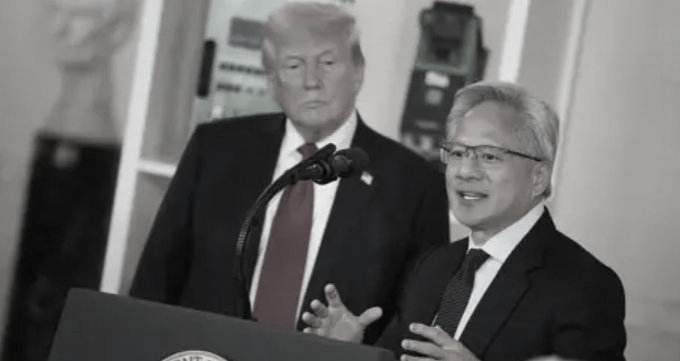
Artificial intelligence giant Nvidia’s most advanced chips will be reserved exclusively for U.S. companies, U.S. President Donald Trump declared, escalating America’s effort to control global AI technology. His announcement came as Nvidia’s charismatic CEO Jensen Huang, often compared to Steve Jobs, charts a future that expands far beyond chipmaking, into AI infrastructure, cloud computing, and global partnerships that could define the next technological era.
During a taped interview with CBS’s “60 Minutes,” Trump said the most advanced Blackwell GB200 chips would remain within the United States. Trump said: “The most advanced, we will not let anybody have them other than the United States.”
He added: “We don’t give the Blackwell chip to other people.”
These statements mark a decisive shift in U.S. policy. Trump’s administration is considering tighter export controls on AI hardware, effectively cutting off China and other nations from Nvidia’s most powerful chips. The president framed this restriction not as a business decision but as a safeguard for national security and U.S. technological dominance.
Washington’s restriction and Beijing’s composure
Trump’s remarks highlight the growing view in Washington that AI processors are strategic weapons rather than consumer goods. His allies in Congress echoed that sentiment.
Republican Congressman John Moolenaar said the idea of China obtaining Nvidia’s Blackwell chips “would be akin to giving Iran weapons-grade uranium.”
Yet Beijing’s official response has been calm. Rather than protest, China’s state media and ministries have projected confidence, emphasizing domestic innovation. Analysts believe this restraint is calculated. China’s government is quietly accelerating investments in its own chip industry through companies like Huawei, SMIC, and Biren while publicly maintaining that it does not depend on American technology. By appearing unshaken, China avoids market turmoil and strengthens its image as a nation advancing toward technological self-reliance.
Jensen Huang: Nvidia’s visionary CEO planning big
While Washington tightens restrictions and Beijing talks about resilience, Nvidia’s Jensen Huang is thinking bigger than both. The man often described as the “Steve Jobs of AI” has turned Nvidia into the world’s most valuable company, worth over five trillion dollars. But Huang’s ambitions go beyond selling chips, he is building an entire AI economy.
At Computex 2025, Huang declared:
“AI is now infrastructure, and these factories are what we build today.”
That statement summed up his mission. Nvidia is evolving from a chip supplier into the backbone of the global AI ecosystem. Huang has announced a $15 billion investment in an AI data center in South Korea, expanded partnerships with Samsung Electronics, and initiated a $5 billion investment in Intel to boost U.S. chip manufacturing capacity. Nvidia has also taken multibillion-dollar positions in companies like CoreWeave, while deepening collaborations with global AI leaders such as OpenAI, Microsoft, and Amazon.
Through these moves, Huang is diversifying Nvidia’s base, ensuring that the company is never dependent on a single country or region. He has described Nvidia’s new direction as building “AI factories” - networks of powerful data centers capable of generating intelligence rather than producing goods. His leadership combines technical vision and stage charisma, convincing both investors and engineers that Nvidia will define the next generation of computing.
Markets unshaken as Chip war becomes routine
Despite Trump’s ban, Nvidia’s stock barely moved, reflecting investors’ growing confidence in the company’s global strategy. Analysts note that every time export restrictions have been announced in recent years, Nvidia’s shares have briefly dipped before surging higher. The reason is clear: demand from U.S. and allied tech giants remains insatiable, from Microsoft’s cloud infrastructure to OpenAI’s model training pipelines.
For investors, the U.S.-China chip war has become a predictable part of the global landscape rather than a disruptive shock. Each side has adapted to this controlled competition. Washington enforces technology containment, Beijing accelerates domestic innovation, and Nvidia rebalances toward friendly markets like South Korea, Japan, and the Middle East. The world’s chip ecosystem has reached a kind of uneasy stability - a cold tech war that fuels rivalry without crashing the market.