
Trump’s $65 Billion Venezuelan Oil Deal Puts Controversial Private Operator At The Centre
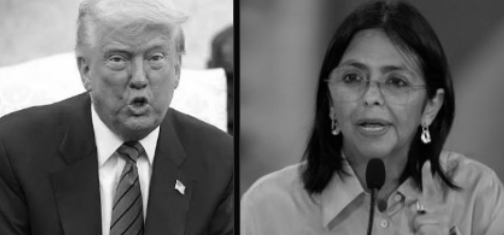
US President Donald Trump on August 28 claimed he had secured the “biggest oil deal in world history”, saying the United States had obtained majority control of more than 65 billion barrels of proven Venezuelan oil reserves at no cost to American taxpayers.
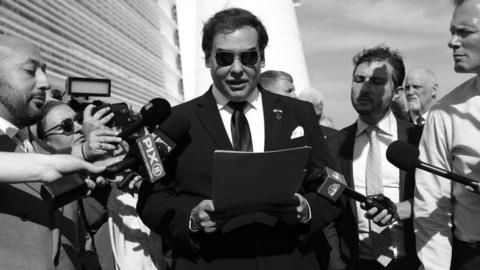
The key detail is that Washington is pursuing the arrangement through a private business partnership, rather than primarily through US oil giants such as ExxonMobil or Chevron. Reports by The New York Times and The Wall Street Journal identify Alejandro Betancourt Lopez, a controversial Venezuelan businessman, as the figure at the centre of the deal.
Under terms unsealed by the White House, the US is expected to hold a 55% stake in a joint venture covering 17 strategic oil fields, giving it control over more than 65 billion barrels of proven reserves. The venture could become the world's second largest oil project by reserves, behind Saudi Arabia.
Betancourt, 46, is based in London and is linked to North American Blue Energy Partners (NAB), a Barbados registered company that produces around 200,000 barrels per day from fields around Lake Maracaibo and the Orinoco Belt. NAB plans to take on up to $5 billion in debt to raise production to about 1 million barrels per day within five years.
Betancourt built his business empire during the government of late Venezuelan President Hugo Chávez. In 2009, as Venezuela faced an electricity crisis, Betancourt and partners at Darwick Associates secured 11 emergency power plant contracts worth billions of dollars. He later acquired a stake in Petro Zamora, operating mature fields around Lake Maracaibo that eventually became part of NAB.
His close ties to Venezuela's socialist establishment have made him deeply controversial. Critics associate businessmen of his generation with the “Boliburguesía”, a term describing entrepreneurs who became wealthy through connections to the political elite.
Betancourt has also faced scrutiny overseas. His personal bank accounts have reportedly been investigated for money laundering in Switzerland for more than a decade, while his lawyers maintain he has never been charged with a crime. Venezuela also closed its investigation without charges.
Despite the allegations, senior US officials, including Secretary of State Marco Rubio, have reportedly focused on Betancourt's ability to raise capital and increase oil output. Reports by The New York Times and The Washington Post say US officials intervened on his behalf with Swiss and British authorities and facilitated his access to Washington.
The deal's structure is unusual. The Pentagon's Office of Strategic Capital is expected to support development of the 17 fields, while NAB handles operations. Washington would also receive warrants, giving it the right to purchase shares in NAB or related entities at predetermined prices. However, it remains unclear how much of the reported 55% represents direct ownership and how much involves rights to purchase oil.
The US has a strategic interest in Venezuelan crude because Gulf Coast refineries were designed to process heavy, sour oil, unlike much of America's lighter shale production. Venezuelan crude can therefore support production of diesel, jet fuel and other petroleum products.
The deal comes amid global energy disruptions and heavy use of America's Strategic Petroleum Reserve, which Trump has drawn down to its lowest level since 1982. US imports of Venezuelan crude reportedly reached around 600,000 barrels per day earlier this year.
Interim Venezuelan President Delcy Rodríguez supports the agreement, saying it could generate more than $200 billion in government revenue. At $65 a barrel, Venezuelan officials estimate roughly $19 per barrel would go to the country.
But rebuilding Venezuela's oil industry will be difficult. Production is currently around 1.2 million barrels per day, compared with historical peaks of 3.5 million, after years of mismanagement, equipment failures, infrastructure damage and a recent earthquake. Restoring output could require tens of billions of dollars and at least a decade.
The agreement has also triggered political backlash, with critics accusing Rodríguez of sacrificing Venezuela's national sovereignty over its natural resources to secure Washington's political backing.