
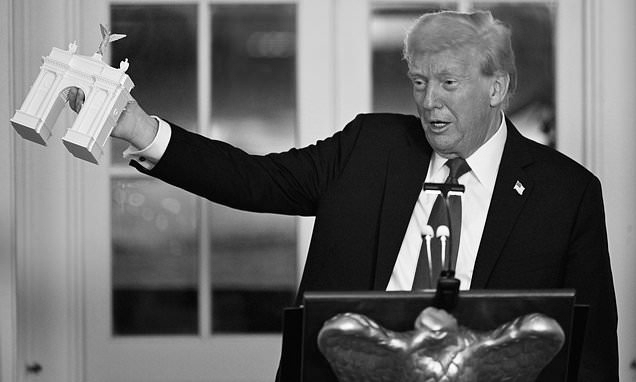
Trump’s 250-Foot Memorial Arch Gets Federal Nod Despite Lawsuits and Veteran Opposition
US President Donald Trump’s ambitious plan to build a 250-foot-tall memorial arch near Washington DC has cleared a major hurdle after a key federal planning panel approved the project, despite strong opposition from veterans, lawmakers and families of military personnel buried at nearby Arlington National Cemetery.
The National Capital Planning Commission approved the proposed monument by an 8-4 vote on Thursday night, paving the way for construction to begin. Administration officials have indicated that work could start as early as within a day. However, the project remains entangled in three separate lawsuits, with a federal judge expected to decide whether construction should be temporarily blocked.
The nearly 10-hour public hearing witnessed strong objections, with critics arguing that the massive structure would disrupt Washington’s historic skyline and undermine the solemnity of Arlington National Cemetery. Several veterans and relatives of fallen service members said the monument would overshadow the resting place of those who sacrificed their lives for the country.
Democratic lawmakers also questioned the purpose of the project, accusing Trump of using a veterans’ memorial as a pretext for building a monument celebrating himself. California Representative Jared Huffman called the proposal ill-advised and illegal, arguing that it was more a tribute to the president than to American military personnel.
The commission, led by Trump-appointed chairman Mark Paoletta, defended the proposal, describing grand monuments as important symbols of national identity. Supporters also argued that a memorial arch had long been envisioned for the location under a 1925 law.
The proposed structure, planned for Memorial Circle near the Potomac River between Washington and Arlington, would stand around 30 metres taller than the Statue of Liberty without its pedestal. Designs include a bronze winged Lady Liberty holding a torch, an eternal flame, an observation deck, offices and multiple internal facilities.
The legal battle could still derail the project. Opponents argue that congressional approval is required, while the administration maintains that existing legislation already permits the monument.