
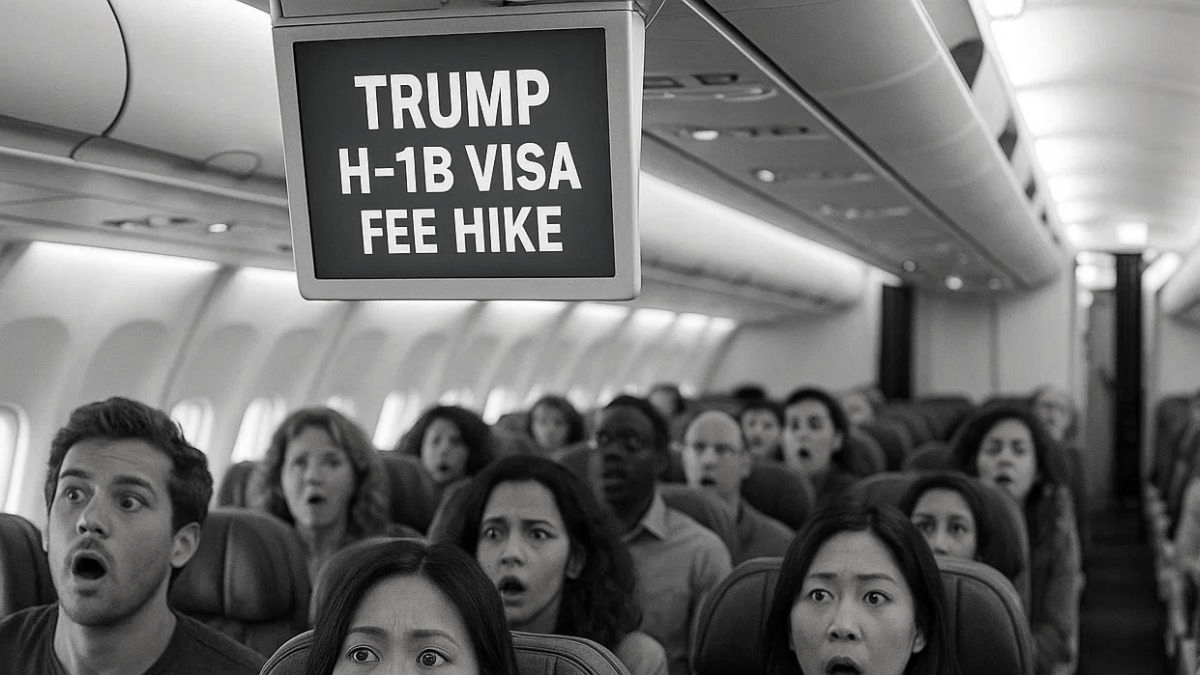
Trump’s $100,000 H-1B Visa fee sparks global panic, uncertainty and political uproar
On September 19, 2025, U.S. President Donald Trump signed an executive proclamation imposing a staggering new $100,000 fee on H-1B visa petitions, one of the most severe overhauls in decades. The announcement stunned millions, especially in India, as Indians hold about 70% of all H-1B visas issued annually. The rule, effective September 21, applies only to new visa applications and not current holders or renewals, a clarification later issued by the White House to quell panic.
New fee applies only to Fresh Applications, Not Current Holders
While the initial announcement caused confusion and concern, White House Press Secretary Karoline Leavitt clarified this is a one-time payment on new petitions only. Existing H-1B holders can travel, renew, and re-enter the U.S. as usual without paying the new fee. The U.S. Citizenship and Immigration Services (USCIS) confirmed petitions filed before September 21 remain exempt, providing relief to current skilled workers.
Industry giants warn of disruption and advise caution on travel
Tech giants like Amazon, Microsoft, Meta, and Tata Consultancy Services, heavily reliant on H-1B talent, urged employees to avoid international travel amid uncertainty. Some firms advised staff to remain in the U.S. to prevent issues due to the abrupt policy change. Airlines even raised fares on flights between India and the U.S., amplifying anxiety within the tech diaspora.
Indian political leaders demand urgent government action
Indian political leadership reacted strongly: Telangana CM Revanth Reddy called on PM Modi and EAM Jaishankar for urgent intervention, warning of the “unimaginable” impact on IT professionals. Various opposition MPs criticized the government for perceived diplomatic failures, viewing the fee increase as anti-India. Congress MP Akhilesh Prasad Singh accused the U.S. of hostility towards Indians, while others demanded stronger diplomatic responses.
Opposition and Business voices criticize impact on workers and firms
Opposition figures like Pawan Khera and Asaduddin Owaisi condemned the government’s silence and emphasized the visa fee’s threat to thousands of young Indians seeking employment abroad. Industry leaders, including the former Nasscom chairman, acknowledged short-term disruptions but suggested firms might adapt by increasing local hiring and upskilling operations domestically.
Indian government studies full implications, pursues diplomatic engagements
India’s Ministry of External Affairs stressed concern over potential humanitarian consequences, especially family separations, and pledged to work with U.S. authorities to address disruptions. Commerce Minister Piyush Goyal planned visits to the U.S. for trade talks beginning September 22, reflecting urgency in diplomatic efforts to mitigate the fee’s impact.
Fee seen as push to prioritize American workers amidst talent shortage
The Trump administration justified the fee as a measure to discourage “abuse” of the H-1B program and encourage companies to hire American workers first. Commerce Secretary Howard Lutnick stated companies need to assess whether overseas hires justify the new fee or if domestic employment should be prioritized, reflecting broader efforts to tighten immigration controls.
Trade talks scheduled as visa fee causes turmoil and uncertainty
The visa fee’s imposition on September 21 sparked a scramble among companies and visa applicants worldwide. It coincides with upcoming trade discussions aimed at soothing tensions between India and the U.S., highlighting the move’s significant bilateral impact.
Global reaction mixes concern, criticism, and calls for resolution
The $100,000 fee has drawn criticism across sectors and nations due to its unprecedented scale and disruption potential. While it targets new applicants, the policy sends a strong message about the U.S.’s evolving immigration stance one balancing national interest with global talent competition, amid growing diplomatic complexities.