
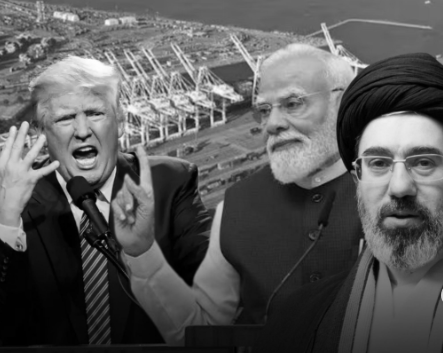
Trump Wants a 20% Strait of Hormuz Protection Fee as Indian Seafarers Pay the Price
Fresh attacks on commercial ships have pushed the Strait of Hormuz back into the global spotlight, with US President Donald Trump proposing that vessels pay the United States a 20% protection fee for cargo transiting the strategic waterway. The proposal comes as tensions between the US and Iran escalate, oil prices surge, and Indian seafarers continue to lose their lives in attacks on merchant ships.
Trump argued that the United States spends billions protecting one of the world's busiest shipping lanes while wealthy Gulf nations benefit without sharing the cost.
"We're protecting a very rich portion of the world. I want to be reimbursed because we're protecting them," Trump said, naming Saudi Arabia, the UAE, Qatar, Bahrain and Kuwait among the countries that should contribute. Instead of pursuing further diplomacy with Iran, Trump suggested ships using the Strait of Hormuz should effectively pay Washington for security.
The proposal comes as commercial shipping is increasingly caught in the crossfire.
According to regional reports, Iran fired two cruise missiles at commercial vessels after they crossed the Strait of Hormuz into the Gulf of Oman , near the UAE coast. One missile struck the oil tanker Mubarak , hitting its engine room. An Indian seafarer was killed instantly , while several crew members, including two Ukrainians , were injured. Another commercial vessel was also hit in a separate strike.
India condemned the attack as a blatant and unprovoked assault on civilians , saying the victims were ordinary merchant sailors simply trying to earn a living.
The Ministry of External Affairs summoned Iran's Deputy Chief of Mission in New Delhi and lodged a strong diplomatic protest , demanding greater protection for Indian nationals working aboard merchant ships.
The latest death adds to a growing toll. At least five Indian seafarers have been killed in the past two months . Two died in Iranian missile attacks , while three others were killed in missile or drone strikes linked to the wider conflict . At least 13 Indian sailors have also been injured , several critically. Indian seafarers have suffered the highest death toll among merchant crews caught in the Gulf crisis.
The violence has spread beyond shipping. Around Bushehr , home to Iran's only civilian nuclear power plant , officials reported five explosions nearby, though the facility remained safe. Bahrain also said it intercepted multiple Iranian attacks for the fourth time this year .
The escalating conflict has shaken energy markets, with Brent crude climbing above $85 per barrel amid fears that disruptions in the Strait of Hormuz, through which nearly one-fifth of the world's oil passes, could affect global supplies. China has urged both Washington and Tehran to show restraint and protect freedom of navigation.
Trump's proposal has also sparked legal and economic concerns. He wants ships transiting Hormuz to pay the US 20% of their cargo value for protection. Shipping experts say commercial vessels typically pay only 2% to 3% of cargo value in fees, making a 20% charge nearly ten times higher and commercially unviable. Marine insurers could also refuse to cover voyages if risks remain too high.
Legal experts argue the plan faces another obstacle: the Strait of Hormuz is an international waterway , and ships enjoy transit rights under international law. The United States cannot unilaterally impose mandatory tolls unless shipping companies voluntarily choose American security services.
For India, however, the issue is not geopolitics but protecting its citizens.
India is the third-largest supplier of seafarers , with more than 300,000 sailors , accounting for about 15% of the global merchant shipping workforce . Indian crew members operate oil tankers, chemical tankers, bulk carriers and container ships that keep global trade moving.
India has repeatedly called for restraint while the Indian Navy continues safeguarding merchant shipping. New Delhi is not part of the conflict between Washington and Tehran, yet its citizens are paying a devastating price.
For the US, the crisis may be about regional dominance. For Iran, it may be about resistance. But for India, the priority is bringing every sailor home safely. As attacks continue and Trump's controversial proposal fuels debate, one fact remains clear: India did not start this conflict, but Indian seafarers are paying the price.