
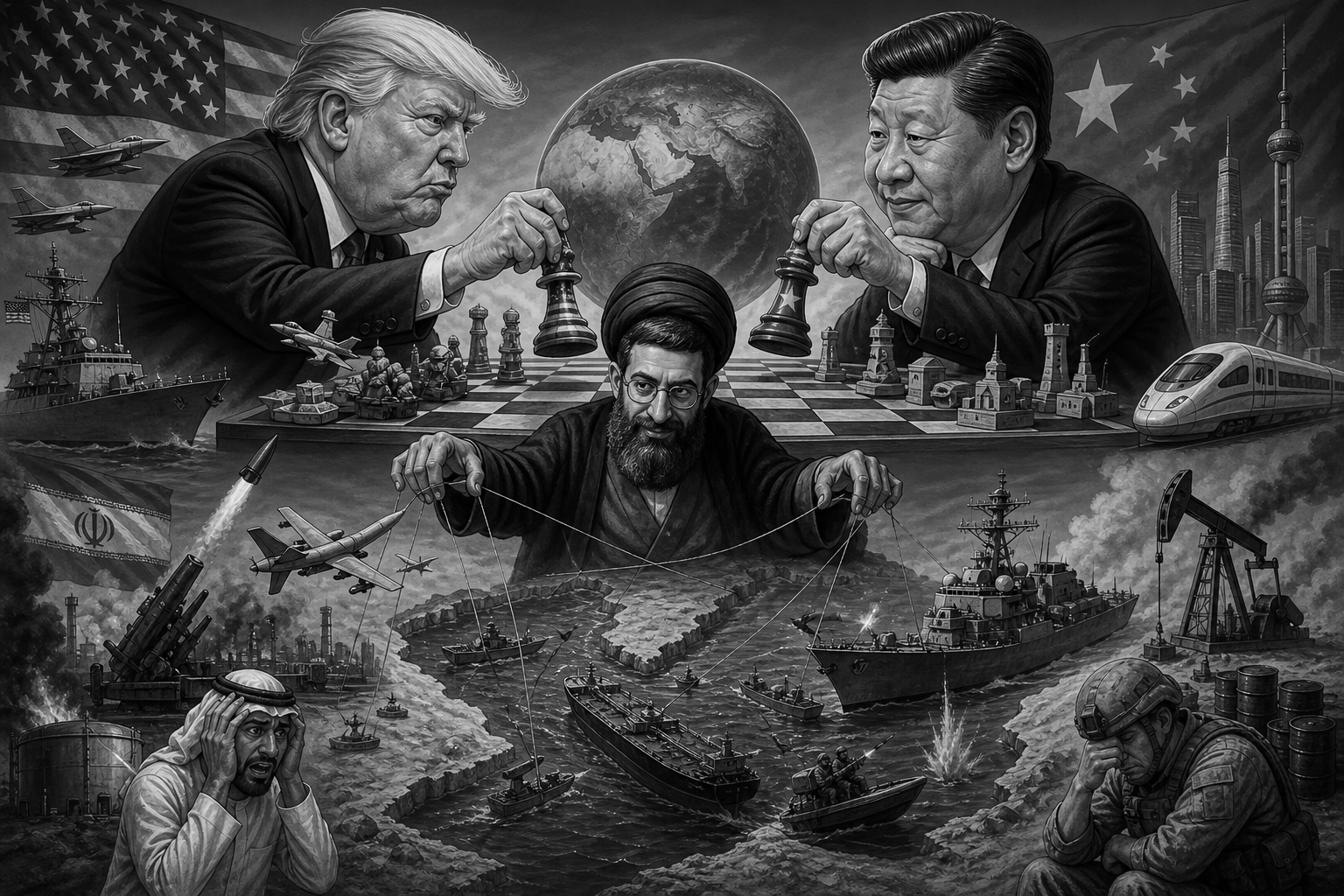
Trump vs Xi Over Iran War: US Accuses China of Funding Tehran Before Beijing Summit
Day 67 of the West Asia war. Nine days before Donald Trump lands in Beijing. And somewhere between those two facts lies the most important geopolitical story of this moment, not the drones over the UAE, not the blockade at Hormuz, but the question of who holds the real cards when the world's two most powerful men finally sit across from each other on May 14.
That question has a deeply uncomfortable answer for Washington. As one analyst put it bluntly: "The US is fighting without winning. China is winning without fighting." While American destroyers patrol the Strait and Iranian Shaheds keep falling on Gulf infrastructure, Beijing has done something far more elegant, it has simply waited . And the wait, it turns out, has paid off.
Here is the architecture of China's advantage. More than 80 percent of Iranian oil shipments are bought by Beijing, approximately 1.38 million barrels per day . This is done through teapot refineries , small, independent, privately owned facilities with no exposure to Western banks and no international assets, making them virtually untouchable by US sanctions . Payments flow in Chinese yuan or through barter arrangements. It is sanctions evasion at an industrial scale, hiding in plain sight. US Treasury Secretary Scott Bessent has now made the most direct accusation yet, that China is keeping Tehran alive , funding the drones and missiles that have been targeting American personnel and global shipping. Washington is considering secondary sanctions on major Chinese banking institutions. Beijing's response was to invoke its blocking statute for the first time, a legal mechanism telling Chinese firms they are under no obligation to comply with American law on Chinese soil.
The gloves are fully off. And the summit clock is ticking. Trump delayed the Beijing visit once already, reportedly wanting a quick win in Iran to project power before sitting across from Xi. But the Iran war has dragged on, and sources say that rather than demonstrating American strength, the conflict has pulled Washington into an intractable confrontation with spiraling global consequences. Trump's approval rating has plummeted to 36 percent , driven by rising gasoline prices, inflationary pressure, and growing public scrutiny of his foreign policy. He goes to Beijing not as a conqueror but as a president badly in need of a visible win, trade concessions, agricultural purchases, Boeing orders, something he can hold up before November's midterms .
Xi knows this. And Xi is not offering anything for free. Bessent, leading preliminary discussions ahead of the summit, went on Fox News on Monday and said: "Let's see if China steps up with some diplomacy and get the Iranians to open the strait." That is not a negotiating position of strength. That is a public plea . Iran's foreign minister Abbas Araghchi has already traveled to Beijing, and Chinese officials are believed to have played a role in previous ceasefire efforts. Washington needs Beijing to lean on Tehran. Beijing knows it. Tehran knows it. The most optimistic scenario involves China using its economic leverage over Iran in exchange for tariff relief and US acknowledgment of Chinese commercial interests in the Gulf. The most pessimistic involves the summit collapsing entirely, with the Hormuz crisis grinding toward a summer of five-dollar gasoline and renewed military strikes.
Meanwhile, the war itself is mutating. Iran struck the UAE again, Prime Minister Modi condemned the attack. Iran claims civilian boats were hit. The US has not commented. Classic fog of war.
What is also mutating is the technology of survival . The US military has quietly deployed a Ukrainian command-and-control platform called Sky Map at Prince Sultan Air Base in Saudi Arabia, a base roughly 640 kilometres from Iran that has absorbed repeated drone and missile barrages since February. Ukrainian specialists are already on the ground, training US troops on the software. This, weeks after Trump publicly declared on Fox News that America did not need Ukraine's help in drone defence. The base tells a different story. Iran has already identified the counter-drone architecture and struck a Ukrainian anti-drone depot in Dubai, describing it as part of the "hideouts of American commanders and soldiers." The hunter is now hunting the hunters.