
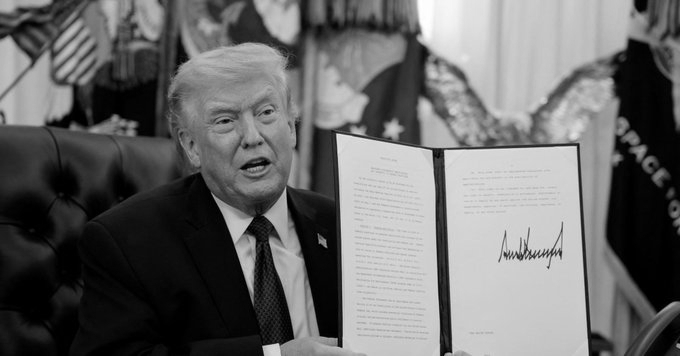
Trump Signs Executive Order for National Voter List, Faces Likely Legal Battles
President Donald Trump on Tuesday signed an executive order to create a nationwide list of verified eligible voters , a move that is expected to face intense legal challenges . The order directs the Department of Homeland Security , in coordination with the Social Security Administration , to compile voter information from each state. It also seeks to bar the US Postal Service from sending absentee ballots to individuals not included on these lists and proposes secure ballot envelopes with unique barcodes for tracking.
Trump described the initiative as “really great,” but experts say it is likely to be blocked. Legal scholars argue that the president has no constitutional authority to control state-run elections. In the U.S., elections are highly decentralised , conducted by local election officials across thousands of jurisdictions, and overseen by the states , not the federal government. The Elections Clause of the Constitution gives Congress power over federal election regulations, but does not allow the president to directly administer elections.
The move is politically controversial, coming ahead of the 2026 midterm elections , and follows Trump’s March executive order that sought proof-of-citizenship requirements and stricter mail-in ballot rules. Much of that order was blocked after lawsuits from voting rights groups and Democratic state attorneys general. Trump continues to allege widespread voter fraud , particularly in Democratic-run areas, despite audits and court rulings showing such claims are unfounded . Mail-in ballot fraud is extremely rare, occurring in only about four cases per 10 million ballots according to a 2025 Brookings Institution report.
The plan has drawn comparisons with India’s State-wise or national voter registration system (SIR) , where the Election Commission of India (ECI) maintains state-level and national electoral rolls. Unlike the U.S., India’s system is constitutionally mandated , transparent, and legally backed, avoiding the constitutional and practical challenges Trump is likely to face. In India, voter lists ensure eligible citizens can participate, but ballots are not restricted or controlled by political figures.
Experts predict Trump’s national voter list could face constitutional, legal, and technical hurdles , including disputes over states’ rights , potential voter disenfranchisement , and challenges to federal control of the US Postal Service . A former Justice Department lawyer, David Becker , said, “The Constitution is very clear the president has no power over elections in the states. This will be blocked as soon as lawyers can get to the courthouse.”
The executive order reflects Trump’s continued efforts to influence election procedures despite repeated legal setbacks and the deeply decentralised nature of U.S. elections .