
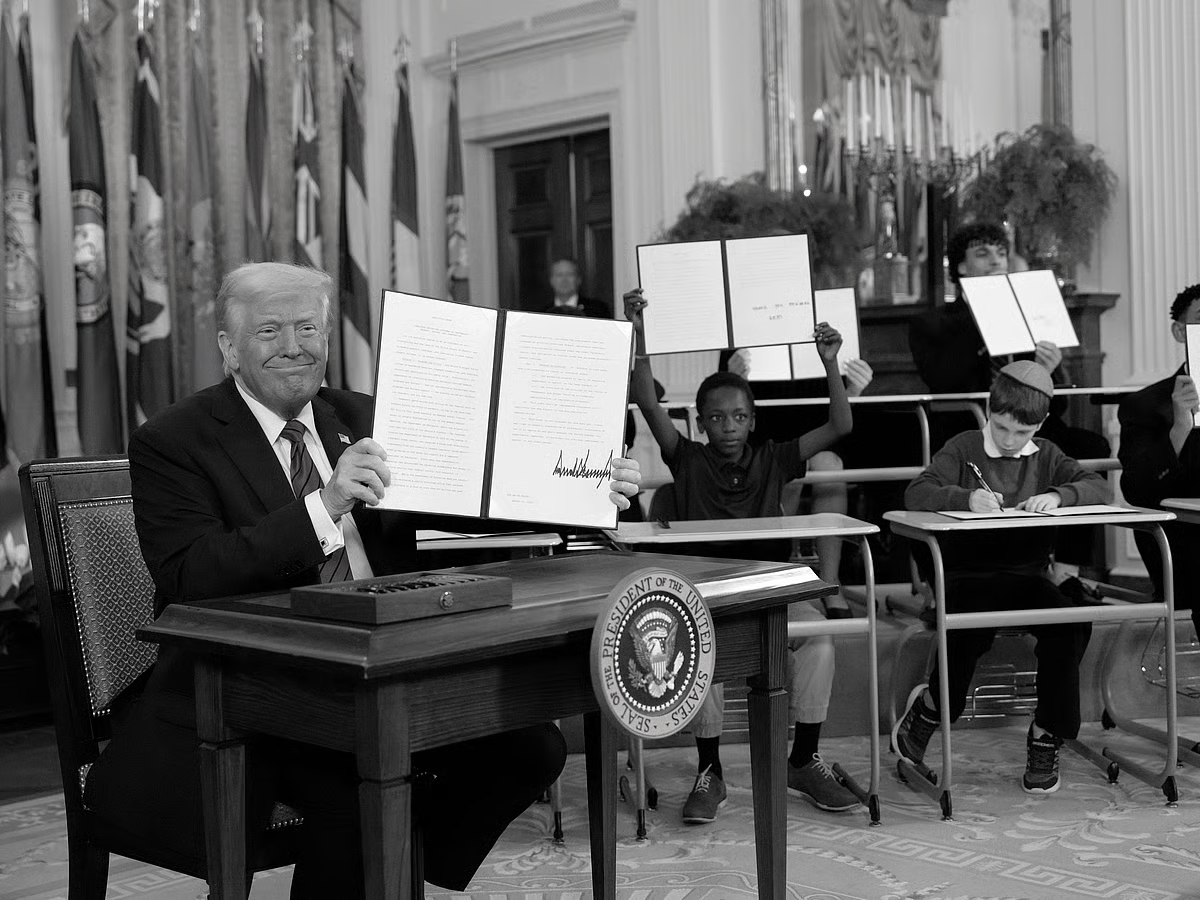
Trump signs defence policy bill, strengthening US-India ties and Quad engagement
US President Donald Trump on Thursday signed the National Defence Authorisation Act (NDAA) 2026 , a key law that sets out how the United States will fund its defence and security programmes in the coming year and which regions it will prioritise. The legislation places strong emphasis on the Indo-Pacific, highlighting deeper engagement with India and the Quadrilateral Security Dialogue (Quad) as part of Washington’s strategy to strengthen regional security and counter growing challenges from China in the region.
The Quad, established in 2017, has since developed as a strategic grouping for military cooperation, maritime security, humanitarian aid, disaster response, and broader regional stability. The NDAA 2026 strengthens this engagement, signalling that the US will continue to expand bilateral and multilateral defence ties in the region.
The requirement to establish a joint consultative mechanism under the U.S.-India Strategic Security Dialogue to review and implement India’s nuclear liability rules is a newly introduced obligation under the recently enacted U.S. defence policy law. While the 2008 U.S.-India Civil Nuclear Cooperation Agreement provides the longstanding framework for nuclear cooperation between the two countries, it did not previously mandate a formal, recurring consultative body or reporting schedule. Under the new law, the Secretary of State must set up the mechanism, ensure it reviews India’s domestic nuclear liability rules for alignment with international standards, and submit progress reports within 180 days of enactment and annually for five years.
The Act also directs the Secretary of Defence , in coordination with the Secretary of State, to establish a security initiative to strengthen cooperation among the defence industrial bases of the US and its Indo-Pacific allies, including Australia, Japan, South Korea, India, the Philippines, and New Zealand. This initiative aims to improve capability, workforce, supply chain security, interoperability, and resilience among partner nations.
Analysts say the law positions India to benefit from advanced military technology, intelligence sharing, and enhanced maritime capabilities, while reinforcing its role in regional security frameworks. At the same time, closer US-India and Quad cooperation is expected to put strategic pressure on China, which may view the development as a counterbalance to its influence in the South China Sea and broader Indo-Pacific region.
While the move strengthens India’s defence and diplomatic standing, experts caution that careful management of India-China relations will be crucial to prevent escalation along contested borders, including the Line of Actual Control (LAC).
The law authorises funding for the Department of War , Department of Energy , Department of State, Department of Homeland Security, the Intelligence Community, and other agencies. President Trump said the Act would help implement his “Peace Through Strength” agenda, protect the homeland from threats, strengthen the defence industrial base, and eliminate wasteful programmes.
The NDAA 2026 cements US-India defence ties, strengthens Quad engagement, and signals a robust American focus on the Indo-Pacific, though it may heighten regional tensions with China.