
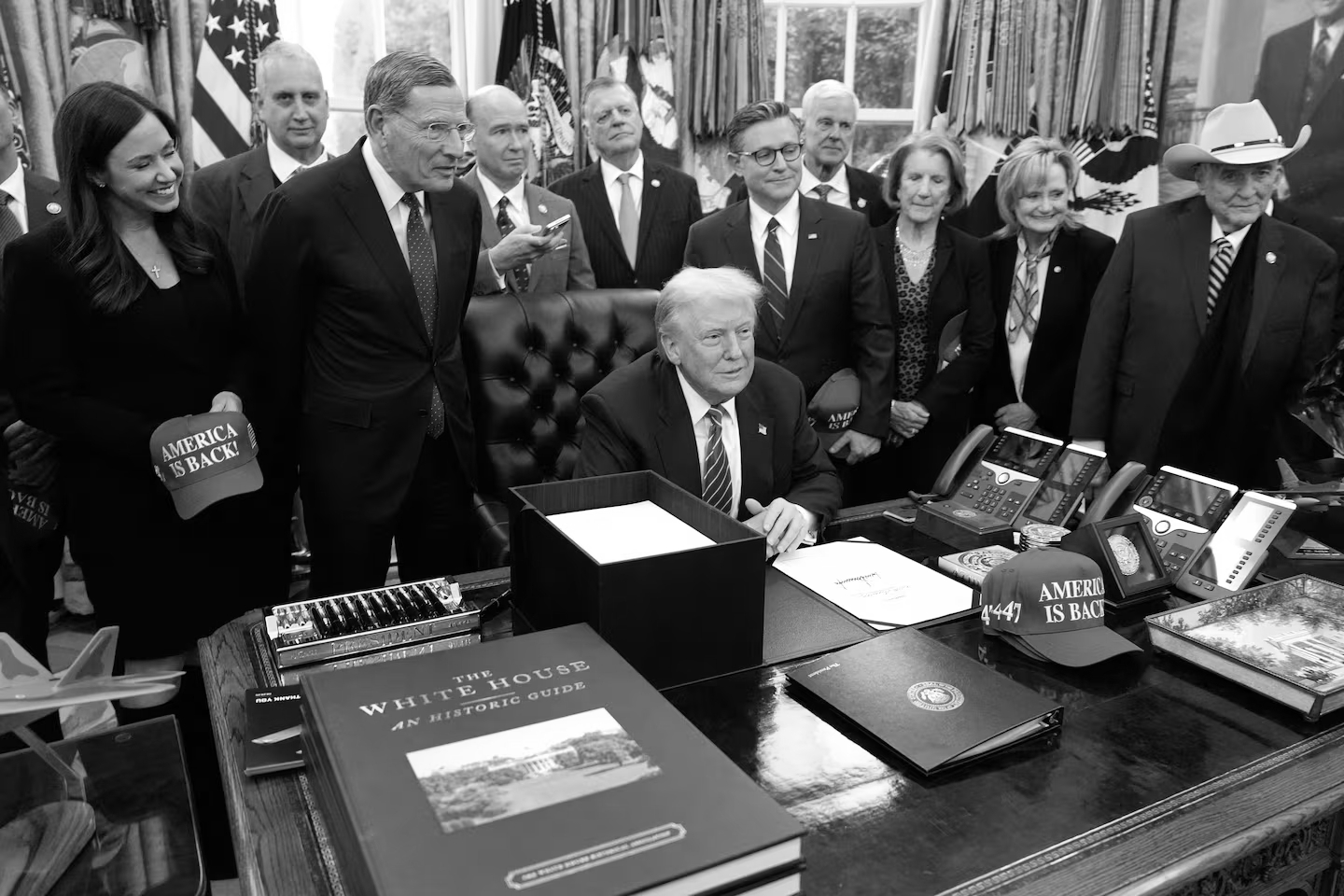
Trump signs bill to end partial government shutdown, setting stage for next fight
The passage of a sweeping $1.2 trillion U.S. government funding bill has brought an end to a brief but disruptive partial federal shutdown , while simultaneously setting the stage for a far more politically volatile confrontation over immigration enforcement and national security policy. President Donald Trump swiftly signed the bill into law after it cleared the House of Representatives by a razor-thin 217–214 vote , restoring funding stability to most federal agencies through September 30 and preventing wider disruptions to public services.
However, the agreement represents less of a resolution than a temporary truce. Lawmakers deliberately carved out the Department of Homeland Security from long-term funding, approving money for the department only through February 13 . This short-term extension ensures immigration enforcement will dominate congressional negotiations almost immediately. The debate is expected to focus heavily on the powers and practices of U.S. Immigration and Customs Enforcement (ICE) and other DHS components, making border security and enforcement accountability the central flashpoints in Washington’s next budget battle.
Democrats are using the looming deadline to press for significant operational reforms . House Democratic Leader Hakeem Jeffries has signaled that his party will not support further stopgap funding for DHS without substantial changes to immigration enforcement practices. Proposals under discussion include stronger oversight standards , expanded use of body cameras , clearer rules of conduct for agents, and tighter legal safeguards governing arrest procedures. The push follows heightened public scrutiny of federal enforcement actions and reflects broader Democratic concerns over civil liberties and accountability.
Republicans, meanwhile, are portraying the funding bill as a strategic win despite the temporary DHS compromise. Speaker Mike Johnson emphasized that Congress avoided passing a massive year-end omnibus package a format many conservatives argue fuels excessive spending. Instead, lawmakers advanced individual appropriations measures, which Republicans say improves transparency and preserves fiscal discipline. The agreement also protected existing defense funding and border security structures while preventing deeper cuts to enforcement agencies.
Still, the GOP made notable concessions. Hardline conservatives did not secure the sharper overall spending reductions they sought, and the two-week DHS funding window effectively gives Democrats negotiating leverage in the next round of talks. The bill also reinforces Congressional authority over how funds are used, limiting the executive branch’s ability to redirect money without legislative approval. The narrow vote underscored divisions within both parties and highlighted how fragile bipartisan cooperation has become.
Unlike last year’s prolonged shutdown, this episode caused comparatively limited disruption because earlier appropriations had already secured funding for critical services such as nutrition assistance and national parks. Roughly 96 percent of government operations continued uninterrupted. Yet the remaining 4 percent tied directly to homeland security and immigration enforcement may prove the most politically explosive. While the shutdown has ended for now, Washington is heading into a high-stakes clash that could redefine immigration policy and test the balance between enforcement authority and civil-rights protections in the weeks ahead.