
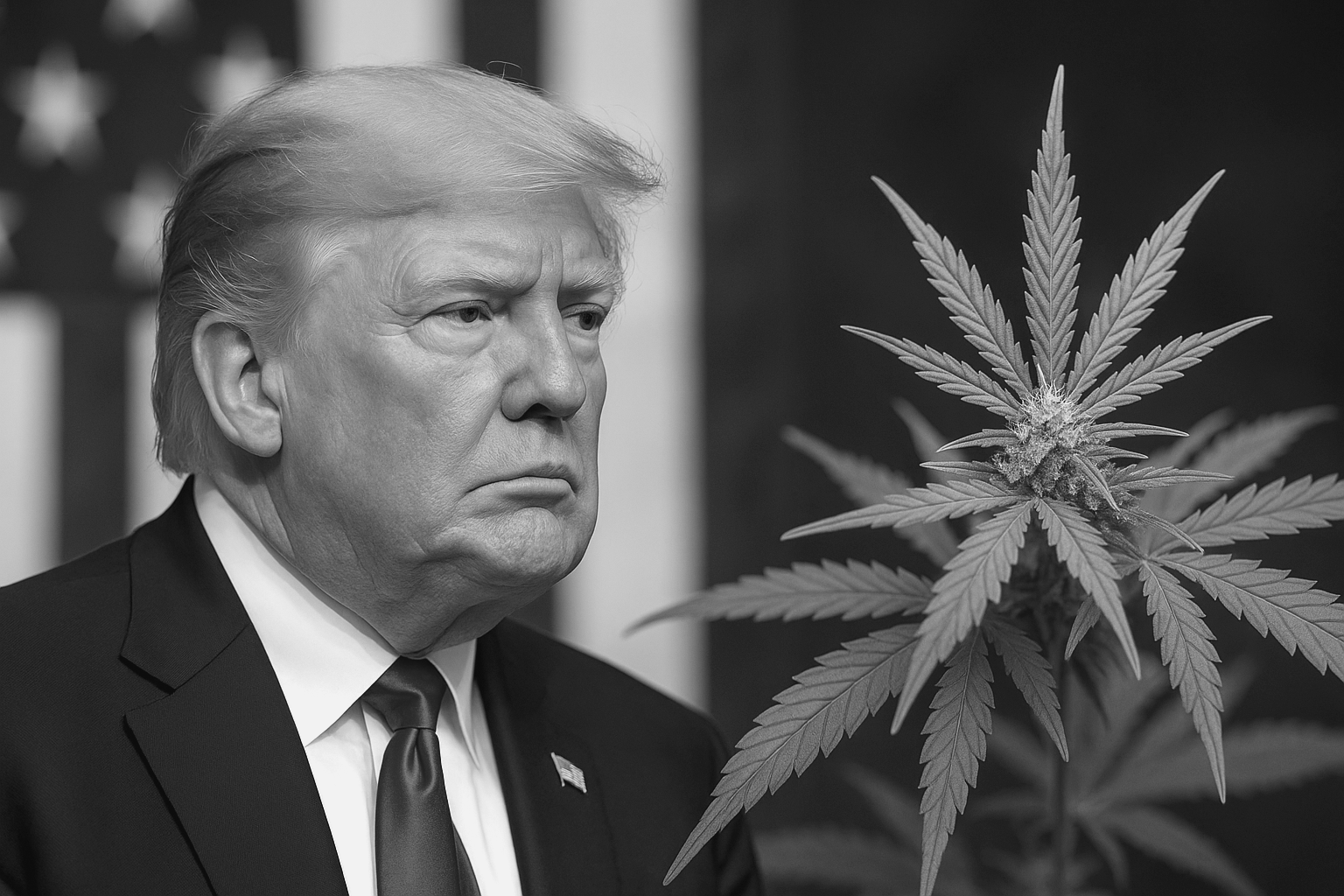
Trump revisits Marijuana reclassification plan first begun under Biden
US President Donald Trump on Monday said his administration is “considering” reclassifying marijuana as a less dangerous drug, a move that could significantly ease restrictions on scientific research and offer regulatory relief to the fast-growing cannabis industry.
Speaking in the Oval Office, Trump said the reclassification was being examined seriously as it would unlock research currently blocked under federal law. The remarks came amid reports that the White House is weighing an executive order to advance the process, first initiated under former President Joe Biden in 2024 but left incomplete before he exited office.
Marijuana has been listed as a Schedule I drug since 1971 , placing it alongside heroin and LSD , a classification that deems it to have no accepted medical use. Reclassifying it to Schedule III would align it with substances such as ketamine and codeine-based medications, easing federal controls without fully legalising it nationwide.
While rescheduling would not amount to full decriminalisation, it could have wide-ranging implications for states where marijuana is already legal. Currently, 24 US states and Washington, D.C. allow recreational marijuana use , including California, New York, Illinois, Colorado, Michigan, New Jersey, Ohio, Arizona and Washington, while 42 states permit medical marijuana in some form.
The legal cannabis sector has grown into a major economic force. The US marijuana industry is estimated to be worth around $35–40 billion annually , supporting hundreds of thousands of jobs across cultivation, retail, research and ancillary services. Analysts say the industry’s total economic impact, including taxes and indirect employment, runs well above $100 billion .
However, Democrats questioned Trump’s intent, accusing him of using the issue for political gain. Senator Ron Wyden said the proposal fell short of meaningful reform, arguing that it neither expunges past convictions nor ends federal penalties.
As the debate continues, the central question remains whether reclassification will translate into concrete regulatory change or remain a symbolic gesture ahead of a high-stakes election cycle.