
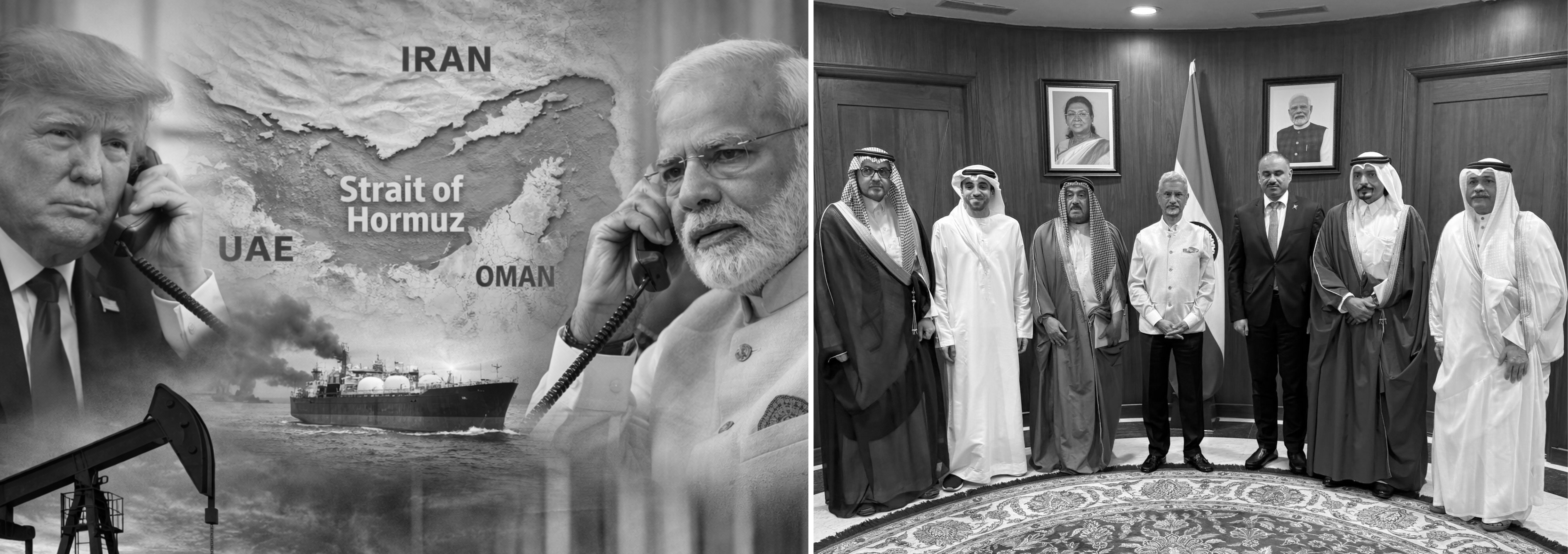
Trump - Modi Call Draws Attention to Hormuz and Global Energy Supply
India has moved swiftly to navigate the escalating West Asia conflict , as rising tensions threaten to disrupt global energy supplies and economic stability. In a significant development, Prime Minister Narendra Modi and US President Donald Trump held a phone conversation their first since the US and Israel launched coordinated strikes on Iran on February 28 signalling the growing urgency of the crisis.
During the call, Modi underscored India’s position, backing de-escalation and an early return to peace. He stressed that keeping the Strait of Hormuz open, secure and accessible is vital for global energy flows. The narrow maritime corridor is a lifeline for the world economy and a critical artery for India, through which nearly 40% of its crude imports pass.
The impact of the conflict is already being felt. Disruptions have begun to ripple across air travel , shipping , and gas supply chains, pushing oil prices higher and raising inflationary pressures worldwide. For India the world’s third-largest oil consumer with over 85% crude dependence on imports the risks are particularly acute.
Acknowledging the gravity of the situation, Modi told Parliament that the crisis has posed unprecedented challenges for India . However, he offered reassurance, noting that the country’s economic fundamentals remain strong and that there is adequate availability of petroleum, fertilisers and coal to manage potential disruptions.
On the diplomatic front, External Affairs Minister S. Jaishankar has been actively coordinating with global and regional partners. He held a telephonic conversation with US Secretary of State Marco Rubio, focusing on energy security and the broader global economic impact of the conflict.
Jaishankar also met envoys from the Gulf Cooperation Council nations in New Delhi , seeking stability in energy supplies and support for the Indian diaspora in the Gulf. Additional discussions with Sri Lanka and Germany reflect India’s widening diplomatic outreach.
As tensions continue to simmer, the Strait of Hormuz remains at the centre of global concern. Any prolonged disruption could trigger wider economic shocks, testing not just markets but the resilience of nations like India that depend heavily on stable energy flows.