
Trump Extends Iran Ceasefire, Fears Collapse as Tehran Skips Pakistan Talks
The clock ticked down to zero and then reset. On Day 54 of the West Asia crisis , a ceasefire that was supposed to expire did not. Within hours of a midnight deadline that Washington had drawn with considerable fanfare, US President Donald Trump made a surprise announcement on Truth Social: the truce would continue. No hard deadline. No clear timeline. And no formal acceptance from the other side.
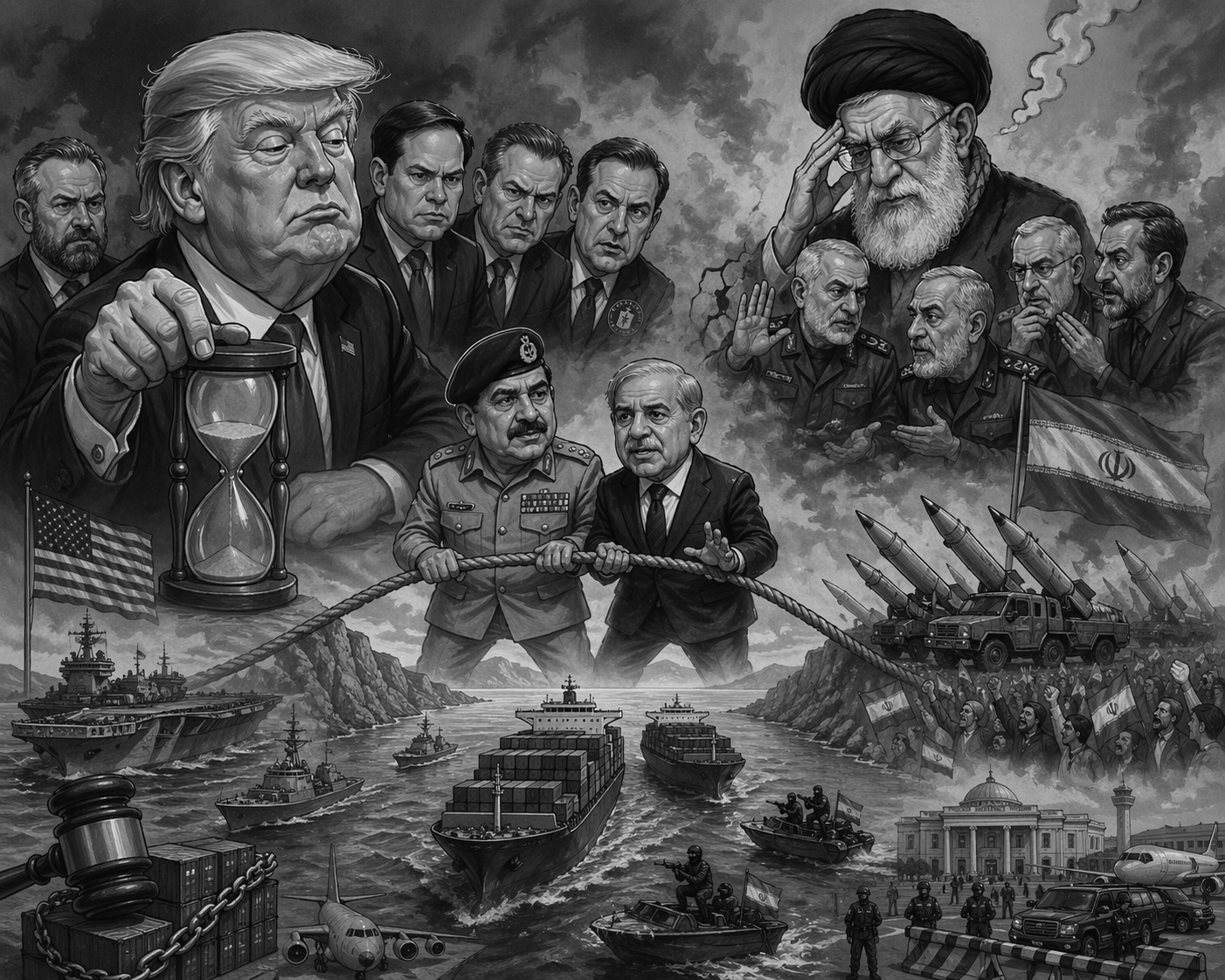
It was, by any measure, a remarkable pivot from a president who had, only hours earlier, threatened to drop bombs if a deal was not reached. What changed was not Iran's position, Tehran had offered no formal response, but rather Washington's reading of why the silence existed. Inside a White House meeting that included Vice President JD Vance, Secretary of State Marco Rubio, Defense Secretary Pete Hegseth, and CIA Director John Ratcliffe, the prevailing assessment was striking: Iran's leadership is fractured , and the silence is not defiance. It is confusion.
Trump's own post spelled it out in language both blunt and revealing. He described the Iranian government as "seriously fractured" and said the ceasefire had been extended at the request of Pakistani Field Marshall Asim Munir and Prime Minister Shehbaz Sharif . Islamabad had asked Washington to hold its fire while Iran's representatives worked toward a unified position. Trump, who typically prefers to be the one keeping everyone guessing, chose to wait.
At the heart of the paralysis in Tehran is a question that Washington itself cannot definitively answer: who is actually in charge? Supreme Leader Mojtaba Khamenei has been conspicuously absent from public view. Trump has claimed Mojtaba may be severely injured. Others suggest he is in hiding, acting as a consensus figure, or simply not fully in control. What all these accounts share is a single, unsettling implication: there is no single authority in Tehran capable of signing off on a deal .
The sea itself did not wait for diplomacy to catch up. Despite the ceasefire extension, the maritime standoff around Hormuz has only intensified. At least two container ships came under fire near the strait, with Iranian forces reportedly seizing them and escorting them into Iranian waters. A third vessel, described as Greek-owned, was separately targeted. Tehran accused the ships of operating without proper authorization. Independent confirmation remains elusive, but the pattern is unmistakable: the air strikes may have paused, but the economic war at sea has not .
Trump has made clear that the US naval blockade on Iranian trade will continue regardless of the ceasefire's status. Iran calls this an act of war. Washington calls it leverage. The distinction matters less than the consequence: every tanker stopped, every cargo ship turned back, is another pressure point in a standoff that has not moved meaningfully toward resolution. Reinforcing that pressure, the United States also announced fresh sanctions targeting 14 individuals, companies, and aircraft under what it calls Operation Economic Fury , entities across Iran, Turkey, and the UAE accused of helping move weapons components for Tehran.
Meanwhile, in Islamabad, the city prepared for a diplomatic event that may or may not happen. Security tightened. Key routes were restricted. JD Vance had been set to fly to Pakistan for round two. His plane sat on the tarmac at Joint Base Andrews before the trip was put on hold. Iran had not confirmed whether its own delegation was coming. After the first round collapsed without agreement, Islamabad is acutely aware of what another failure would mean, for its own credibility, and for the region.
Back in Iran, the regime chose a different kind of message. Ballistic missiles on launchers were paraded through pro-government crowds , flags waving, slogans chanting. It was not merely a parade. It was a statement, to Washington, to Tel Aviv, and to Iran's own domestic audience, that whatever fractures exist at the top, the Islamic Republic's arsenal remains intact and on display . Whether that represents genuine military confidence or a performance of unity that the leadership no longer feels internally is a question the missiles alone cannot answer.
What this moment reveals, more than anything, is the strange asymmetry at the core of the current standoff . The United States is applying maximum pressure, sanctions, blockades, the ever-present threat of resumed strikes, while simultaneously waiting for Iran to produce a coherent negotiating partner. Iran, for its part, is projecting defiance while privately struggling with the very coherence Washington is waiting for. Pakistan is trying to hold both ends of a rope that neither side is fully gripping. And the strait sits at the center of it all, with ships being seized and missiles being rolled out and ceasefire extensions announced without the other side formally agreeing.