
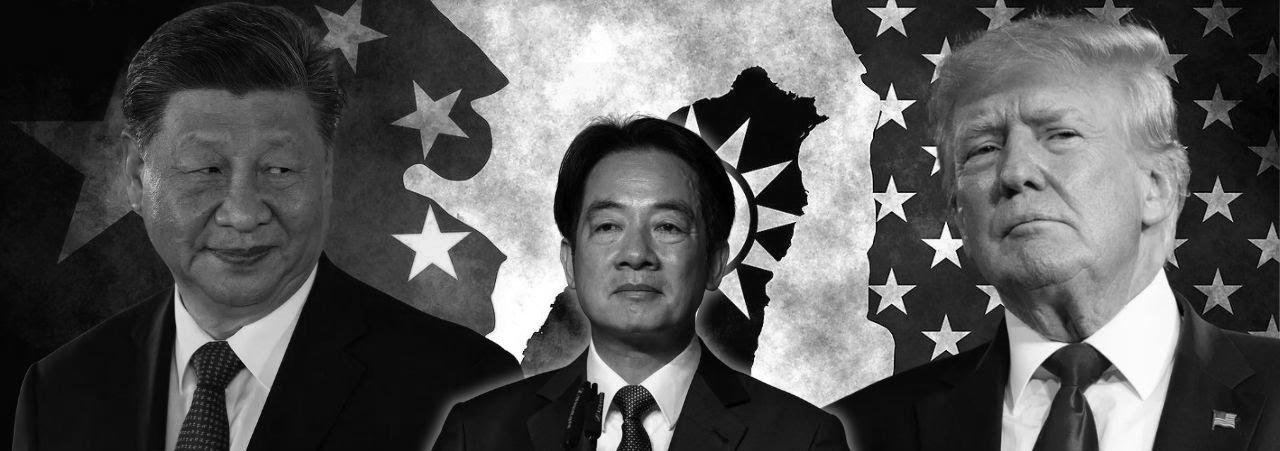
Trump downplays risk as China escalates Taiwan drills in Justice Mission‑2025
China’s People’s Liberation Army (PLA) has sustained heavy and highly visible military drills around Taiwan through December 31, 2025 , in a series of exercises Beijing calls “Justice Mission‑2025.” The operations, which began on December 29 , involve naval, air force, rocket force, and joint forces unit activities aimed at demonstrating combat readiness and deterring what China calls “external interference” and “separatist forces.” Unlike routine training, this round of drills has featured extensive live‑fire rocket launches, simulated blockades of Taiwan’s ports, and rehearsals of joint air‑sea operations in multiple surrounding seas.
Taiwan’s defence authorities reported unusually high numbers of Chinese military assets operating in the area, with dozens of aircraft crossing the Taiwan Strait median line and numerous naval and coastguard vessels near the island in the 24‑hour period through December 31. The PLA’s manoeuvres have effectively choked two of Taiwan’s major shipping routes , raising concerns over trade and supply chain disruptions. Taipei’s armed forces have conducted rapid‑response exercises and maintained heightened monitoring of maritime and air traffic due to the drills.
U.S. President Trump said he was “not worried” about the situation, citing his strong personal relationship with Chinese President Xi Jinping and saying he did not believe Beijing intended to escalate into a broader conflict. Trump dismissed fears of imminent war, suggested that China has been conducting similar drills for many years without open conflict, and claimed that Xi had indicated to him that Beijing would avoid military action against Taiwan while he remains in office. Trump’s remarks contrasted with alarms from Taipei and other capitals, reflecting a belief that China’s actions do not necessarily signal a move toward outright war.
Japan’s response has been firm. Japan’s foreign ministry said it had officially conveyed “serious concerns” to China over the military exercises, noting that the drills “increase tensions across the Taiwan Strait” and stressing that peace and stability in the Taiwan Strait are important not only to Japan but to the entire international community.” Tokyo reiterated its longstanding position that the Taiwan issue should be resolved peacefully through dialogue and said it would continue to monitor developments closely.
European nations and the European Union (EU) also expressed strong concern. The EU’s foreign affairs service issued a statement opposing any unilateral actions that would change the status quo and warning that the drills further heighten tensions and endanger peace and stability in the region. London echoed this, with the United Kingdom’s foreign office calling for restraint and peaceful resolution through constructive dialogue, and rejecting any attempts to alter the regional balance by force. Paris, Berlin , and other member states voiced similar sentiments, emphasizing that the Taiwan Strait’s peace is vital to global security and prosperity.
China’s government has pushed back strongly against these international reactions, labelling criticism from Japan, Australia, the EU, and certain European countries as “irresponsible” and interference in China’s internal affairs. Chinese officials defended the drills as justified actions to safeguard national sovereignty and territorial integrity, and reiterated that perceived “separatist forces” and foreign interference are the real threats to peace in the region.
Regional partners beyond Europe and Japan have also joined in expressing concern. Countries in East Asia, including South Korea and the Philippines , have underscored the importance of maintaining peace and stability across the Taiwan Strait and urged all parties to avoid actions that could further escalate tensions.
Taipei has strongly condemned the drills as provocative and destabilising to regional peace. Taiwan’s president described the exercises as not isolated incidents but part of a broader pattern of coercive pressure that affects Taiwan’s security, disrupts major shipping routes, and impacts global trade flows. Taiwan’s transport authorities also reported disruptions to civilian air traffic due to the restricted areas around the drills, although commercial shipping has continued with cautions to avoid restricted zones.
Analysts note that the 2025 drills are among the most expansive in recent years, reflecting a trend in increasingly sophisticated joint training that blurs the line between routine exercises and strategic coercion. Some see this as part of China’s broader efforts to refine its anti‑access and area denial capabilities and to signal its opposition to foreign military cooperation with Taiwan.
Taipei remains on heightened alert. Beijing has not formally announced the end of the exercises, leaving the security situation in the Taiwan Strait closely watched by governments and military observers worldwide.