
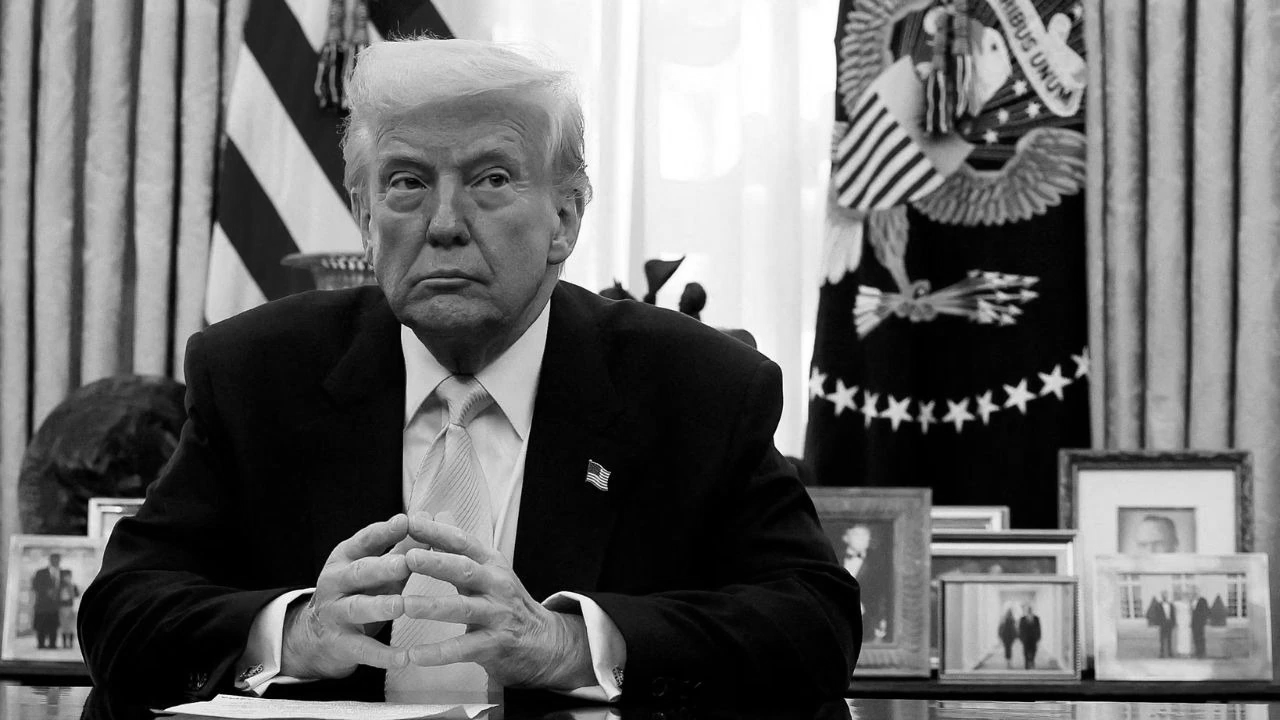
Trump declares South Africa “Not Worthy” of G20, bars it from 2026 Miami summit
President Donald Trump announced that South Africa will not receive an invitation to the 2026 G20 Summit, which will be hosted under the US Presidency in Miami, Florida. Trump described South Africa as not “worthy” of membership in any international forum, citing alleged human rights violations against Afrikaners and other descendants of European settlers.
The United States will assume the G20 Presidency from December 1, 2025, to November 30, 2026, taking over from South Africa, which held the presidency for the year-long term beginning December 1, 2024. South Africa hosted the G20 Leaders’ Summit in Johannesburg from November 22–23, 2025, marking the first time the summit was held on African soil.
In a post on his platform, Truth Social, Trump accused the South African government of failing to acknowledge or address what he called the “horrific human rights abuses” endured by Afrikaners and other white communities. He said South Africa had “demonstrated to the world that it is not a country worthy of membership anywhere,” and announced that all payments and subsidies to the country would be stopped immediately.
Trump also criticised South Africa for allegedly refusing to hand over the G20 Presidency to a senior US Embassy representative at the conclusion of the Johannesburg summit. “At the conclusion of the G20, South Africa refused to hand off the G20 Presidency to a senior representative from our US Embassy,” Trump said. He added that the 2026 summit would instead be hosted in Miami, Florida, which he described as the “Great City” near his golf club.
The US President further made stark claims, stating that South Africa was “killing white people and randomly allowing their farms to be taken from them.” He criticised the international media for not reporting on this alleged violence, accusing outlets such as The New York Times of ignoring what he termed a “genocide” against white South Africans.
South Africa’s Response
South African President Cyril Ramaphosa described Trump’s statements as “regrettable.” The Presidency of South Africa issued a detailed statement emphasising that the Johannesburg G20 Summit was attended by several heads of state and government and was widely regarded as one of the most successful summits of recent years.
Prime Minister Narendra Modi attended the Johannesburg summit and praised the country for its efforts in hosting a gathering that, he said, would contribute to a prosperous and sustainable planet. “I’d like to thank the wonderful people of South Africa, President Ramaphosa, and the Government of South Africa for organising the Summit,” Modi had remarked.
The South African statement clarified that the instruments of the G20 Presidency were duly handed over to a US Embassy official, despite the absence of US government representatives at the summit. It highlighted South Africa’s longstanding commitment to consensus, collaboration, and partnership within the G20, stressing that the country’s membership is recognized and endorsed by all other members.
South Africa also reaffirmed that it is a sovereign, constitutional, democratic nation and does not appreciate what it considers insulting remarks from another country regarding its G20 participation or international standing. The government called on all G20 members to reaffirm the principles of multilateralism, ensuring that all countries participate on an equal footing in the forum.
“It is regrettable that despite efforts by President Ramaphosa and his administration to reset diplomatic relations with the United States, punitive measures continue to be applied against South Africa based on misinformation and distortions about our country,” the statement added.
Historical Context and Diplomatic Tensions
In February 2025, shortly after being sworn in for a second term as US President, Trump had condemned South Africa for enacting legislation that allowed the government to seize Afrikaner-owned agricultural property without compensation, calling it a shocking disregard for human rights.
The Johannesburg G20 Summit itself was a landmark for South Africa and the African continent. As the first African host of a G20 Leaders’ Summit, South Africa played a pivotal role in setting the global economic agenda, promoting sustainable development, and fostering dialogue among major economies. Multiple heads of state, including those from emerging and developed economies, attended, reflecting the summit’s global significance.
Despite the absence of the US delegation, South Africa ensured the smooth functioning of the G20, demonstrating procedural integrity by formally handing over the G20 Presidency instruments to the US Embassy representative. The summit focused on economic cooperation, climate action, sustainable growth, and global prosperity, and was widely praised by attending leaders as constructive and effective.
Global Implications of the Dispute
The public dispute between Trump and South Africa has sparked broader questions about the credibility of the G20 and the strength of its principles of consensus and multilateralism. Analysts suggest that when member countries are publicly criticised or excluded, it can erode trust among participants, raise doubts about the forum’s neutrality, and shift attention away from substantive economic issues to political conflicts.
Emerging economies, particularly from Africa, may perceive such disputes as a signal that their leadership and participation can be challenged by political disagreements, potentially affecting their engagement in future global platforms. Media coverage of the dispute may also overshadow achievements of the summit and the G20’s multilateral initiatives.
However, such conflicts can also serve as a reminder for the G20 to reinforce procedural safeguards and reaffirm the forum’s commitment to equal participation, dialogue, and cooperative problem-solving among all members.
South Africa’s Position Moving Forward
Despite Trump’s announcement and criticisms, South Africa has reiterated that it will continue to participate as a full, active, and constructive member of the G20. The country called on all member states to uphold the spirit of consensus, multilateralism, and equitable collaboration that defines the G20 as the premier platform for international economic cooperation.
In conclusion, South Africa’s G20 Presidency in 2025 was historic, widely recognised as successful, and set important precedents for Africa’s role in global economic governance. While diplomatic tensions with the US have emerged, South Africa maintains its commitment to constructive engagement, multilateralism, and global cooperation, signalling that it will continue to assert its voice on the world stage.