
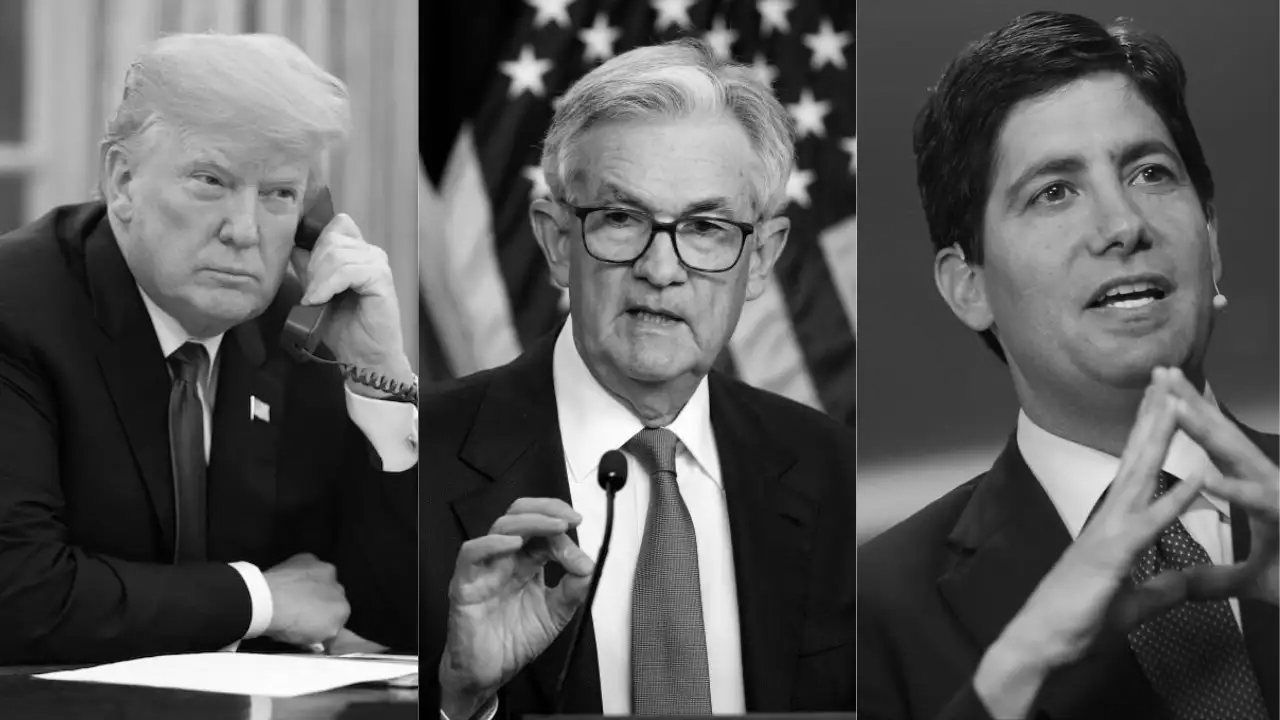
Trump Ally Kevin Warsh Replaces Jerome Powell After Narrow Senate Vote as Inflation Stays High
The Senate voted 54-45 to confirm Kevin Warsh as the next chairman of the Federal Reserve replacing Jerome Powell whose term expires this Friday. Only Pennsylvania Democrat John Fetterman crossed party lines to support the nomination.
To understand why this moment matters, the history between Trump and the Fed runs deep. Back in 2017, Trump chose Powell over Warsh, seeing Powell as more malleable , a decision he has openly regretted ever since. Over the years, Trump called Powell a "numbskull," a "stubborn mule," and "Mr. Too Late," repeatedly pressuring him to slash interest rates while Powell held firm on data-driven decision-making. The conflict came to a head when the Department of Justice launched a criminal investigation into Powell over Congressional testimony about a $2.5 billion Fed headquarters renovation , which Powell publicly called a pretext for political intimidation, stating plainly: "This is about whether the Fed will be able to continue to set interest rates based on evidence and economic conditions."
Trump turned to Warsh precisely because of their long personal relationship, writing on Truth Social: "I have known Kevin for a long period of time and have no doubt that he will go down as one of the GREAT Fed Chairmen." Warsh was also shortlisted for Treasury Secretary before Trump picked Scott Bessent , underlining the depth of trust between them. Crucially, Warsh shifted his public stance on rates to align with Trump's preferences, despite holding notably hawkish views on inflation throughout his earlier Fed career, he began advocating for lower rates last year, in line with the White House position.
Yet the relationship carries its own risks. Trump himself acknowledged that Fed chairs " change once they get the job ," and Warsh at his confirmation hearing pledged to be a strictly independent actor , promising never to take orders from the White House. He also laid out a sweeping reform agenda: reducing the Fed's $6.7 trillion balance sheet , cutting annual policy meetings from eight to as few as four , scaling back press conferences, and ending the practice of telegraphing future rate moves, all changes JPMorgan analysts confirm fall within his authority.
The economic environment gives him very little room for political accommodation. Inflation stands at 3.8% annually , its sharpest rise in nearly three years, worsened by oil price spikes tied to conflict disrupting the Strait of Hormuz . At the last rate-setting meeting in April, three FOMC members signalled their next move could as easily be a rate increase as a cut. Markets place a 97% probability on rates holding steady at 3.50–3.75% at Warsh's first FOMC meeting on June 16–17 .
Warsh received the fewest Senate votes of any Fed chair in history , leaving him with a notably thin political cushion if Trump turns on him, unlike Powell, who had strong bipartisan Senate backing to weather the pressure. If inflation persists and cuts stay off the table, the same dynamic that poisoned the Trump-Powell relationship may well replay itself, only this time, there is no obvious successor waiting in the wings.