
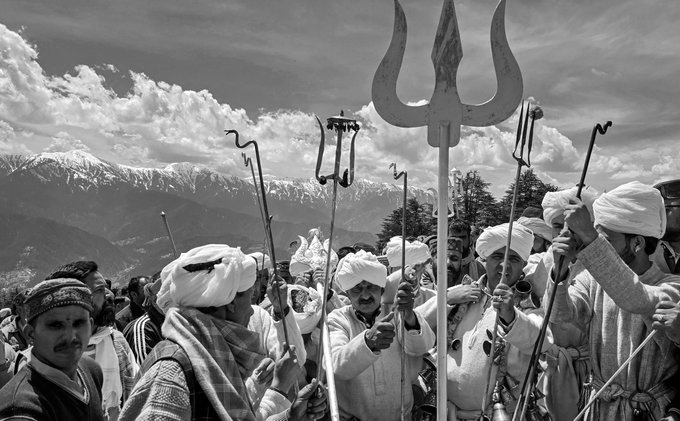
Trek to tranquility: 22,000 devotees gather for Nag Baisakhi at Bhaderwah, J&K
Bhaderwah in Jammu and Kashmir witnessed a massive spiritual gathering as more than 22,000 devotees undertook a demanding uphill pilgrimage to the Subar Nag temple in Doda district to mark Nag Baisakhi, the traditional festival signalling the arrival of spring after months of harsh winter closure. The ancient shrine, believed to be around 700 to 1,600 years old , is situated at an altitude of about 12,000 feet and remains inaccessible during winter due to heavy snowfall, reopening every year on this occasion when the ceremonial kapaat (temple doors opening) is performed with great religious fervour.
The celebrations began early in the day with devotees trekking nearly 12 kilometres through steep and rugged Himalayan terrain to reach the hilltop meadow where the shrine is located. The pilgrimage is widely regarded as one of the most important expressions of the region’s ancient Nag culture , which has been preserved for centuries in the Chenab Valley. Devotees from Bhaderwah and surrounding villages, including Chinta, Bhalaara and Sharora, participated in large numbers, many carrying traditional charris (ceremonial maces) as symbols of devotion while chanting prayers to Lord Subar Nag.
Upon reaching the shrine, devotees took part in age-old rituals that included offerings and prayers, followed by the traditional sacrifice of rams and sheep , a practice rooted in local belief systems and community customs. Cultural celebrations also formed an important part of the gathering, with the performance of the folk Dekhu dance , along with music and communal festivities that brought together pilgrims in a shared expression of faith and identity.
Local priests described the event as the first major Baisakhi celebration in the country, as it begins ahead of the festival observed elsewhere. They also noted that the opening of the temple marks the start of a broader cycle of seasonal Nag festivals that continue for months across Bhaderwah before concluding with winter closures.
Despite the difficult terrain and challenging conditions, officials reported a peaceful conduct of the event with no disruptions. Devotees expressed that the arduous journey was spiritually rewarding, offering both emotional fulfilment and an opportunity for social bonding after the long winter isolation. The Nag Baisakhi pilgrimage thus remains a powerful blend of faith, tradition and cultural continuity in the region.