
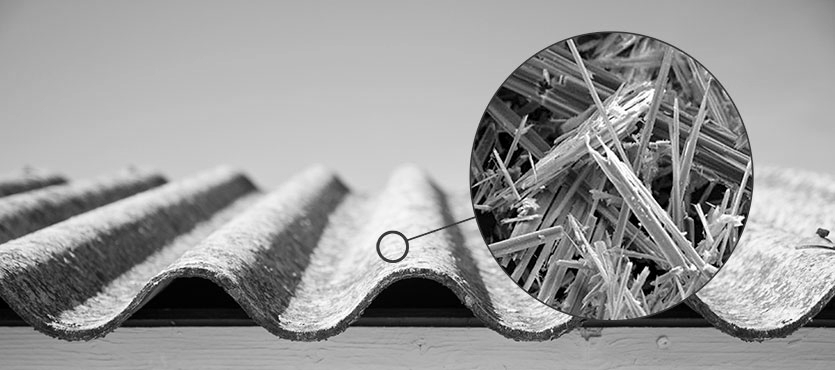
Toxic roofs over young heads: NGT orders phase-out of asbestos in Indian schools
In a landmark decision aimed at protecting children from toxic exposure, the National Green Tribunal (NGT) has directed the Ministry of Environment, Forest and Climate Change (MoEF&CC) to frame a comprehensive policy within six months to phase out asbestos roofing from schools across India.
A Bench of Justice Arun Kumar Tyagi and Afroz Ahmad passed the order while hearing a plea seeking a nationwide ban on asbestos in educational institutions. The Tribunal emphasised that it “cannot remain a silent spectator when the health of children is at stake,” calling for urgent governmental action guided by the precautionary principle under the NGT Act.
What exactly is asbestos
Asbestos is a naturally occurring mineral made up of soft, flexible fibres resistant to heat, electricity, and corrosion. Once hailed as a “miracle material,” it was widely used in roofing sheets, insulation, and construction . But these same fibres, when inhaled, can cause lung cancer, mesothelioma, and chronic respiratory diseases , illnesses that often appear decades after exposure
NGT’s directive
The Tribunal instructed the MoEF&CC to work with the Central Pollution Control Board (CPCB) and the Ministry of Education to draft a nationwide plan that would:
• Phase out asbestos roofing from all schools.
• Develop Standard Operating Procedures (SOPs) for safe removal and disposal.
• Conduct a nationwide survey to identify affected institutions.
• Submit a status report within six months.
• Launch awareness campaigns for safe, sustainable alternatives.
“Children are a vulnerable group,” the Bench observed. “In the face of scientific uncertainty, the benefit of doubt must go to public health.”
Why asbestos is still around
While many Western nations have completely banned asbestos , India has not yet implemented a full national ban , even though mining the mineral is prohibited. The country still imports chrysotile (white asbestos) , mostly from Russia and Brazil, to manufacture cement sheets and roofing.
The government maintains that asbestos use is regulated under the Environment and Air Pollution Acts, but not prohibited. Industry groups argue that asbestos fibres are “locked in cement” and pose no risk during normal use. However, global health agencies including the World Health Organisation (WHO) assert that no level of asbestos exposure is safe .
The continued use of asbestos is also tied to economic realities , as the material is inexpensive and widely used in rural and low-income schools , making an immediate switch financially challenging.
Recent incidents reveal the risks
Across India, multiple incidents have underscored the hazards of asbestos roofs in schools:
• Chhattisgarh (March 2024): Thirteen students injured when an asbestos roof blew off during a windstorm in Korba district.
• Hyderabad (September 2025): Six girls hurt after a sheet collapsed during class at Basharathnagar’s Government High School.
• Vellore, Tamil Nadu (November 2023): Students continued lessons under fragile asbestos roofs that had been declared unsafe for over three years.
These are not isolated tragedies but symptoms of a larger crisis , a neglected public infrastructure where maintenance takes a back seat to cost cutting.
The challenge of safe removal
The Tribunal’s directive also raises a critical question: How will India remove asbestos roofs without exposing workers and students to toxic fibres? Experts warn that the removal process itself can be more hazardous than leaving sheets untouched if not managed properly. Safe removal requires trained personnel, protective equipment, sealed disposal systems, and designated landfill zones , facilities that many Indian states currently lack.
Searching for safer, affordable alternatives
To make the transition feasible, authorities are exploring asbestos free fibre cement sheets , galvanised iron roofing , and eco-friendly composite panels made from rice husk, jute, coconut fibre, and recycled plastic . Though initially more expensive, these alternatives are durable, recyclable , and far less harmful to human health. Some Kendriya Vidyalayas and Navodaya Vidyalayas have already banned asbestos in new construction, setting an example for others.
Why India hasn’t banned asbestos yet
Despite repeated WHO warnings, India’s reluctance to impose a complete ban stems from economic, political, and logistical challenges . The asbestos industry sustains thousands of livelihoods, particularly in rural manufacturing clusters , and provides cheap materials for low cost housing and schools.
Moreover, asbestos related diseases take 20 to 40 years to manifest , which delays public pressure and accountability. Regulators have long relied on the argument of “controlled use,” though enforcement has been inconsistent and under monitored.
The reality beneath the roofs
The NGT’s directive could finally mark a turning point, signalling India’s intent to shift toward asbestos free public spaces , starting with schools. Yet, the deeper issue runs beyond roofs and regulations.
Across the country, incidents keep recurring , and every time a roof collapses or a classroom tragedy unfolds, the headlines flash for a few days, social media outrages flare, and then silence follows. Children die, inquiries begin, and the system moves on.
The harsh truth is that it’s not just the roofs collapsing, it’s the system itself . A system where safety is reactive, accountability is missing, and policy often arrives only after lives are lost. The NGT’s ruling offers a chance to change that narrative, if the government truly listens, acts swiftly, and puts the health of children above the convenience of cost.