

Total Solar Eclipse 2026: Millions To Witness 2 Minutes Of Day Turning Into Night
The total solar eclipse on August 12, 2026, is turning skies dark across parts of the Northern Hemisphere as the Moon passes directly between Earth and the Sun, briefly hiding the Sun’s bright disk from view. The rare event is drawing millions of skywatchers to Iceland, Greenland and Spain, with northern Spain emerging as one of the biggest viewing destinations.
A total solar eclipse happens when the Moon lines up almost perfectly between Earth and the Sun. Its shadow falls on a narrow strip of Earth called the path of totality. People inside this path can see the Sun completely covered for a short time. Around them, a much wider area experiences a partial eclipse.
The August 12 eclipse is sweeping across northern Russia, Greenland, Iceland, the Atlantic Ocean, northern Spain and a small part of Portugal, while much larger areas of Europe and parts of North America will see a partial eclipse. The event will also be visible partially across parts of northwestern Africa.
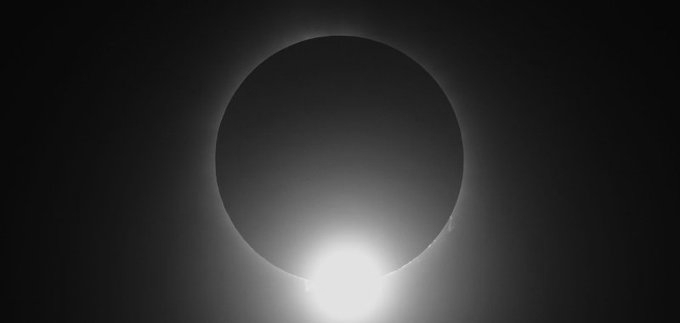
During totality, the sky can suddenly become much darker and the Sun’s corona becomes visible around the Moon’s black silhouette. The corona is the Sun’s outer atmosphere and is normally hidden by the Sun’s intense brightness. The darkness is brief, however, as the Moon continues moving across the Sun.
The longest totality during the 2026 eclipse is about 2 minutes and 18 seconds, with the maximum duration occurring near Iceland. In Spain, totality will generally last for less than two minutes, depending on the location.
Northern Spain is expected to see some of the most spectacular views. Cities and areas along the eclipse track include Bilbao, Burgos, León, Oviedo, Santander, Valladolid, Valencia, Zaragoza and parts of the Balearic Islands. Madrid and Barcelona are outside the main path of totality, although both can experience a partial eclipse.
The eclipse is also becoming a major tourism event for Spain. Government estimates suggest the country could receive about 446,700 additional visitors because of the eclipse, with an estimated €347.6 million in net economic benefits. Smaller towns along the path are preparing for large crowds, giving lesser-known areas a rare chance to attract international tourists.
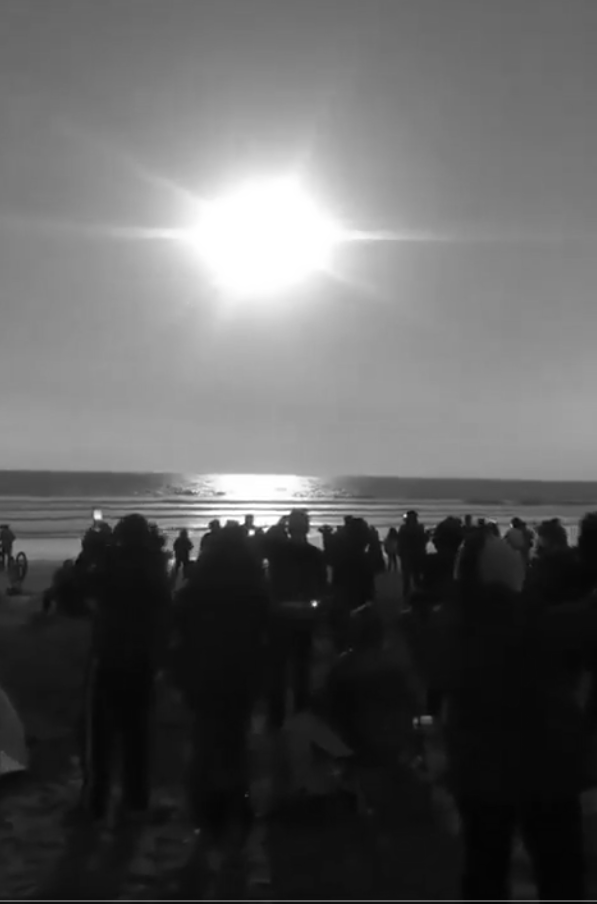
Authorities are also preparing for the crowds and summer heat. Spain has announced extensive security and safety measures, with thousands of police officers and hundreds of official viewing locations planned. Officials are particularly concerned about traffic, heat and the risk of wildfires during the busy viewing period.
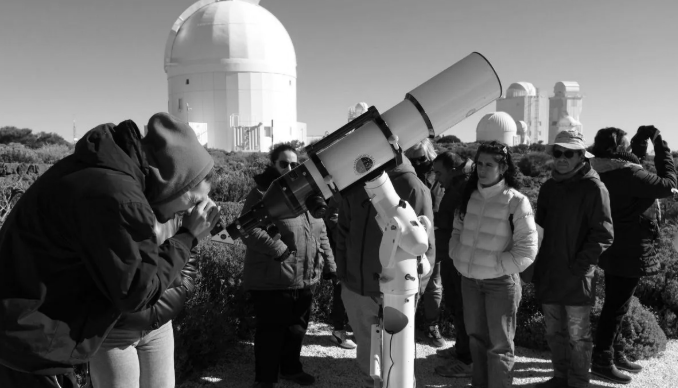
For anyone watching the eclipse, eye protection is essential. Looking directly at the Sun during the partial phases can cause serious and permanent eye damage. Ordinary sunglasses are not safe. NASA recommends certified solar viewers that meet the ISO 12312-2 standard. Special solar filters are also required for cameras, binoculars and telescopes.
The 2026 eclipse is particularly special for Spain because it is the country’s first total solar eclipse in more than a century. But skywatchers will not have to wait long for another major event. On August 2, 2027, another total solar eclipse will cross Spain, North Africa and the Middle East. At its longest point, totality will last for more than six minutes, making it one of the longest total solar eclipses of the century.