
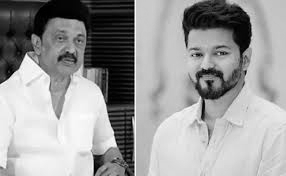
TN CM Stalin condemns 'weaponisation' of censor board
Tamil Nadu Chief Minister M K Stalin on Friday launched a sharp attack on the BJP-led Union government, accusing it of turning the Central Board of Film Certification (CBFC) into a political “weapon” to stifle dissent and control narratives.
The Chief Minister’s remarks come amid a controversy surrounding actor-politician Vijay’s upcoming and much-anticipated film Jana Nayagan , which has reportedly been referred to a CBFC review committee just days ahead of its scheduled release. While Stalin did not directly name the film, his comments were widely seen as a response to the development.
In a post on X, Stalin said, “On the lines of #CBI, #ED, #IT, the Censor Board has also become a new weapon of the BJP government. Strong condemnations.” The DMK leader has repeatedly accused the Centre of misusing constitutional and statutory bodies to target political opponents and voices critical of the ruling establishment.
The latest episode has revived a long-standing debate over the autonomy of the CBFC. Over the years, several films have run into trouble with the censor board, with filmmakers alleging political and ideological interference. In 2016, the CBFC under then chairperson Pahlaj Nihalani drew sharp criticism for demanding extensive cuts to the Shahid Kapoor-starrer Udta Punjab , a film on drug abuse, with filmmakers alleging an attempt to mute uncomfortable social realities. More recently, Kangana Ranaut’s Emergency sparked fresh controversy after facing certification delays and objections from the censor board over its political content, reviving accusations that the CBFC is increasingly scrutinising films with sensitive political themes beyond its mandate of certification.
Similarly, Sanjay Leela Bhansali’s Padmaavat was caught in prolonged certification delays and demands for changes amid political pressure and protests, despite the film being cleared later by the CBFC with modifications. More recently, Tamil and Hindi films dealing with caste, religion, governance, or political themes have often faced additional scrutiny, delays, or demands for cuts, prompting accusations that the censor board is being used to regulate political expression rather than certify films.
Opposition parties and members of the film fraternity have argued that such actions undermine creative freedom and turn certification into a form of indirect censorship. The Centre, however, has maintained that the CBFC functions independently and in accordance with the Cinematograph Act.
With Jana Nayagan drawing heightened attention due to Vijay’s growing political profile and its timing close to electoral developments in Tamil Nadu, the controversy has taken on added political significance. The film, which was initially slated for release earlier this month, has since been postponed following the CBFC’s decision to refer it to a review committee. The matter has now reached the Madras High Court, further intensifying the debate over censorship, freedom of expression, and the role of statutory institutions in a democratic framework.