
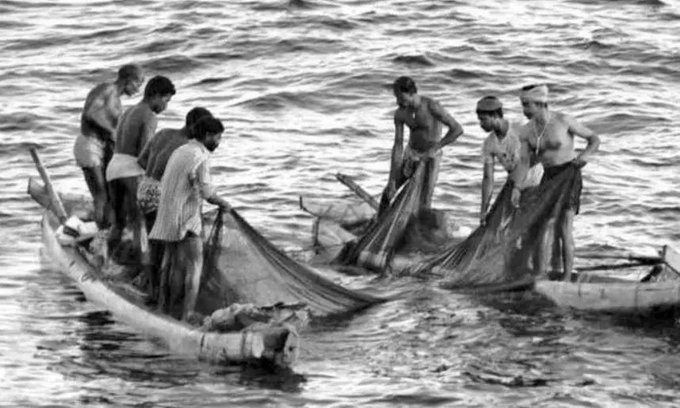
TN, AP Fishermen Turn To GPS To Resolve Long-Running Pulicat Lake Dispute
Fishermen from Tamil Nadu and Andhra Pradesh have agreed to replace unreliable traditional boundary markers in Pulicat Lake with a GPS-based system, in a move aimed at preventing accidental crossings and reducing a long-running dispute over fishing rights.
Representatives of 25 fishing hamlets from the two states reached the agreement at a joint meeting of officials held at the Gummidipoondi Panchayat Union Office in Tiruvallur district. The meeting was convened to address recurring territorial disputes and tensions between fishing communities dependent on the brackish-water lake.
For decades, fishermen have relied on palmyrah tree trunks as boundary markers in the water. However, the markers often rot because of the lake's saline conditions and can become difficult to identify. Changing water conditions, siltation and shallow channels have further complicated efforts to determine the inter-state fishing boundary.
Under the proposed system, motorised and traditional boats would be fitted with automated GPS transponders. The National Centre for Coastal Research (NCCR) would establish precise digital coordinates for the fishing boundary. Boats approaching the designated line could receive real-time alerts, while Marine Police control rooms in Tiruvallur and Tirupati could also be notified if a vessel crosses the boundary.
The proposal is significant because the dispute has a history of conflict. Fishermen cited the April 2014 clash at Chinna Mangodu, where homes, boats and fishing nets were set on fire. Around 199 police cases involving Tamil Nadu fishermen remain pending, and local fishermen have largely avoided entering Andhra waters for more than a decade due to fears of arrest and renewed confrontation. Community representatives said the two state governments would need to consider fast-tracking or mutually withdrawing the pending cases for lasting peace.
The dispute has also been linked to declining aquatic resources. Heavy siltation and low summer water levels restrict the lake's connection with the sea, affecting the movement of marine species and intensifying competition for fishing grounds.
To address this economic pressure, the Union Fisheries Ministry is implementing a Rs 133.11-crore project to open and stabilise the Rayadoruvu sea mouth, following representations by Tirupati MP Maddila Gurumoorthy. Better water exchange is expected to help replenish fish stocks and reduce pressure on shared fishing areas.
The proposed GPS framework, combined with restoration of the sea mouth and efforts to resolve pending cases, is intended to provide a clearer system for managing the shared lake and reducing future tensions between the two fishing communities.